MotoGP's rulemakers have turned an increasingly common circuit procedure into a uniform championship requirement for 2027. The Grand Prix Commission has confirmed that practice starts from pit-lane exits will be prohibited at every track, while also approving a reset of Moto2's chassis-concession order as the class prepares for a new engine specification from official supplier Triumph.
The decisions were announced on September 23 after a meeting of the Grand Prix Commission, the body that brings together representatives of the FIM, MotoGP, the teams' association and the manufacturers' association. Neither change is designed to transform the spectacle on Sunday afternoon. Both are operational decisions, but they matter because clear operating rules can shape safety, testing priorities and competitive preparation long before a race begins.
One rule for every pit-lane exit
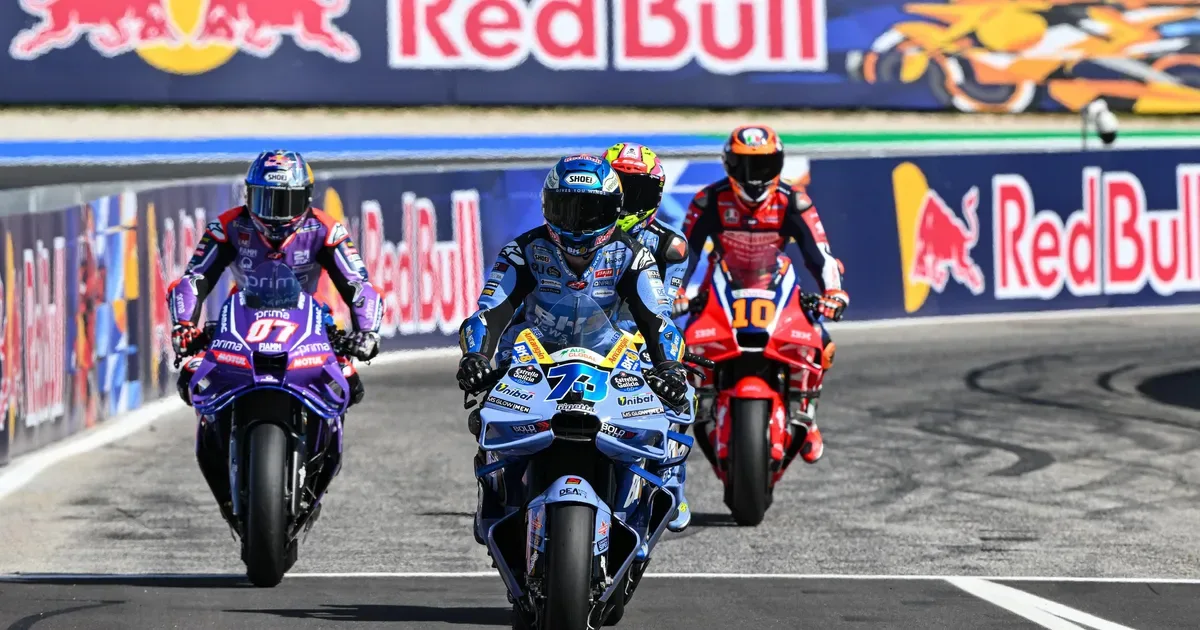
Practice starts allow riders to rehearse launches, evaluate clutch feel and test electronic settings. They also create a large difference in speed between a rider preparing to accelerate hard and other traffic moving through a limited space. MotoGP said the practice was already prohibited at most circuits. The 2027 decision removes the remaining track-by-track variation and makes the ban universal.
Standardization is the practical headline. Teams move through an international calendar with different pit-lane layouts, exit designs and local procedures. A single championship-wide rule reduces the need to treat pit-lane exit practice as a circuit-specific exception. Riders and teams will still need to follow designated practice-start procedures, but they will no longer face uncertainty about whether the exit itself is available for that purpose.
The measure does not imply that every venue presented the same problem or that practice starts are being eliminated. It narrows where they may occur. That distinction is important: the governing decision addresses a specific interaction point where riders can be focused on launch execution while other motorcycles are entering the circuit environment.
Moto2 concessions return to a common baseline
The same communication confirmed a reset for Moto2's concession rankings. MotoGP said Triumph's continuing development will bring a new engine specification for next season. Because every chassis manufacturer will need to adapt to that common change, the existing concession order will be reset at the start of 2027 and reassessed midway through the year.
Concessions are intended to help structure development opportunities. Resetting them recognizes that a new control-engine specification changes the technical reference point for every chassis builder. Retaining an order based entirely on the outgoing package could carry old performance assumptions into a materially different engineering cycle.
The mid-season review is equally significant. Rather than freezing the reset for a full year, the championship will have an opportunity to measure how the new combinations perform once real race data exists. That creates a two-stage approach: equalize the starting point, then revisit the competitive order after teams have had time to understand the engine and refine their chassis.
Why the changes matter beyond the paddock
For Canadian race fans, the immediate effect will be visible through how sessions are organized and how Moto2 development stories unfold in 2027. There is no direct change to Canadian road law, track regulation or dealer operations. The broader relevance lies in the way a global series handles risk and technical transition: define a consistent procedure, then review the competitive consequences using current evidence.
Riding schools, track-day operators and race clubs work under their own sanctioning rules, insurance requirements and site procedures. They should not treat a MotoGP decision as a substitute for local regulations. Still, the announcement offers a useful conversation about separating high-acceleration drills from traffic flow, using clearly designated launch areas and ensuring participants understand where practice starts are permitted.
Dealers with performance customers may also hear more questions about launch-control systems and race-derived technology. The rule is not a judgment on those systems. It governs the location of a practice activity, not the availability of launch aids on a motorcycle. That difference can help keep customer discussions accurate.
What comes next
The full effect of the Moto2 reset will become clearer when the 2027 technical package, participating chassis manufacturers and concession criteria are applied in competition. The first half of the season will provide the evidence for the promised mid-year reassessment.
For the pit-lane rule, teams now have advance notice to build a uniform procedure into their 2027 preparation. It is a modest change on paper, but one that replaces scattered local practice with a common expectation across the calendar. In a championship defined by precision, removing ambiguity at a busy point of the circuit is a meaningful result.