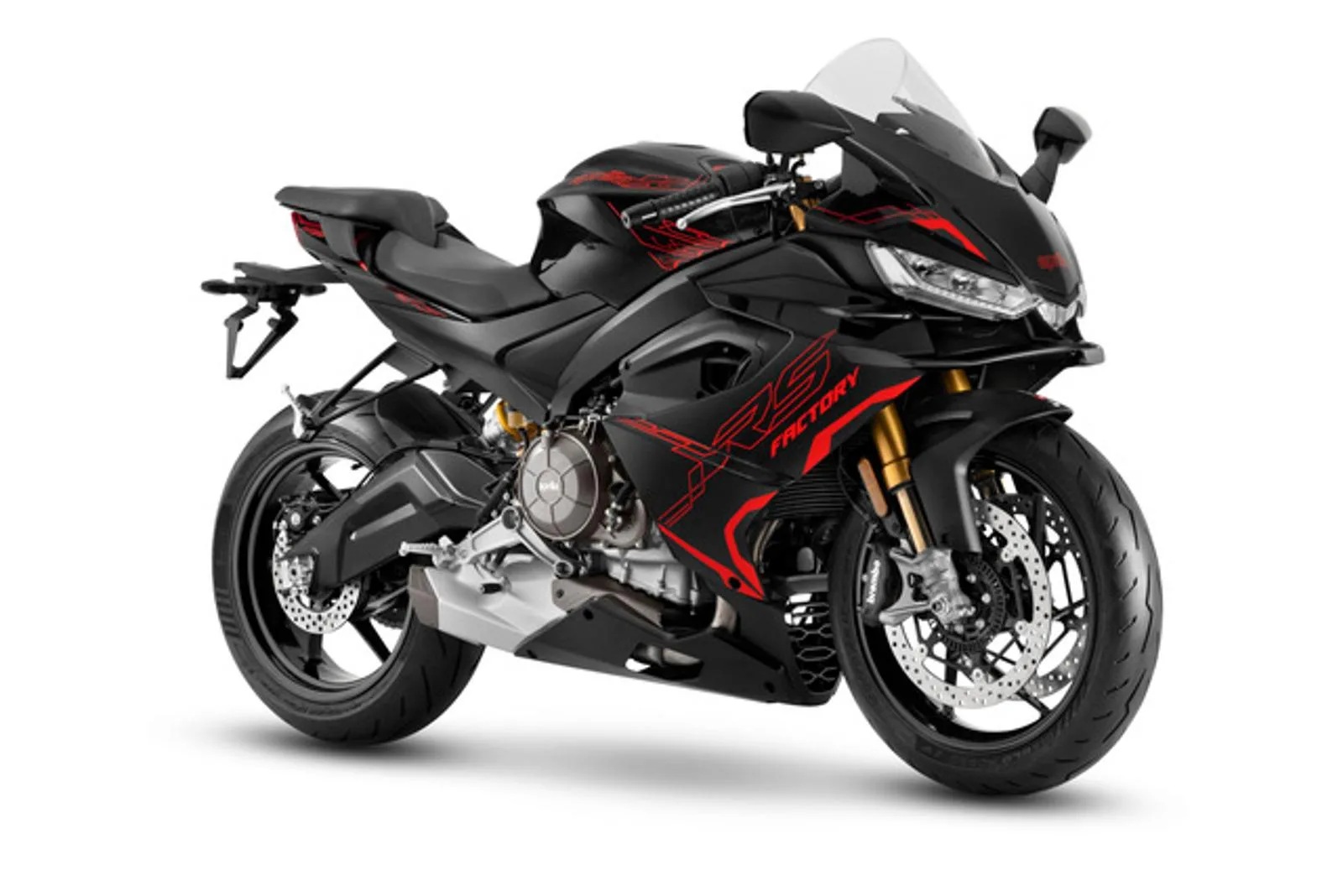
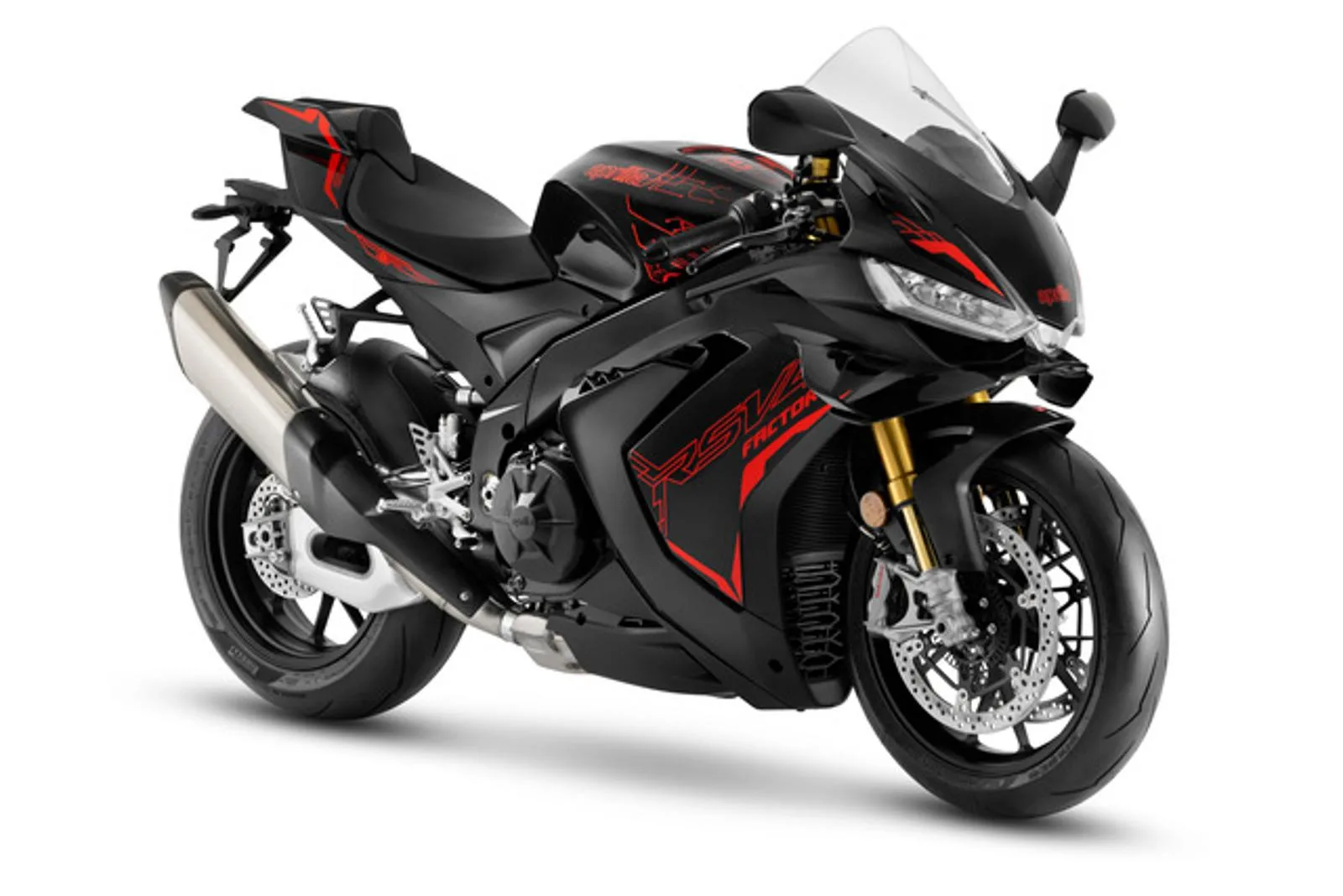
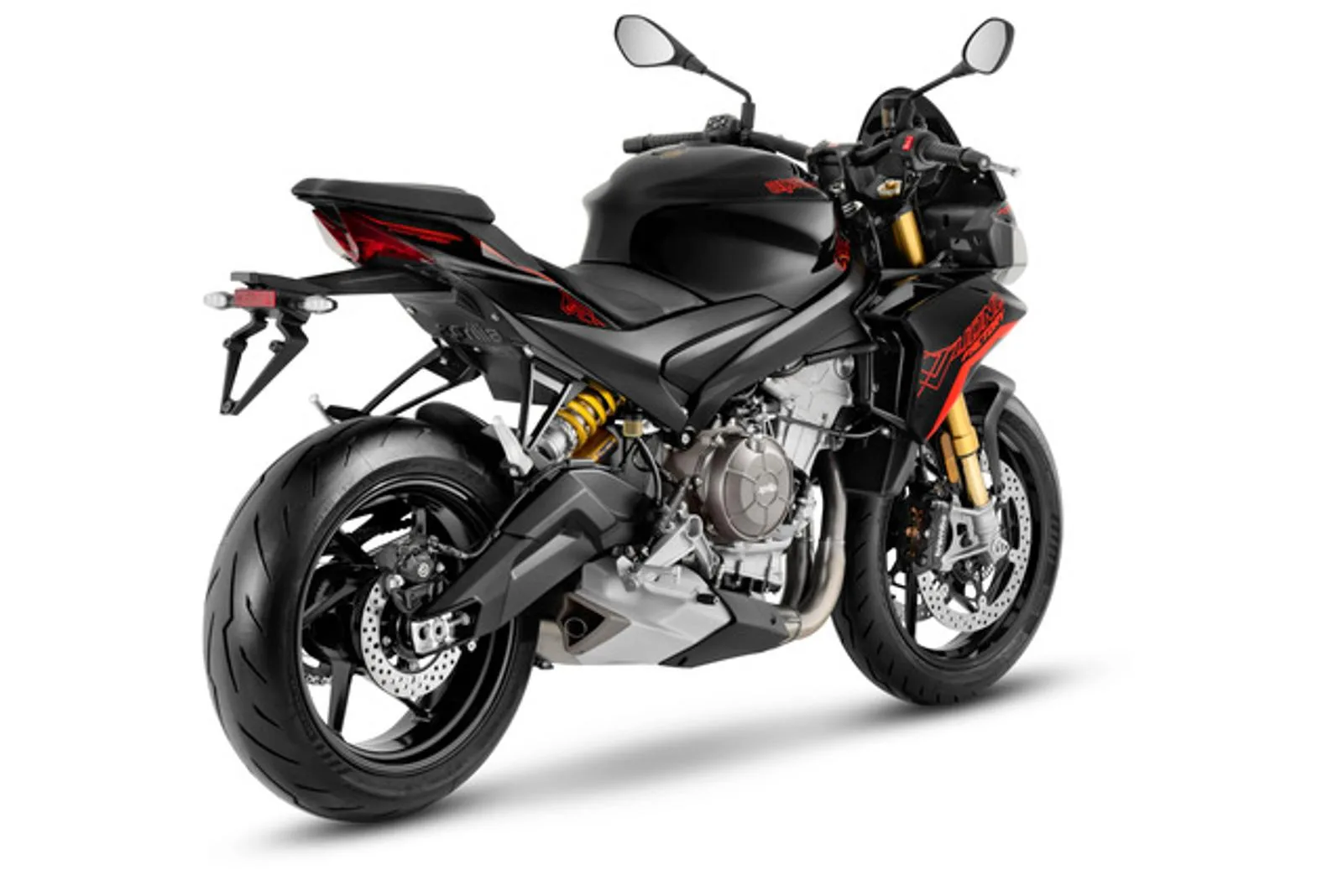
Aprilia has introduced aPRC Backbone graphics for its 2027 Factory sport-bike range, applying a shared electronic-circuit theme to the RSV4 Factory, Tuono V4 Factory, RS 660 Factory and Tuono 660 Factory. Announced on November 3, the update gives four distinct motorcycles a coordinated appearance. The announcement is a graphics development and should not be presented as four newly redesigned platforms.
That distinction helps Canadian buyers understand what is actually new. Aprilia is using the visual identity to draw attention to the electronic systems already central to its Factory positioning. The paint and graphics connect the family, while the individual motorcycles retain different engines, riding positions and intended uses.
Electronics become the visual theme
The aPRC Backbone design uses red lines and dots over gloss black, evoking signals moving from an electronic control unit through the motorcycle. Aprilia also describes a tank panel resembling a control unit and lettering expressed through binary-code graphics. The result is a visual reference to the systems underneath the bodywork.
A common appearance can make a range easier to recognise, but it can also encourage buyers to assume that every model has the same technology. That is not a safe shortcut. Equipment needs to be checked against the specific RSV4, Tuono V4, RS 660 or Tuono 660 version, rather than inferred from a shared colour name.
The distinction is particularly important when comparing a full-fairing sport motorcycle with a naked model. A similar finish does not make the riding positions, wind protection or passenger arrangements equivalent. A useful showroom comparison should begin with the rider's normal routes and comfort needs before moving to the equipment shared across the family.
What aPRC represents
The name stands for Aprilia Performance Ride Control. It refers to a group of rider-control functions rather than a single component. Aprilia's announcement uses the new graphics to highlight this electronic identity, including the relationship between rider input, sensors and the motorcycle's control systems.
The general purpose of a rider aid needs to be distinguished from its operating limits. Traction control, wheelie control and engine-braking adjustment address different aspects of motorcycle behaviour. The rider benefits from knowing which setting is active and how a change affects the motorcycle, rather than simply selecting the largest number of available interventions.
Electronic throttle control is part of that relationship because it allows the control system to manage engine response in coordination with the rider's request. It does not remove the rider's responsibility to choose a suitable speed, look through a corner and account for the surface. Technology supports the task within its designed conditions.
Track functions are model-specific
The release highlights Corner By Corner technology on the RSV4 Factory and Tuono V4 Factory, allowing selected control settings to change according to the rider's preconfigured circuit programme. It does not attribute that feature indiscriminately to every motorcycle receiving the Backbone graphics.
For a rider using such a system, preparation matters. The settings need to correspond to the circuit and the rider's intended approach. A stored programme is useful only when the owner understands what will change and where. It should support a consistent riding plan rather than introduce uncertainty during a session.
Someone riding mostly on public roads may place greater value on a clear display, predictable throttle response and easy access to the basic riding modes. That is a different priority from detailed circuit configuration. The best equipment package is the one whose functions are relevant and understandable for the intended use.
Choosing among four motorcycles
Canadian buyers interested in the new appearance should compare the individual models directly. The V4 and 660 families serve different performance and ownership briefs, while the faired and naked formats create further distinctions. Insurance, service support, passenger needs and the cost of regular consumables can all influence the practical choice.
A demonstration ride should include the kinds of roads the owner will actually use. A sport-bike position can feel purposeful on an open, flowing route while becoming demanding in urban traffic. An upright naked motorcycle may feel natural at lower speeds while exposing the rider to more wind on a long highway section. Graphics do not alter those basic differences.
Local price, colour availability and delivery timing should be confirmed for the Canadian model. Buyers should also have any optional software, connected functions and accessories identified separately from the standard equipment. That keeps the comparison tied to the motorcycle being quoted, rather than the broad language used to describe an entire range.
The aPRC Backbone update is a clear piece of design news: four Factory motorcycles now share a visual language built around Aprilia's electronic systems. Its relevance lies in that coordinated identity and the opportunity to compare the family's different machines. The purchasing decision still belongs at model level, where fit, equipment and intended riding make the meaningful differences.