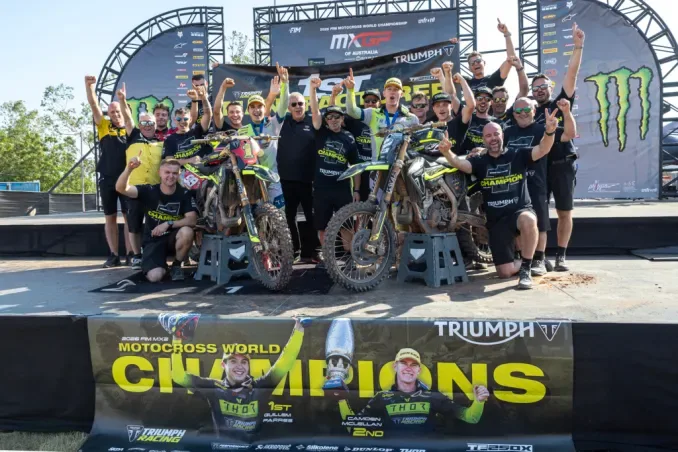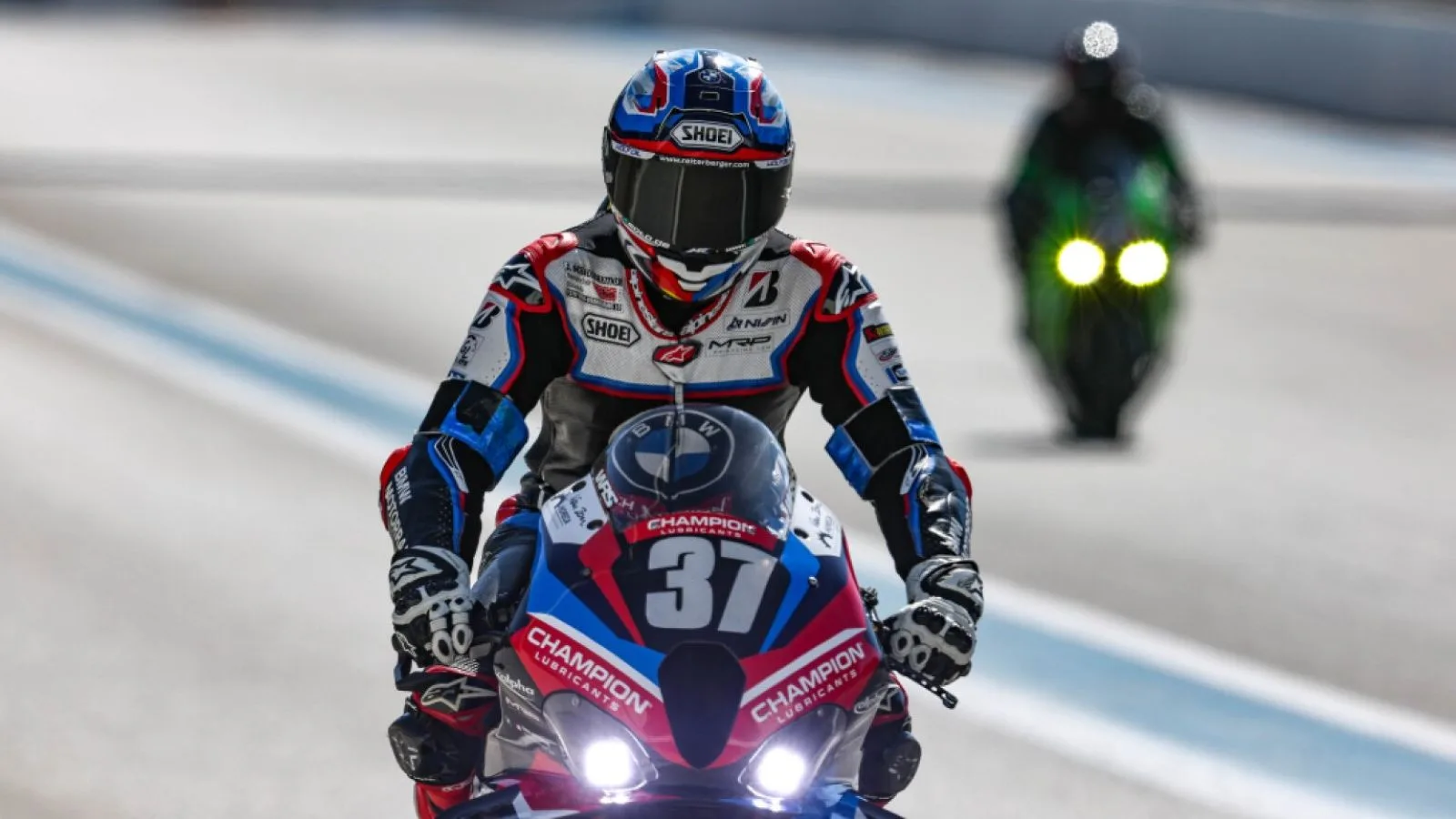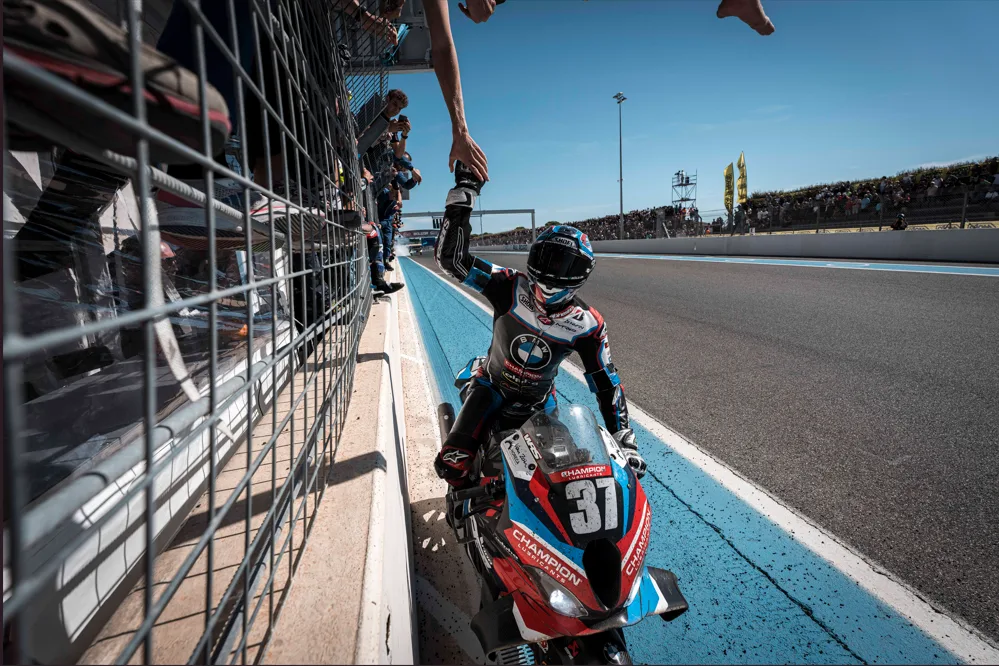
BMW Motorrad World Endurance Team has completed a historic comeback at the Bol d'Or, winning the 24-hour finale at Circuit Paul Ricard and securing BMW's first FIM Endurance World Championship title.
The #37 BMW M 1000 RR of Michael van der Mark, Markus Reiterberger and Steven Odendaal entered the final round 19 points behind YART Yamaha. By the time Reiterberger crossed the line after 24 hours, BMW had turned that deficit into a four-point championship victory.
BMW finished the season with 158 points, ahead of YART on 154 and Yoshimura SERT Motul on 137. The title is also significant beyond the team itself: BMW says it is the first European manufacturer to win the FIM EWC world championship.
A maximum-points weekend changed the championship
The Bol d'Or awards more than the normal race-finish points because teams can collect bonuses during the event.
BMW's weekend began with pole position, worth five championship points. The #37 team then led at the eight-hour and 16-hour marks, collecting another 10 points before taking the 40 points available for the race victory.
That produced a 55-point haul from the finale.
The arithmetic mattered because YART arrived with the championship advantage. A clean race for the Yamaha team could still have protected the title lead, but endurance racing creates far more opportunities for the standings to change than a conventional sprint race.
A 24-hour event rewards outright speed, but it also punishes every lost minute in the pits, every mechanical problem and every avoidable incident.
BMW controlled the race with pace and efficiency
BMW highlighted fuel consumption as one of the reasons the #37 machine was able to build its advantage.
According to the manufacturer, the M 1000 RR used less fuel than its main rivals, allowing the team to complete fewer pit stops over the 24-hour distance.
That kind of advantage can be decisive in endurance racing. A small difference in stint length may appear insignificant over a few laps, but across a full day it can reduce the number of times a motorcycle has to stop for fuel and service.
BMW also emphasized that the motorcycle completed the race without a major technical interruption.
Reiterberger, van der Mark and Odendaal shared the riding duties through changing conditions, darkness and traffic while the crew handled refuelling, tyres, inspections and routine service.
The result was a win built around the combination of speed, reliability and pit execution rather than a single fastest lap.
Suzuki and Yamaha completed the podium
Yoshimura SERT Motul finished second with the #12 Suzuki, one lap behind the BMW.
YART Yamaha completed the podium in third, two laps behind the winner.
Those positions were enough to put BMW ahead in the final championship standings.
The result also underlined how small the margin was after an entire season. BMW's four-point title advantage came after four rounds that included the 24 Heures Motos, Spa, the Suzuka 8 Hours and the Bol d'Or.
An endurance championship can therefore be decided by details that occurred months earlier: a repair, a penalty, a failed component or a few positions lost in another round can eventually become the difference between first and second in the final table.
The season did not start cleanly for BMW
BMW's championship did not follow a simple start-to-finish path.
The team encountered problems at Le Mans, then recovered with a victory at Spa and a podium at Suzuka.
That placed the #37 squad within striking distance before the Bol d'Or, but still with a substantial points deficit to erase.
The final round became a test of whether the team could combine qualifying performance, intermediate bonuses and race execution at exactly the right time.
Pole position was the first step. Leading at the eight-hour and 16-hour checkpoints added more points. Winning the race completed the comeback.
That progression explains why the final result carries more weight than simply another endurance victory.
What this result says about endurance racing
The Bol d'Or is an extreme environment for a motorcycle.
Engines spend long periods under sustained load. Brakes and tyres cycle repeatedly through heavy use. Riders share the same machine despite different preferences and body sizes. Crews perform dozens of tasks while fatigue increases.
A winning package has to be quick enough to stay near the front while remaining serviceable and predictable enough to survive.
That does not mean the race result should be treated as a direct comparison of showroom motorcycles.
The machines are competition-prepared, the teams use specialized equipment and the maintenance schedule bears little resemblance to normal street ownership.
The more useful connection is engineering discipline: fuel range, service access, thermal management, rider consistency and preventative maintenance all become visible when a motorcycle has to perform continuously for 24 hours.
Canadian riders can read the result without overreaching
For Canadian riders and dealers, the title is primarily a racing development.
It does not change Canadian BMW pricing or specifications, and it does not establish that one production model is universally more durable than another.
It does, however, give BMW Motorrad a major motorsport credential tied to the M 1000 RR platform and the manufacturer's endurance program.
Race programs often create strong brand interest because customers can see the same manufacturer working under extreme conditions. Dealers can benefit from that enthusiasm, but technical claims should stay grounded in production specifications rather than race results.
A historic first for BMW
BMW's victory at the Bol d'Or delivered two milestones at once: the team won one of endurance racing's most demanding events and secured the manufacturer's first FIM EWC world championship.
The #37 squad arrived 19 points behind, collected every major points opportunity available at the finale and left Circuit Paul Ricard four points ahead.
That makes the 2026 Bol d'Or more than a single race win. It is the event where BMW converted a season-long recovery into a world title.