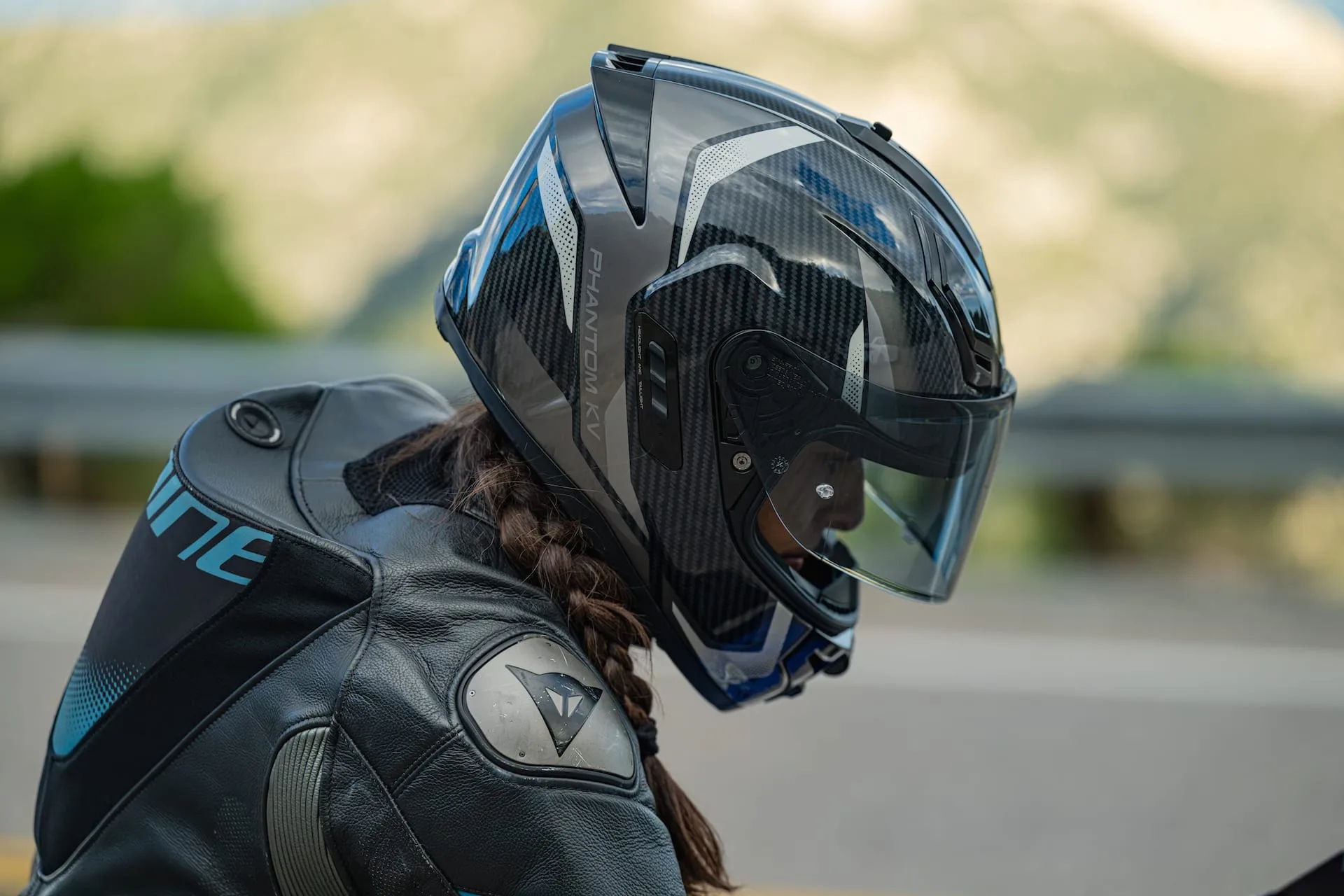
Sena’s EICMA smart-helmet range includes a lighter Phantom KV with claimed active noise cancellation of up to 20 dB and a two-kilometre open-terrain Mesh 3.0 range. The figures appear in EICMA’s Nov. 8 report on the range.
The Phantom KV is described as 50 grams lighter than the previous Phantom ANC. Sena says its active noise cancellation can reduce wind and road noise by up to 20 dB, while the integrated Mesh 3.0 system can reach two kilometres in open terrain. Those are manufacturer performance claims rather than independent measurements under every riding condition.
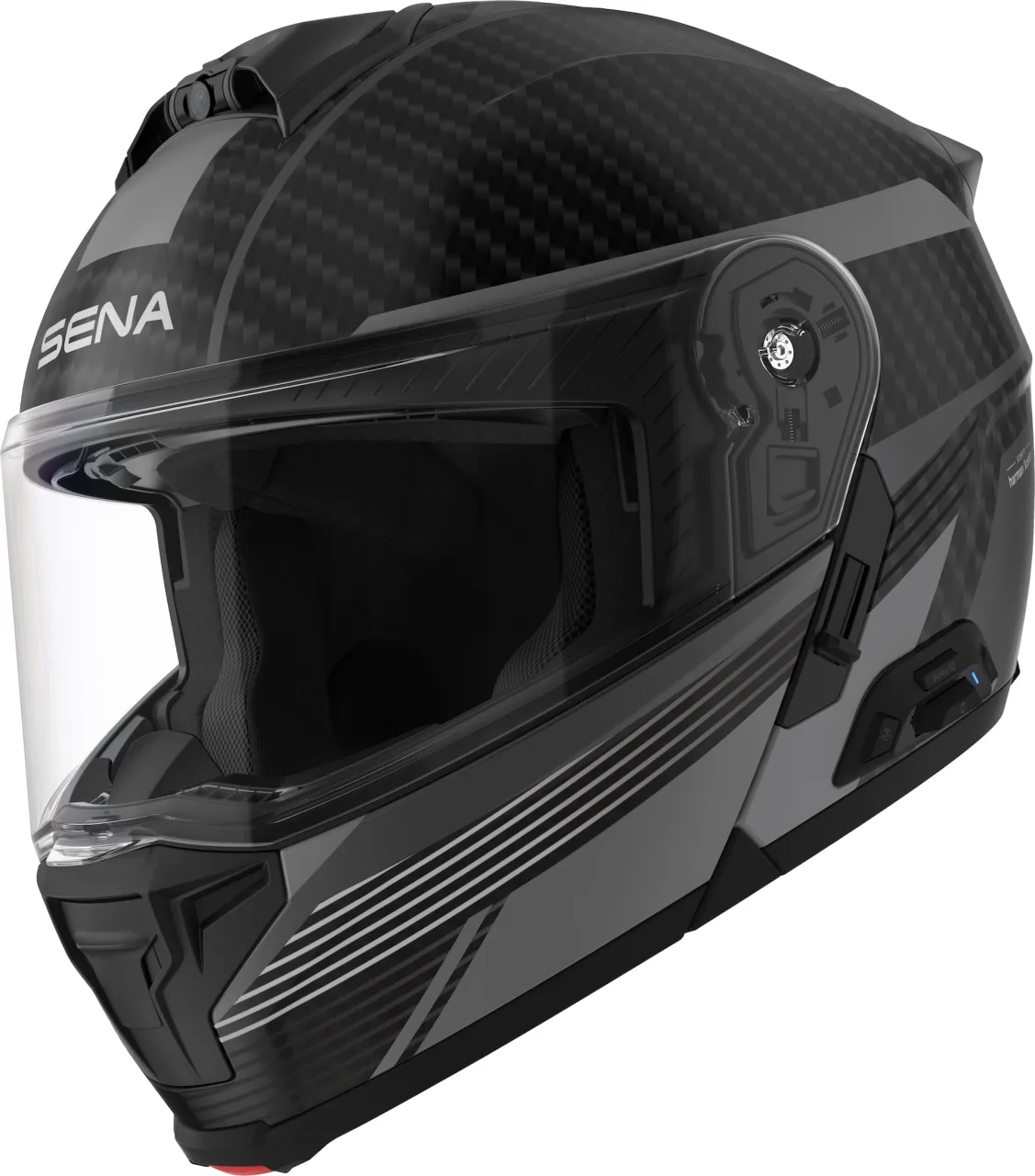
Phantom KV puts the electronics inside the shell
The Phantom KV is a full-face design with a composite shell made from fibreglass and aramid fibre. Sena’s earlier announcement listed 45 mm active-noise-cancellation speaker modules, while the new information adds the 50-gram weight reduction and the claimed noise reduction.
Integrated hardware can remove external control units, clamp mounts and exposed wiring from the side of a helmet. That may improve aerodynamics and simplify installation, but it also makes the whole product more dependent on long-term parts, battery and firmware support.
The 20 dB figure should be read as an “up to” claim, not a guarantee for every rider or speed. Wind noise changes with the motorcycle, windscreen, riding position, helmet fit and head angle. Riders who require hearing protection should continue to use appropriate protection rather than treating an electronic system as a universal substitute.
Mesh 3.0 is quoted at two kilometres in open terrain. Real group range can shrink around buildings, trees, hills and traffic. The useful advantage of publishing the number is that riders can compare it with their own needs and test how the system performs in the conditions where they actually ride.
Sena also includes WAVE Intercom, which uses mobile networks to communicate beyond normal radio range. That can extend a conversation where cellular service exists, but it also introduces dependence on coverage, data access and compatible accounts.
Specter KV brings ANC to a modular format
The Specter KV is the modular member of the family. It uses 60 mm speakers, active noise cancellation and dual P/J certification in the European specification. P/J certification indicates that a modular helmet has been tested for use with the chin section in both the closed and approved open position.
Canadian buyers should still wait for the exact regional certification and owner instructions. A European certification statement does not by itself establish which labels or configurations will be sold in every province.
The larger speaker size may offer more output and a different acoustic character, but speaker diameter alone does not determine clarity. Seal, placement, helmet noise and audio tuning all influence what a rider hears.
Camera versions change where recording hardware lives
Sena plans camera-equipped versions of both main designs. The Phantom Camera places a 4K camera in the chin bar, while the Specter KV Camera mounts its 4K unit on top of the modular shell. Integrating the camera removes a separate adhesive or clamp mount and can produce a cleaner installation.
It also raises service and usability questions. Riders will want to know recording time, storage method, low-light performance, stabilization, microphone behaviour and how easily a damaged camera component can be repaired. Camera access, replacement parts and software support will affect ownership alongside image quality.
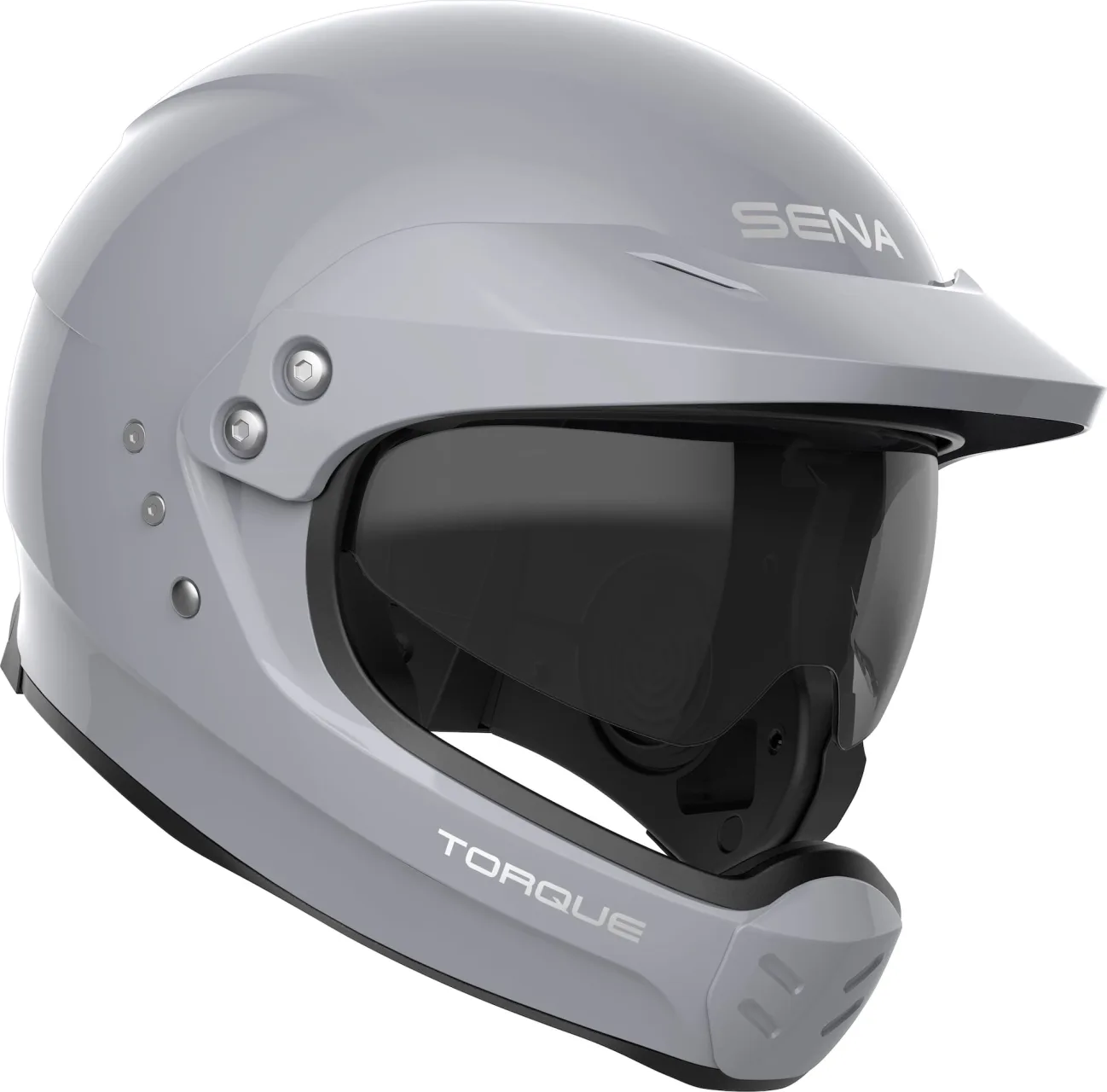
The rest of the range includes the Recon and Torque open-face helmets with Harman Kardon audio, plus the Outlander Camera for adventure riding. The Outlander integrates 4K recording, while the two open-face models focus on audio and different levels of facial coverage.
Fit and certification still come first
Electronics can attract attention, but a helmet remains safety equipment before it is an audio device. Correct fit, a secure retention system and the proper certification for the rider’s jurisdiction are more important than camera resolution or intercom range.
Integrated systems also make replacement planning more complex. A traditional add-on communicator can move to a new compatible helmet. An integrated smart helmet ties more of the purchase value to one shell, one battery system and one service life. Buyers should ask whether batteries are replaceable, how long firmware support is expected and what happens if an electronic component fails while the shell remains usable.
What the Canadian market still needs
Sena already sells communication products and helmets through Canadian retailers, and its official store maintains a collection identified as available in Canada. The new EICMA range, however, does not yet have confirmed Canadian prices, arrival dates or complete regional specifications.
Retailers should wait for the approved size and colour list, certification labels, warranty terms, replacement liners, visors, batteries and camera accessories. They will also need enough staff training to demonstrate pairing and updates without allowing the technology discussion to crowd out fit assessment.
The figures in EICMA’s Nov. 8 report give the Phantom KV a clearer specification. A lighter shell, a stated ANC reduction and a defined Mesh range are specific promises that can eventually be tested. The next milestone will be regional product documentation showing what Canadian riders can buy, how it will be supported and whether the integrated approach delivers a simpler ownership experience.