Motorcycle airbags are moving beyond a small group of road racers and premium touring riders. In&motion's latest EICMA presentation brings the technology into a wider set of products for commuting, adventure riding, off-road competition and everyday road use through partnerships with Honda, SHOT, T.UR and Klim.
The expansion matters because an airbag is not a generic layer that works the same way in every discipline. A road rider, an adventure traveller and a motocross racer move differently, wear different outer equipment and face different crash patterns. In&motion's strategy is to use a common electronic platform while adapting the garment, passive armour and detection approach to each use.
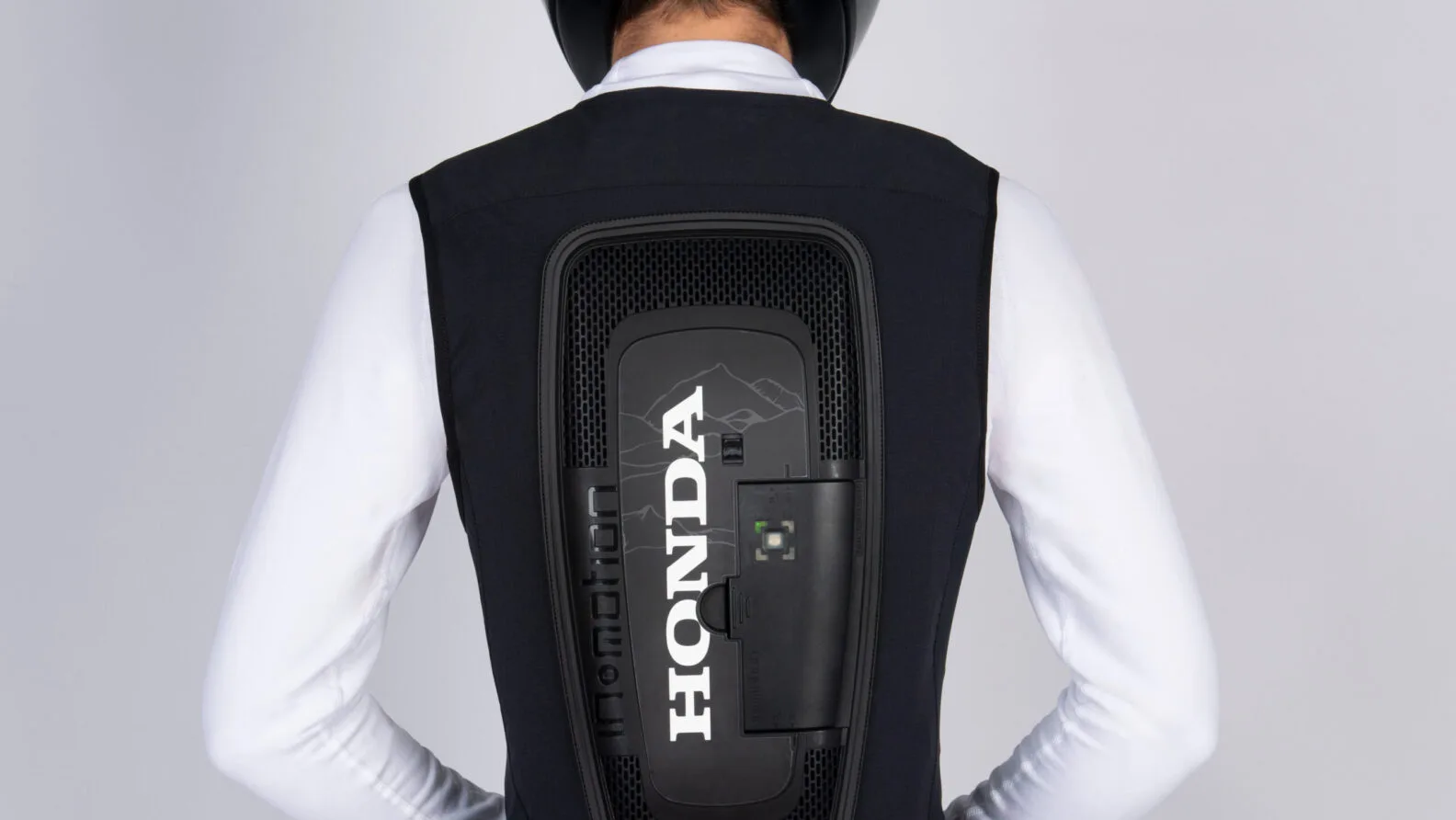
Honda vest emphasizes adjustability
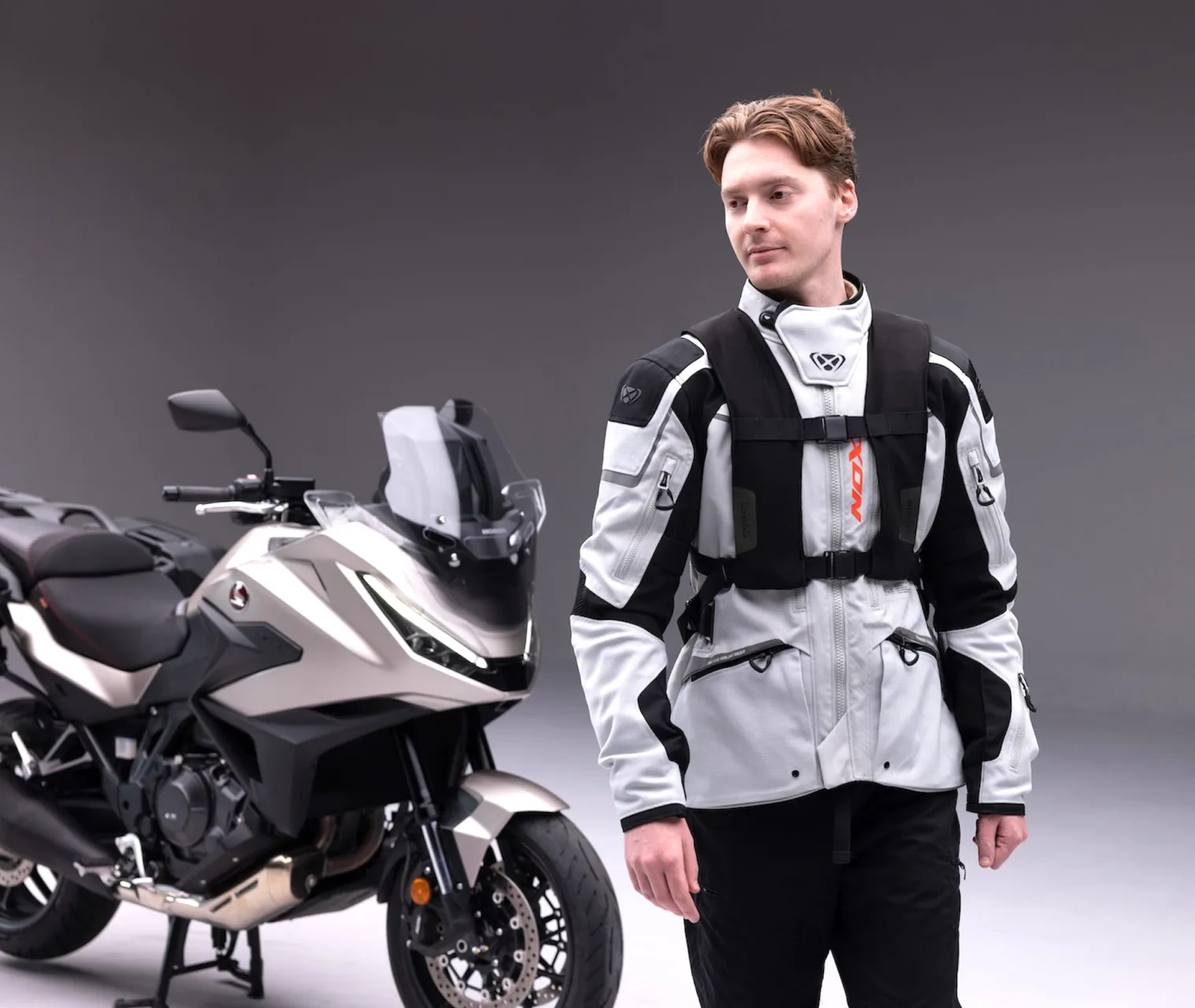
The main new product is an airbag developed with Honda. EICMA describes a one-size design with adjustable sliders intended to fit a broader range of body types. It can be worn over clothing or under compatible garments, giving riders more options than a system restricted to one jacket.
That flexibility is useful, but it also makes fitting discipline more important. An airbag needs room to inflate without being trapped by an incompatible outer layer. A vest worn outside must remain secure and correctly positioned in the wind. Riders should follow the exact product instructions rather than assuming that any jacket with a loose fit will work.
In&motion already lists Honda among the partners on its Canadian site, along with Klim, SHOT, T.UR and several other equipment brands. That confirms an established product ecosystem, but it does not confirm that every new item shown at EICMA is immediately stocked in Canada. Retail timing, sizes, colours and service arrangements can vary by partner.
Off-road protection gets its own product
The SRG-1 Max, developed with SHOT, combines the electronic airbag with D3O passive protectors for off-road use. That combination recognizes that motocross riders face frequent impacts, roost and contact that may not warrant inflation but still require conventional armour. Breathability and freedom of movement are also central because heat and exertion can be much higher than during ordinary road riding.
In&motion says its Racing Legacy program will support new motocross solutions. The FIM has confirmed that operational airbags are strongly recommended from 2027 and compulsory from 2028 in MXGP, MX2, the Women's World Championship and the Motocross of Nations. Competition rules can accelerate development, but recreational riders should not assume a race product is automatically the best choice. A trail rider may need different coverage, battery life, water resistance and service access than a professional racer.
The T.UR Airscud ADV takes another route by integrating the system into an adventure jacket. Klim's AI-1 Airbag is also positioned for road and adventure riding. Integration can simplify how the garment sits on the body, while a separate vest may be easier to move between jackets. The right choice depends on climate, layering and how many riding outfits a person uses.
Evidence is important, but setup still matters
EICMA cites a study of real-world crashes reporting a 52 per cent reduction in chest-injury risk. Its short show report does not provide the study methods or a product-by-product breakdown, so the figure describes the cited research and is not a guarantee for every airbag or crash. Detection timing, coverage area, impact direction and correct fit all affect the outcome.
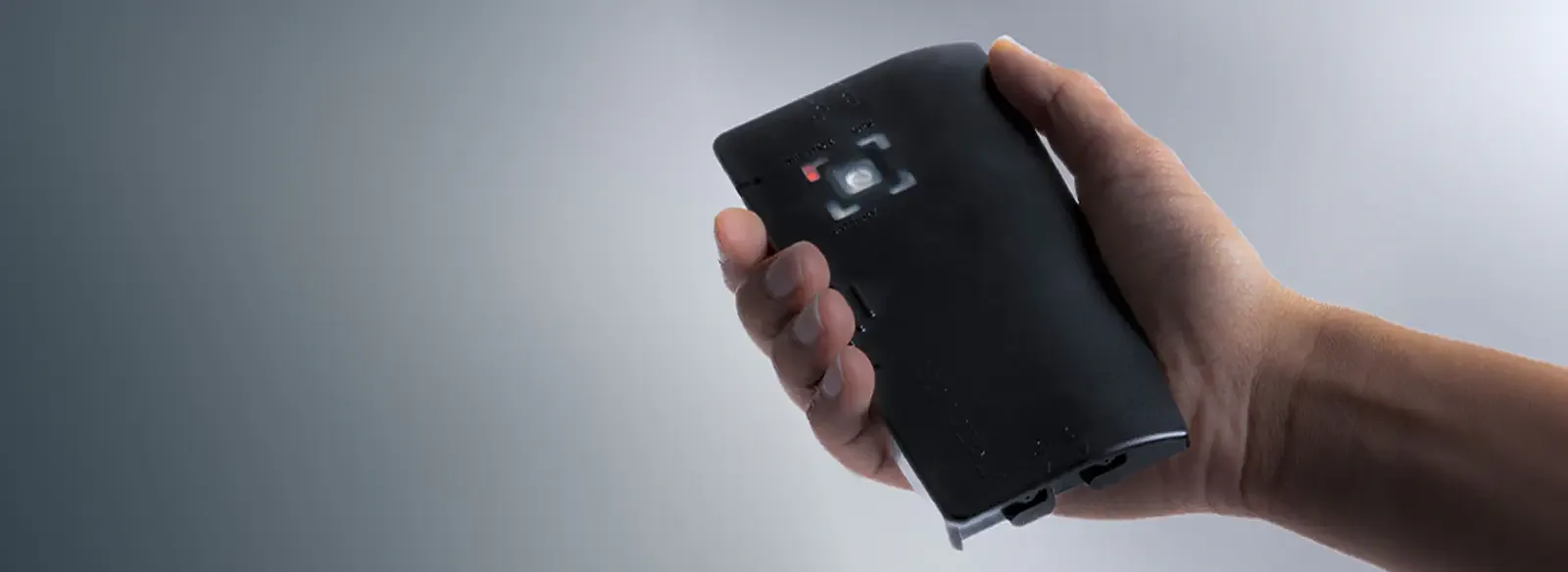
The In&box electronic unit is central to the system. In&motion's Canadian information says an equipped product will not trigger without the unit. Buyers therefore need to understand activation, the correct detection mode for their activity, battery charging, software status and what happens after an inflation. Those steps are part of using the equipment, not optional technical details.
An airbag also supplements rather than replaces a certified helmet, abrasion-resistant clothing, gloves, boots and conventional impact protectors. It cannot prevent a crash and it cannot protect every body area. The strongest safety case comes from combining it with the rest of the rider's equipment and with training that reduces the chance of a collision in the first place.
Canadian riding adds practical questions
Canadian riders often move between hot summer traffic, cold shoulder-season mornings and long highway stretches. Layering changes across those conditions, so the ability to wear the Honda vest over or under compatible equipment could be valuable. It also creates a reason to check fit in the complete riding outfit rather than trying the vest over a T-shirt in a store.
Adventure and off-road riders should ask how the system handles rain, mud, repeated low-speed falls and remote travel. Battery endurance, charging access and post-deployment reset or replacement procedures matter more when the nearest dealer is hours away. Riders crossing into remote areas should know whether the system remains usable after a non-injury inflation and what parts they must carry.
For Canadian dealers, the opportunity is education. Staff should be able to explain garment compatibility, detection modes, activation and service. A wall of expensive vests without that knowledge risks confusing buyers and weakening trust in the category. Demonstration units and scheduled fitting sessions could make the technology easier to understand.
The EICMA update shows that motorcycle airbags are becoming a product family rather than a single road vest. Canadian availability remains specific to the product and retailer. Price, garment compatibility and service support all belong in the purchase decision, alongside a clear understanding of activation and the manufacturer's after-deployment procedure.