Yamaha has detailed a new RW adventure-scooter family in a November 4 global announcement, bringing its 689 cc CP2 engine and automated shifting into the RW700 and adding a new 327 cc single-cylinder RW350. The range also includes the better-equipped RW700 Explore and is on display at EICMA 2026 in Milan.
A new kind of Yamaha
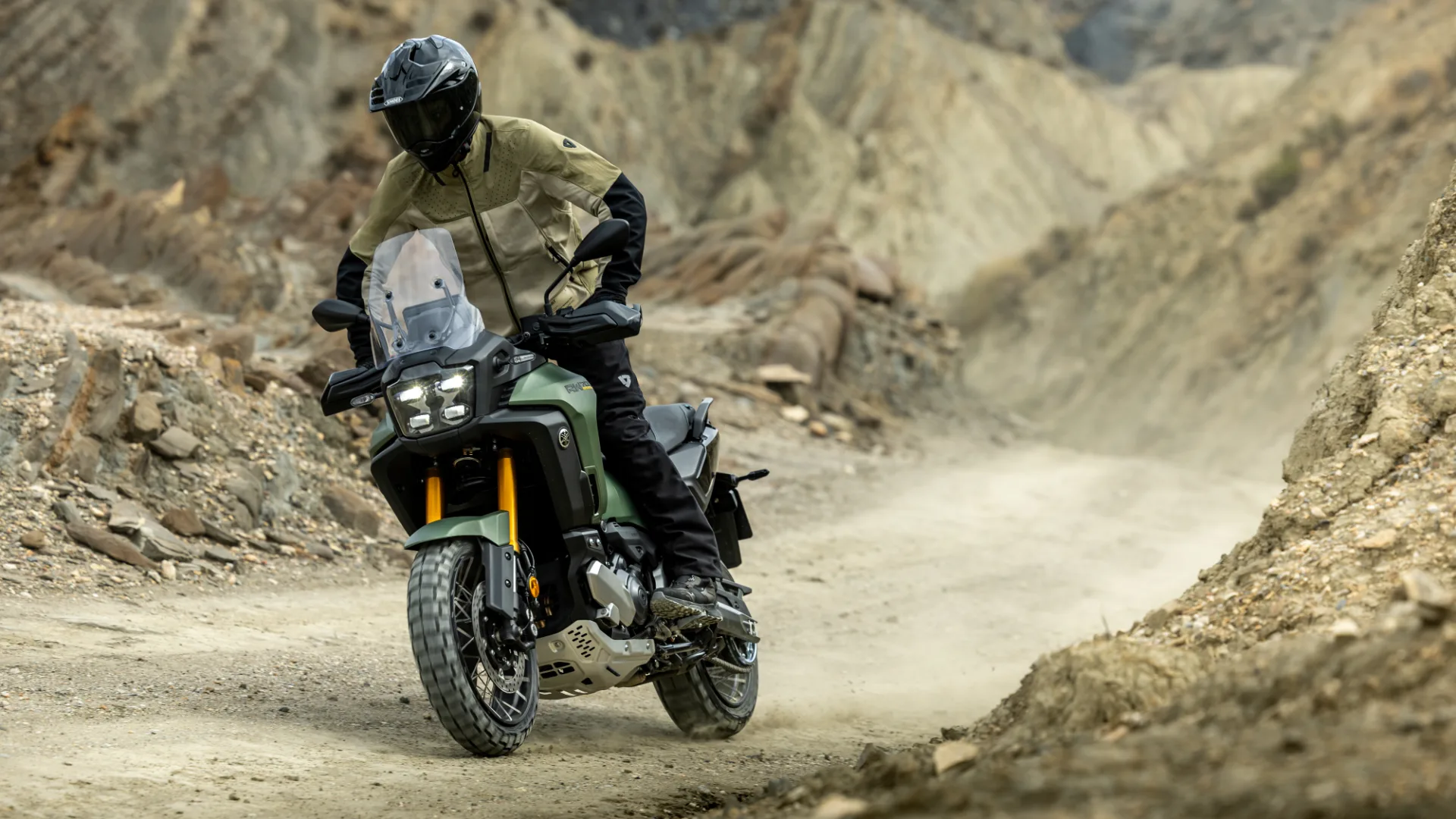
The RW name is new, and Yamaha is describing the machines as adventure scooters for global markets. That distinction matters. These are not simply existing commuter scooters wearing block-pattern tires and taller windscreens. Yamaha has developed frames, suspension configurations, wheels, controls and rider interfaces around mixed-surface use. The result is a family intended to handle urban travel during the week and rougher roads when pavement ends.
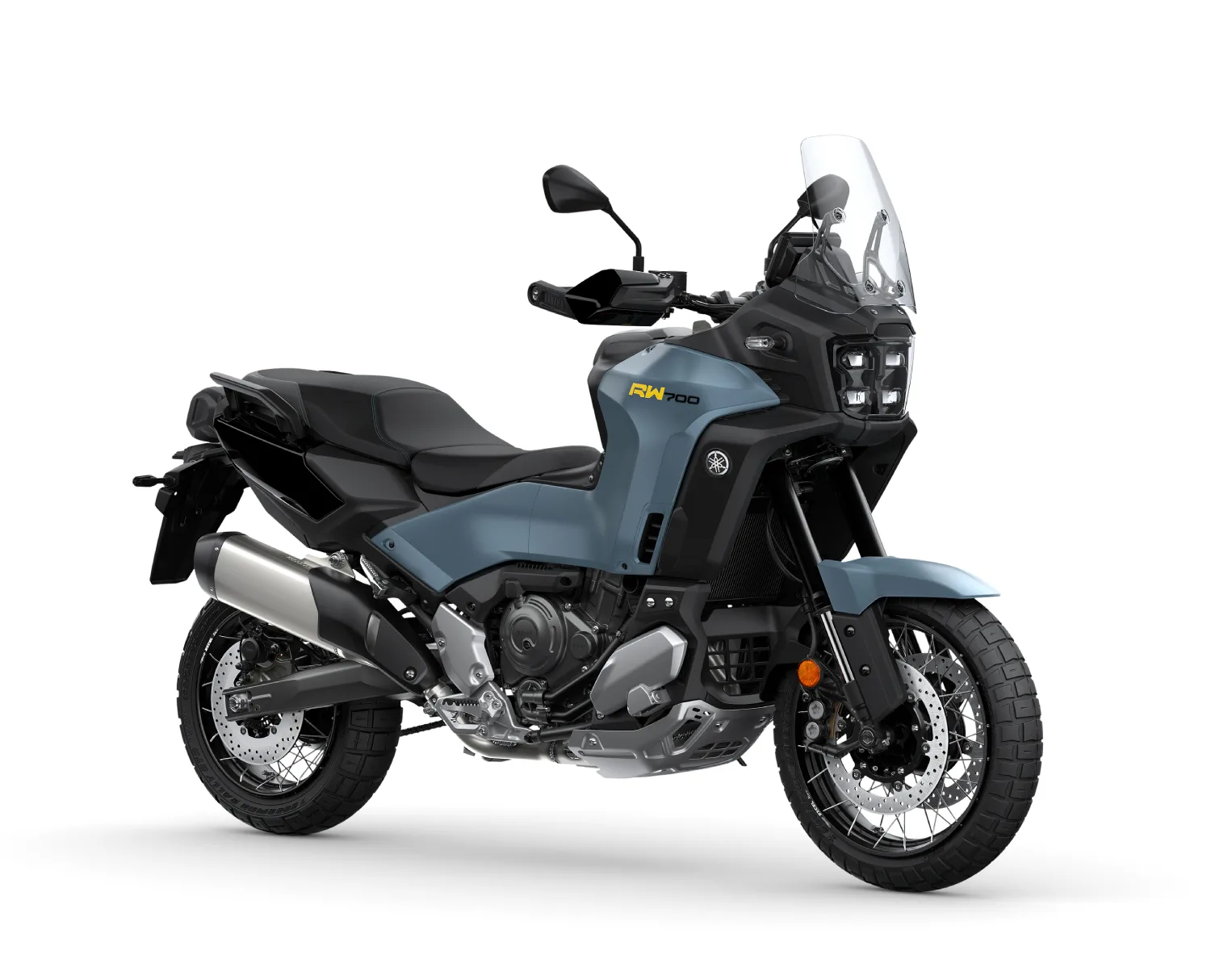
The flagship RW700 starts with Yamaha's familiar 689 cc CP2 parallel-twin engine. The compact twin has become one of the company's most adaptable powerplants, but here it is paired with Yamaha Automated Manual Transmission. Y-AMT removes the clutch lever and shift pedal. Riders can leave shifting to the automatic mode or select gears manually from handlebar controls. Moving the rear brake control to the handlebar also gives the rider scooter-style operation at low speed and on loose surfaces.
Yamaha built a new high-tensile steel backbone frame around that configuration. The engine and seat sit relatively low, while minimum ground clearance is listed at 170 mm. A 41 mm inverted fork and bottom-link rear monoshock provide long travel. Cross-spoke wheels with aluminum rims are a Yamaha first, and tubeless Pirelli Scorpion Rally STR tires underline that the off-pavement claim is more than styling.
The RW700 also receives Yamaha Ride Control modes, cruise control and a gravel setting. The gravel configuration includes a dedicated shift strategy intended to improve control on unpaved roads. Adjustable footpegs and foldable footboards let a rider change position between relaxed road travel and more active control when standing or moving over uneven terrain.
Explore adds cold-weather comfort
The RW700 Explore is the touring-oriented version. It adds heated grips, a heated seat, adjustable front suspension, a centre stand, backlit switchgear and model-specific badging. Those additions may be useful during cool Canadian mornings and longer shoulder-season rides. The global release does not establish a Canadian price, delivery schedule or final local equipment package, so the Explore’s fit for this market remains an opportunity rather than a purchase commitment.
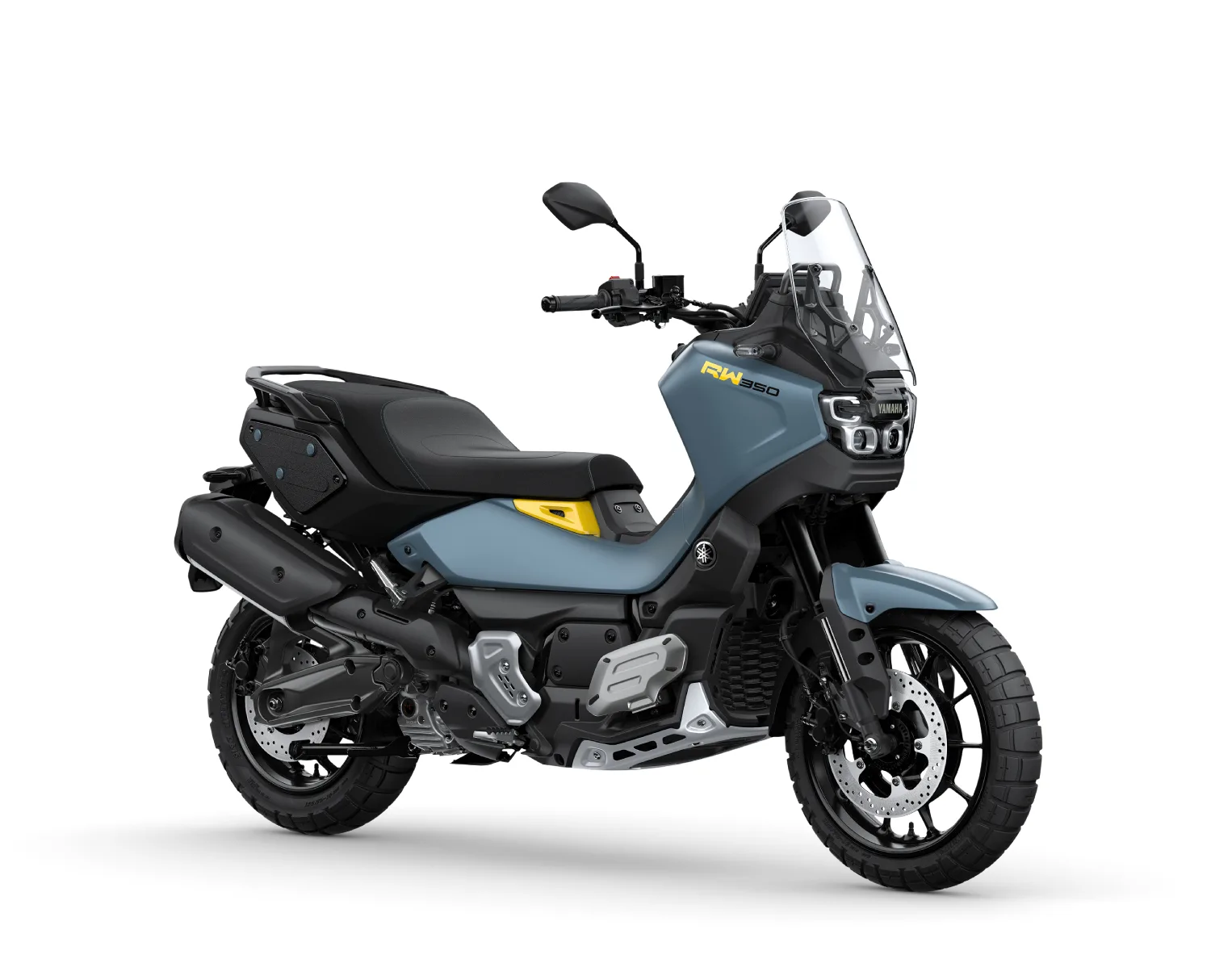
The smaller RW350 takes a different engineering route. Its new 327 cc liquid-cooled single-cylinder engine is paired with a continuously variable transmission. Yamaha calls the chassis arrangement Yamaha Dynamic Ride. The engine is mounted rigidly to the frame while the CVT unit alone moves with the rear suspension. A four-axis balancer is used to control vibration. Yamaha says the arrangement improves rigidity and reduces unsprung weight while retaining the comfort expected from a scooter.
The RW350 uses a diamond-type steel frame, 185 mm of ground clearance, a 37 mm inverted fork and preload-adjustable twin rear shocks. Dunlop D615 block-pattern tires, wide footpegs and foldable footboards support the mixed-surface brief. Electronic throttle control appears on a Yamaha mid-displacement scooter for the first time, enabling ride modes, cruise control and traction control. A five-inch TFT display can work with Y-Connect and Garmin StreetCross through compatible smartphone applications.
What it means for Canadian riders
The Canadian case for the RW family is easy to understand. Many riders want one machine that can commute, carry gear, manage rough cottage roads and remain comfortable when weather changes. Automatic shifting can also open the category to people who are comfortable on scooters but have not wanted a conventional clutch. The unanswered questions are equally important: winter storage demands, Canadian emissions certification, service training, accessory availability and price.
For dealers, the RW700 would not sit neatly beside either a conventional maxi-scooter or a middleweight adventure bike. That could be a strength if Yamaha supports it with clear positioning and demo opportunities. It could also require careful customer education. Ground clearance, tubeless wheels and gravel modes give sales staff tangible features to explain, while the Y-AMT system will be best understood through a test ride.
Yamaha's November 4 announcement establishes the global product. It does not establish a Canadian launch. Canadian buyers should use Yamaha Motor Canada’s model information and dealer quotations to establish local availability, prices and the exact equipment offered. Even with that caution, the RW family is one of the more consequential EICMA debuts because it proposes a practical new answer to a familiar Canadian question: how much motorcycle do you need when one trip can include city traffic, highway miles and gravel?