BENDA has entered the roadster segment with two motorcycles built from the same mechanical foundation but aimed at different uses. The Vinster 700 is the lower, street-focused model. The Vinster X 700 adds a taller front wheel and touring-oriented equipment for riders who want a more rugged stance. Both were unveiled at EICMA 2026 on November 3.
One platform, two interpretations
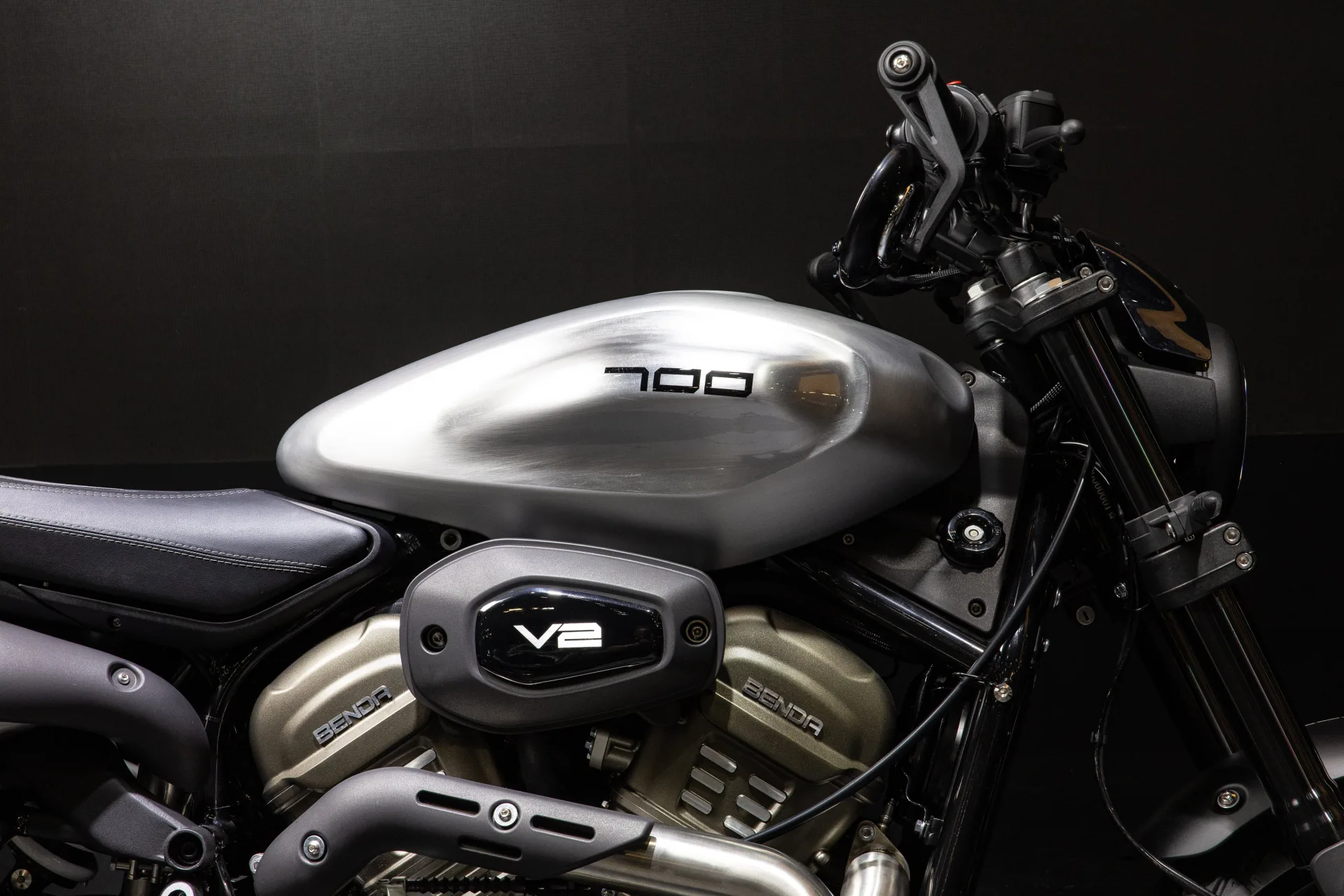
The shared engine is a 691.66 cc liquid-cooled 65-degree V-twin. BENDA lists output at 54 kW, or 73.4 PS, at 9,000 rpm and 68 Nm at 6,500 rpm. Power reaches the rear wheel through a six-speed gearbox, wet multi-plate slipper clutch and chain final drive. The same basic V-twin also appears in BENDA's Rock 707 cruiser and newly revealed Capra 700 adventure motorcycle, showing how the company plans to spread one engine family across several categories.
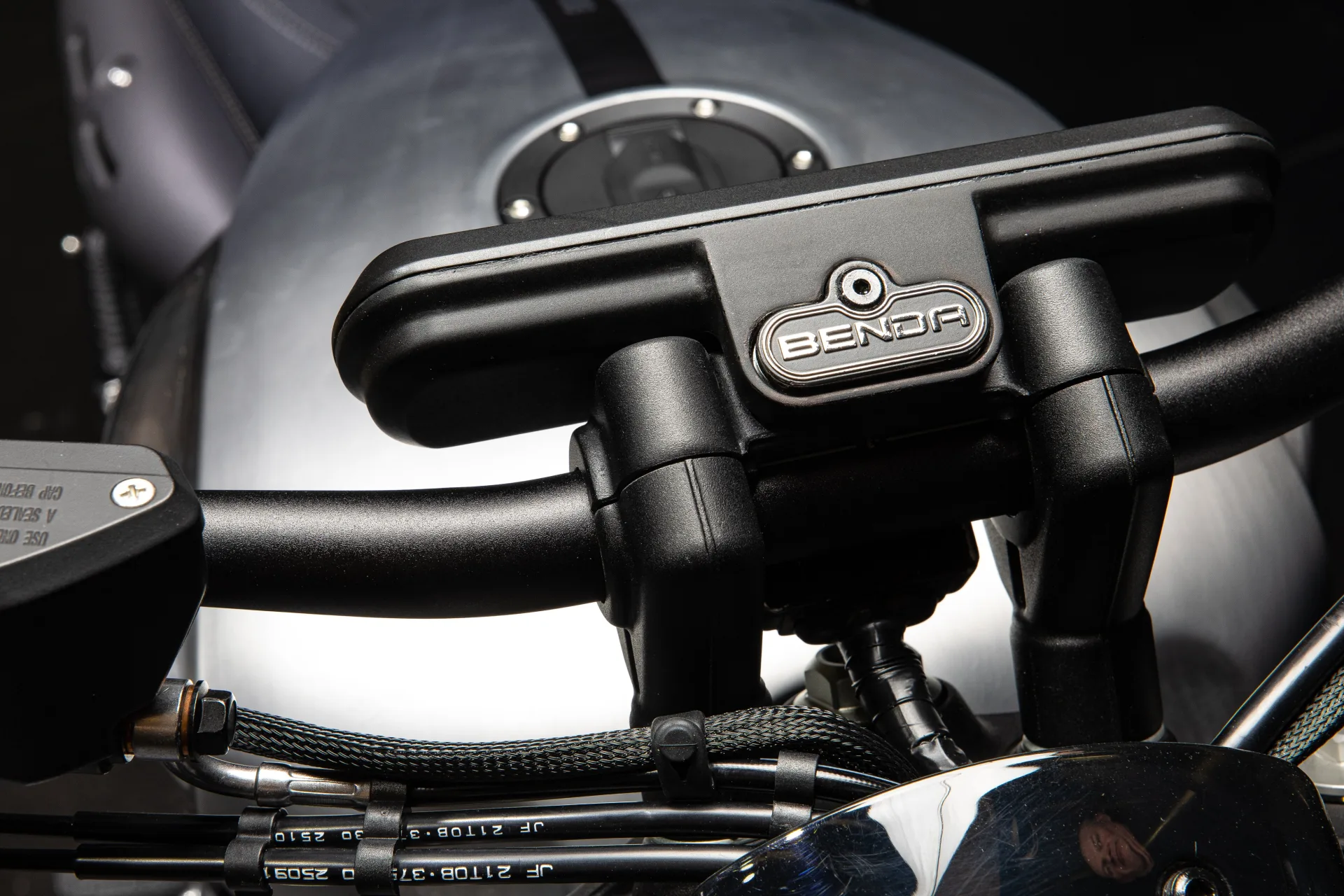
Both Vinster models use a double-cradle frame, aluminum single-sided swingarm, upside-down fork and hydraulic rear suspension. Braking equipment includes a four-piston radial front caliper, rear disc and two-channel ABS. A landscape-format TFT display carries the instruments, while USB-A and USB-C ports support devices on longer rides.
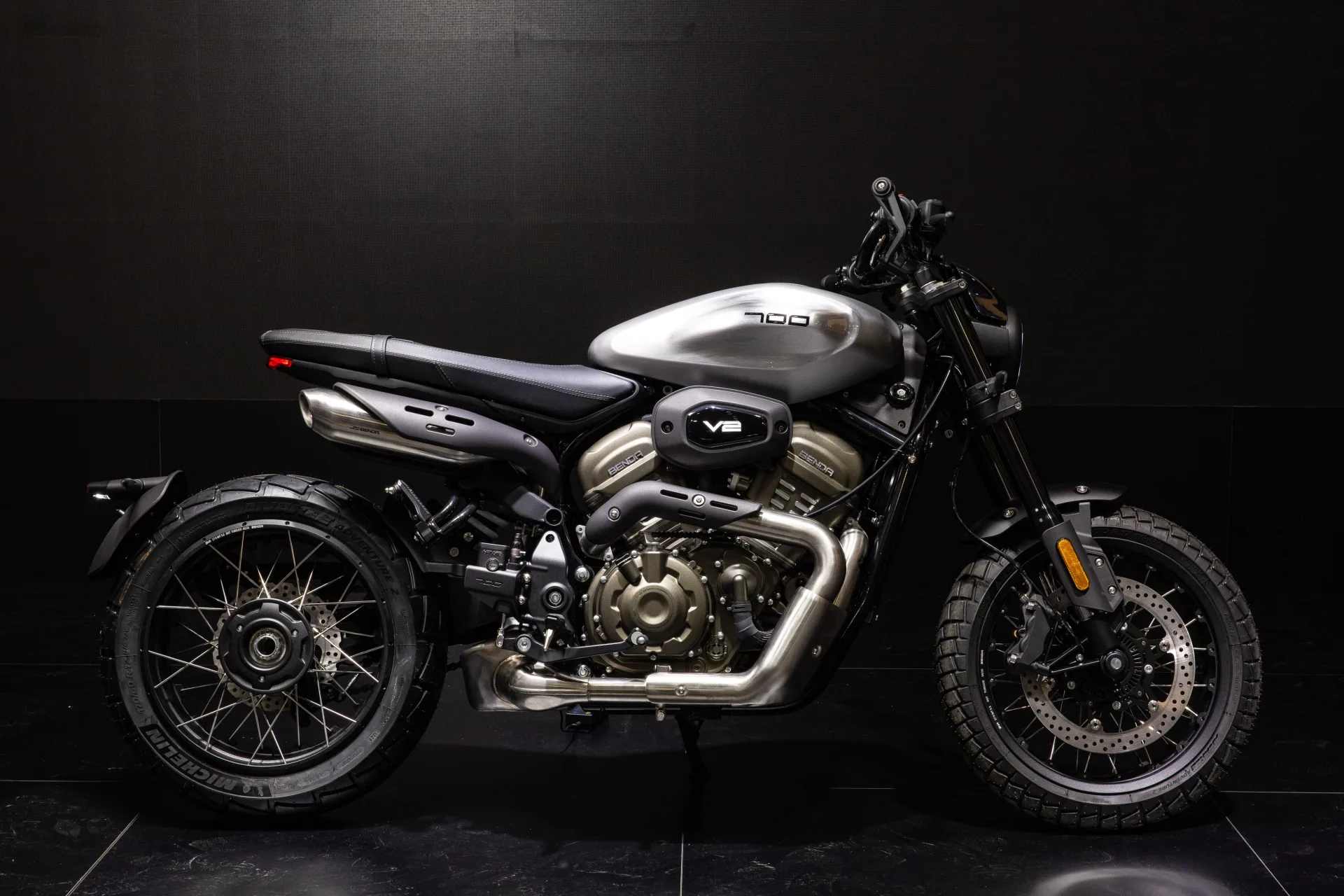
The Vinster 700 uses 17-inch wheels front and rear and has an 830 mm seat. BENDA lists curb weight at 195 kg, a 15-litre fuel tank and a 1,510 mm wheelbase. Its bodywork is deliberately minimal, exposing the V-twin and using a long, flat seat with high-mounted twin exhaust outlets. The proportions place it in the modern roadster class without copying the visual formula of a conventional naked sport bike.
The Vinster X 700 changes the stance with a 19-inch front wheel, an 865 mm seat and a slightly longer 1,518 mm wheelbase. Listed curb weight rises to 200 kg. A side bag, skid plate, handguards, high front fender, taller windscreen and tank rack move it toward light touring and rough-road imagery. BENDA has not described it as a full adventure motorcycle, and the shared 135 mm front suspension travel reinforces that distinction.
Design is the main differentiator
The Vinster pair is notable because the company has not relied on paint and accessories alone to separate the variants. Wheel diameter, seat height, body protection and luggage equipment change the physical package and intended use. The lower standard seat may help ground reach, while the X offers a taller riding position and stronger touring identity. How either steers and balances needs a riding assessment.
BENDA says the design began with the contrast between sculpted bodywork and the exposed mechanical character of the V-twin. That approach is visible in the large engine forms, single-sided swingarm and exhaust layout. The motorcycles have a substantial profile even though their outputs and weights place them in the middleweight class rather than the open category.
The final ride will depend on details that a static reveal cannot prove. Throttle calibration, fueling, suspension damping, heat management and low-speed balance will matter more than the spec sheet. The 15-litre tank could provide practical range if fuel consumption is competitive, but the release provides no consumption figure. It also leaves final production timing and market prices unspecified.
Canadian questions remain unanswered
There is a plausible Canadian audience for both models. The standard Vinster fits riders who want a distinctive urban and weekend motorcycle without moving into litre-class power. The Vinster X could attract commuters and touring riders who value wind protection, luggage and a more upright stance. Heated grips, however, are not listed, and Canadian-market equipment has not been defined.
The European reveal identifies BENDA Motor Europe and a European development focus. It does not set out Canadian availability, distribution, warranty administration or parts support for these models. Those elements are essential for any new brand asking riders to choose it over established manufacturers.
For a Canadian dealer, the product case and the business case are separate. The motorcycles offer recognizable mid-size specifications and distinctive styling. The business case would require reliable supply, diagnostic tools, technician training, warranty reimbursement and parts fill rates. Without those supports, an attractive purchase price can become less important than the risk of a machine waiting for a component.
The Vinster reveal should therefore be treated as a meaningful product debut with an unresolved Canadian path. BENDA has shown a coherent platform strategy and two versions that serve different riders. The next useful milestones are production confirmation, pricing, independent riding impressions and distribution announcements.
If the company can build the support structure, the pair could add real choice to a crowded segment. The Vinster 700 offers the lower and cleaner roadster experience. The Vinster X 700 uses the same engine and chassis to pursue a taller, travel-oriented buyer. That is a more thoughtful distinction than a cosmetic special edition, and it gives BENDA a credible story to tell even before the Canadian questions are answered.