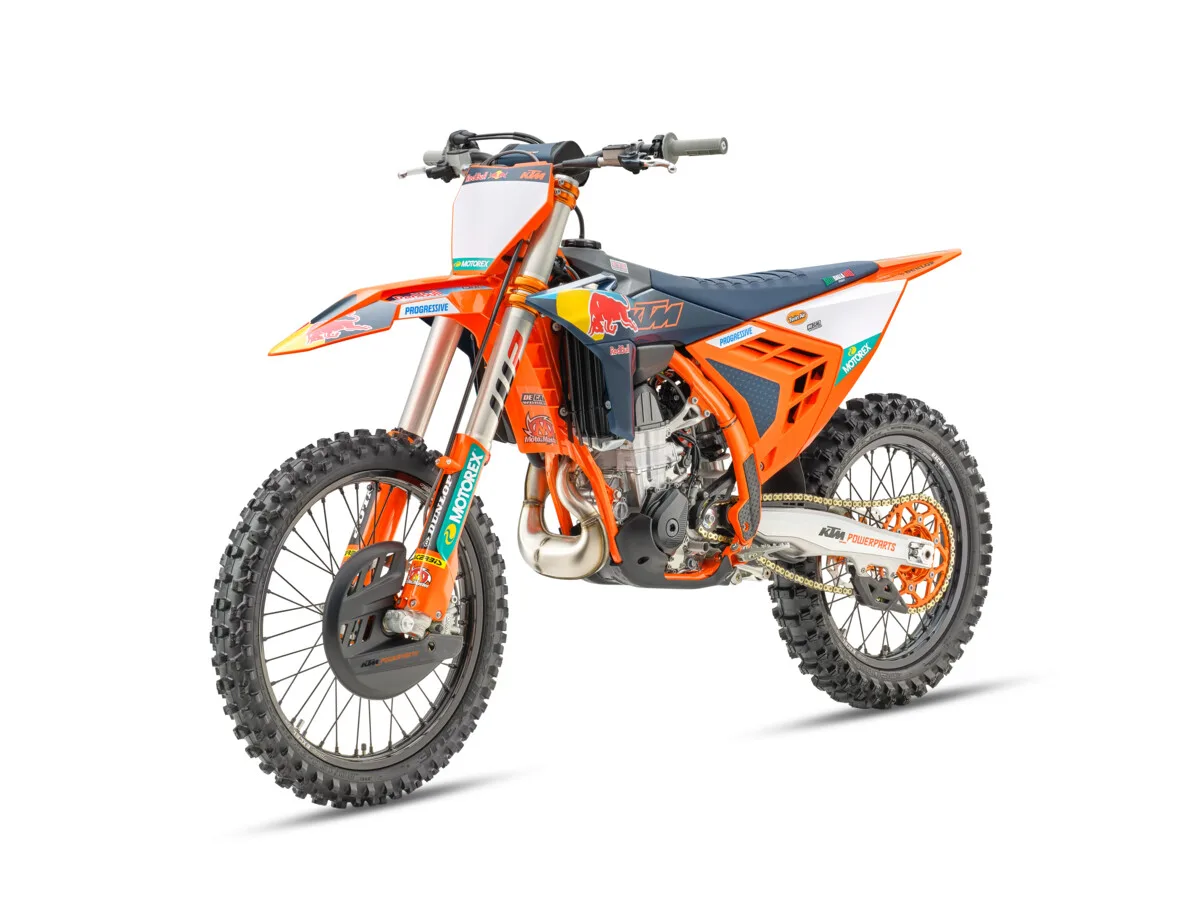
KTM has announced a new generation of 250 SX-F and 450 SX-F Factory Editions, with its Canadian release pointing to availability through authorised dealers from December onward. Unveiled on November 3, the 2027 models introduce changes across the frame, engine, suspension, electronics and rider contact points. This is a substantial technical update rather than a graphics package added to the existing motocross bikes.
For Canadian racers, the timing creates a useful opportunity to prepare for the next season. A December dealership window can allow time to establish a setup, organise parts and plan training before many outdoor tracks reopen. Local allocation and the final purchase total still need to be confirmed with the supplying dealer.
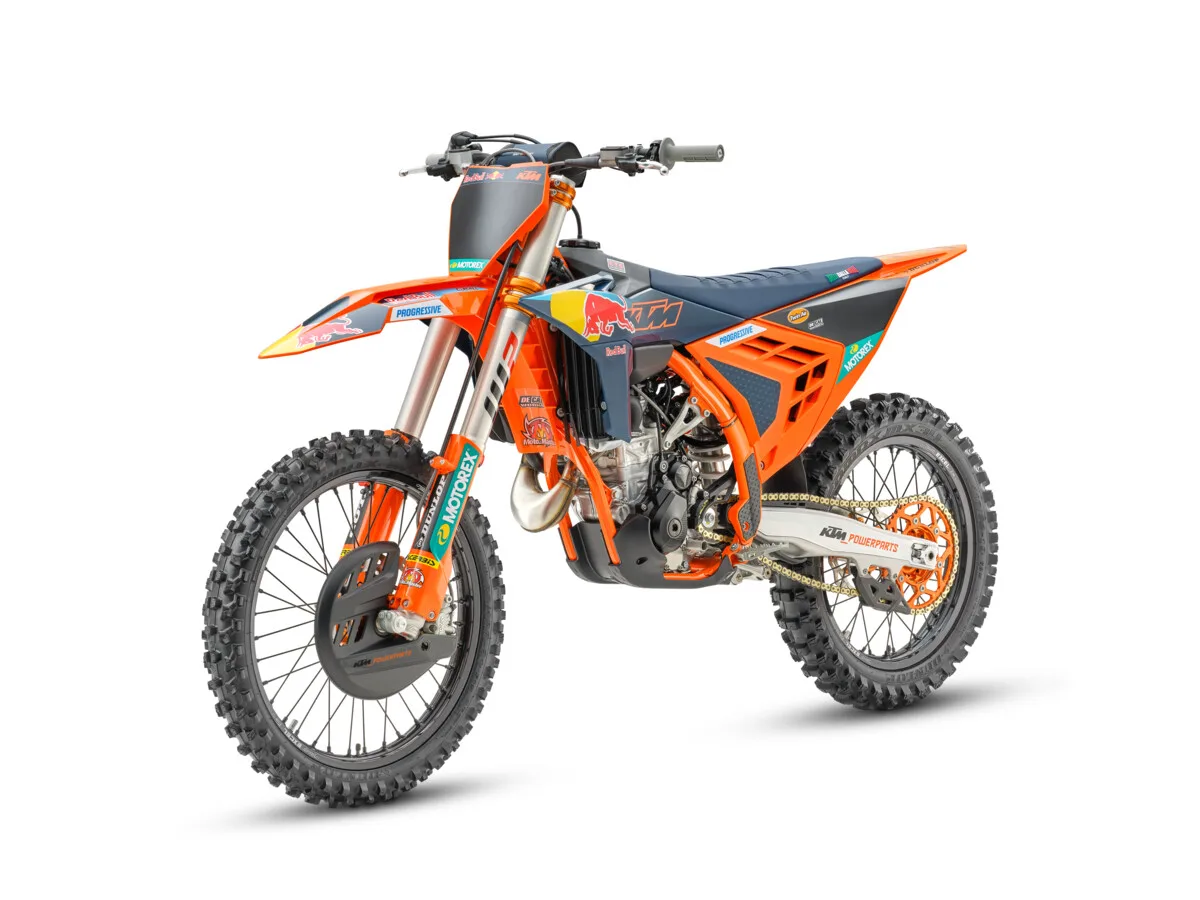
A new chassis and suspension starting point
The Factory Editions receive revised frames, engine mounting points and steering-head geometry, together with an aluminium subframe and new triple clamps. KTM also specifies WP XACT closed-cartridge spring forks and a revised shock. The changes are intended to affect the way the motorcycle communicates with the rider, not simply the number on a scale.
Frame behaviour is particularly important during transitions between braking, turning and acceleration. A rider needs support to place the motorcycle accurately, while still receiving useful information from the tyres. More stiffness in every direction is not automatically the answer. The complete package includes the suspension, geometry, wheel setup and rider position.
That makes a baseline setup essential when moving from an older motorcycle. Familiar clicker positions or preload measurements should not simply be copied across without checking the new owner's manual and spring requirements. A rider may have the same body weight and riding style while needing a different starting point on the revised chassis.
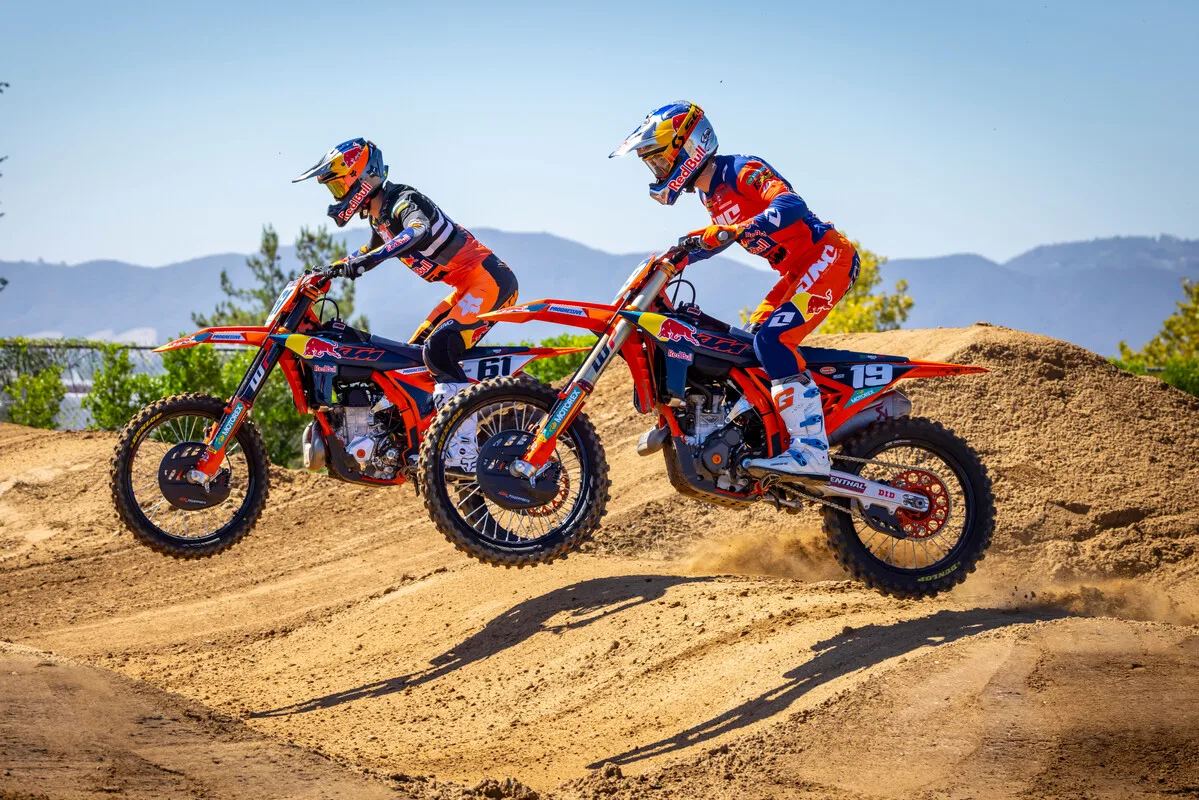
The 250 receives major engine changes
KTM identifies a redesigned valve train, oval intake components and a top-feed injector on the 250 SX-F Factory Edition. The announcement lists a 15.5:1 compression ratio and a 14,500 rpm rev limit. The 450 receives further engine development, with its power peak described as occurring at 10,000 rpm.
Those figures explain different development priorities without providing a substitute for riding the motorcycles. A higher rev limit does not mean every rider should spend every lap against it. Likewise, a larger engine's performance is useful only when the rider can apply it consistently through starts, ruts and corner exits.
The choice between the two models should begin with the intended race class, experience and preferred power delivery. A rider moving to a different displacement also needs to consider fatigue over a complete session. The quickest motorcycle for one lap is not necessarily the motorcycle on which that rider will produce the most repeatable results throughout a day.
Controls and ergonomics are part of the update
The new package includes revised electronic engine management and Quickshifter operation. KTM also describes a slimmer profile, a new seat, greater leg-contact area and updated footpeg surfaces. These changes address how the rider moves and maintains contact with the motorcycle during a lap.
Small differences in the riding position can become significant under repeated braking and acceleration. Riders should assess lever reach, handlebar position and boot contact before making substantial setup changes. A position that feels comfortable while stationary may need adjustment once the rider is standing through rough sections or moving forward to enter a corner.
Electronic functions deserve the same deliberate introduction. The rider should understand the selected settings and the conditions in which the shifting assistance is designed to operate. Learning the controls before a session avoids using valuable track time to work out an unfamiliar interface.
Preparation matters as much as the equipment list
For a Canadian owner collecting a motorcycle during winter, the initial plan should include storage, the delivery inspection and the maintenance schedule that applies to the exact model. Engine hours, riding conditions and the manufacturer's procedures provide a better service basis than an assumed calendar interval copied from another motorcycle.
A practical parts plan also helps protect a short riding season. Filters, brake components and common wear items should be identified before the first event, while any specialised service work can be discussed with the workshop in advance. The aim is to make the motorcycle ready for regular use rather than treat its first track appearance as the beginning of preparation.
The new Factory Editions give KTM's motocross range a clear technical milestone and Canadian buyers a stated dealership window. Their value will depend on how well the revised chassis, engines and controls suit the rider's programme. A careful model choice and a repeatable setup will make more use of that development than selecting a Factory Edition solely for its appearance.