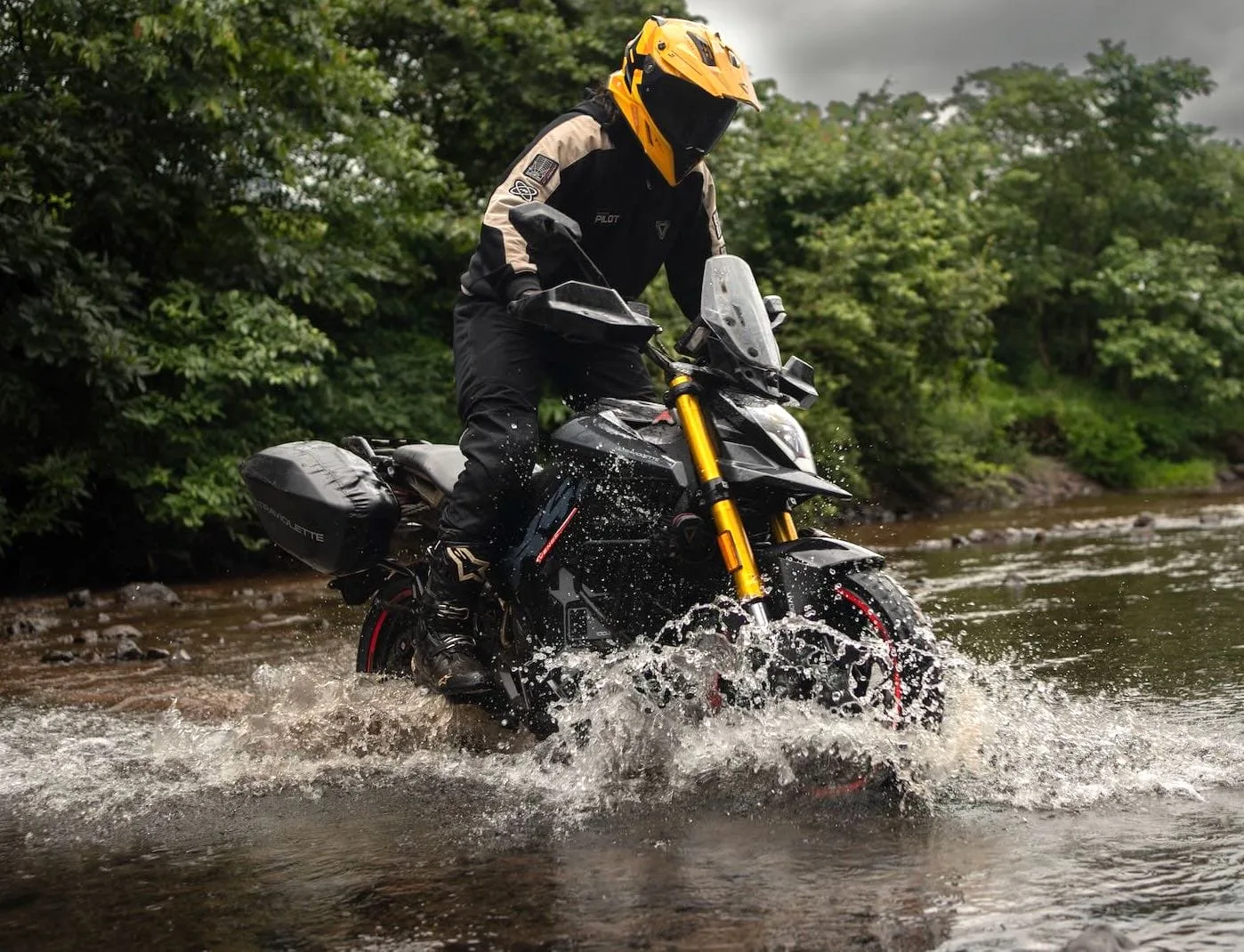
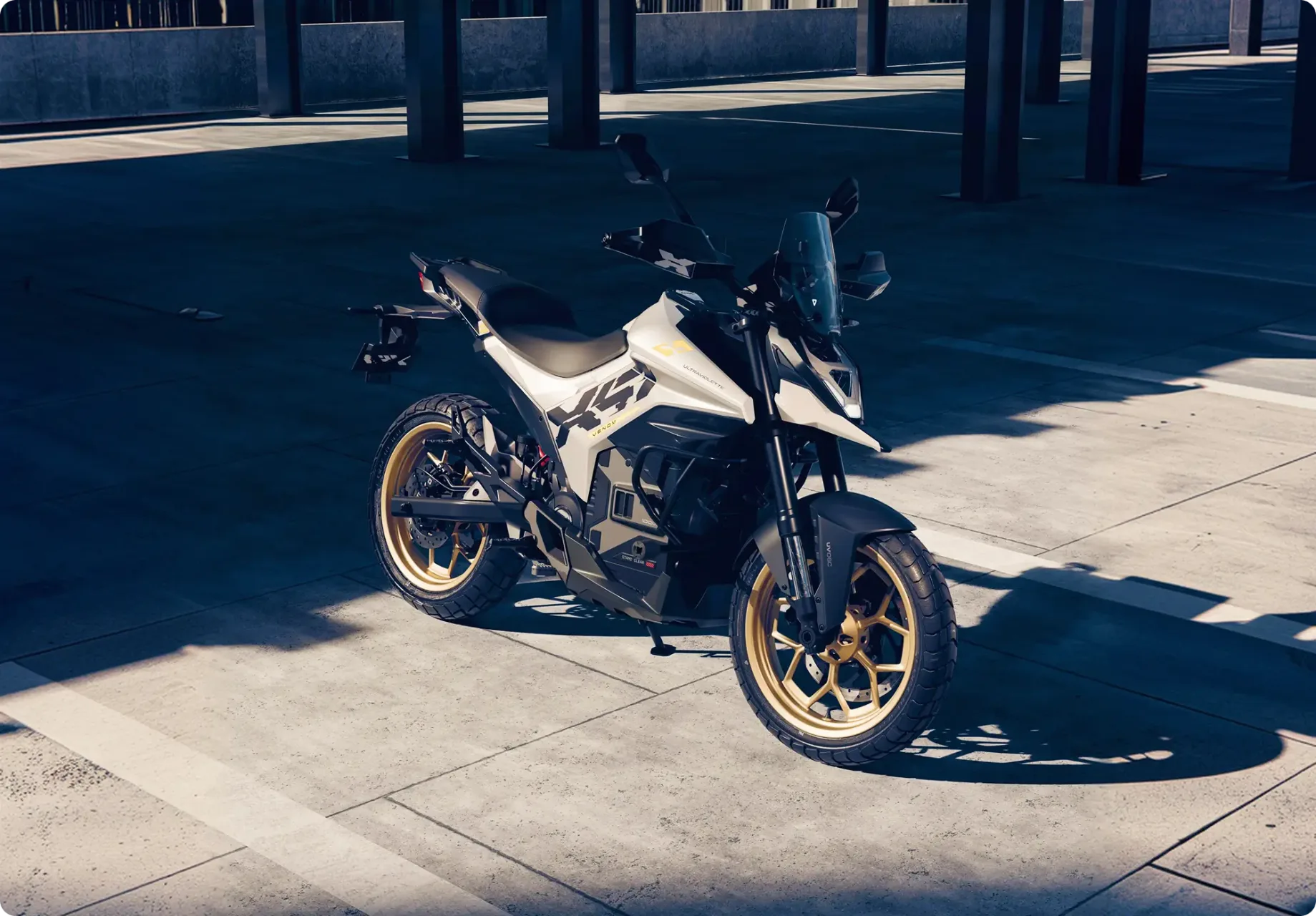
Ultraviolette has brought its X-47 Venom electric crossover to EICMA with a 100-volt electrical architecture, rear radar and integrated cameras. The motorcycle combines urban performance claims with adventure-influenced ergonomics and a safety suite more commonly associated with premium touring machines.
The specification is technically ambitious, although a Canadian launch has not been announced. Ultraviolette describes the VX-100 platform as certified for India and 20 European countries. That certification statement does not establish retail availability in every country, and Canada is not named in the announcement.
A new 100-volt platform
The X-47 uses Ultraviolette's VX-100 architecture. Higher system voltage can deliver a given amount of power with less current, helping reduce electrical losses and heat in cables and power electronics. The benefit depends on the complete design, including the battery, motor controller, cooling and charging system, rather than voltage alone.
EICMA lists a 30 kW peak output, equivalent to about 40 horsepower, and 11 kW of continuous power. The distinction matters because peak output describes short bursts while continuous output reflects sustained operation and type-approval categories. Ultraviolette says the lower continuous figure allows an A1-compatible version in Europe.
Acceleration from zero to 100 km/h is claimed at 5.9 seconds, with an indicated top speed of 155 km/h. Curb weight is listed at 206 kilograms. That is substantial for a motorcycle positioned as agile, so low-speed balance and weight distribution will be important when independent testing begins. Electric motorcycles can carry much of their mass low in the chassis, but the scale number still affects loading, transport and recovery after a tip-over.
Range requires careful reading
The European X-47 page cited by EICMA claims 235 kilometres of urban range on the WMTC urban cycle. Urban-cycle figures benefit from lower speeds and regenerative braking and should not be treated as a mixed Canadian touring range. Sustained highway riding, cold temperatures, headwinds, luggage and heated equipment can reduce real distance significantly.
The battery casing uses die-cast aluminum and carries an IP67 protection rating. Ultraviolette also emphasizes energy density and heat dissipation. Those are positive design points, but Canadian use would require evidence from repeated freeze-thaw conditions, road salt and long periods of storage below freezing. Battery thermal management can protect performance, yet heating the pack also consumes energy.
Charging is handled by a 1.6 kW Type 2 onboard unit. An optional external 3 kW Boost Charger is listed. Type 2 is widely used in Europe, but Canadian infrastructure and connector expectations differ. A Canadian model would need a clearly supported home and public-charging method, electrical certification and transparent charge times from ordinary household service.
Rear radar is the most distinctive feature
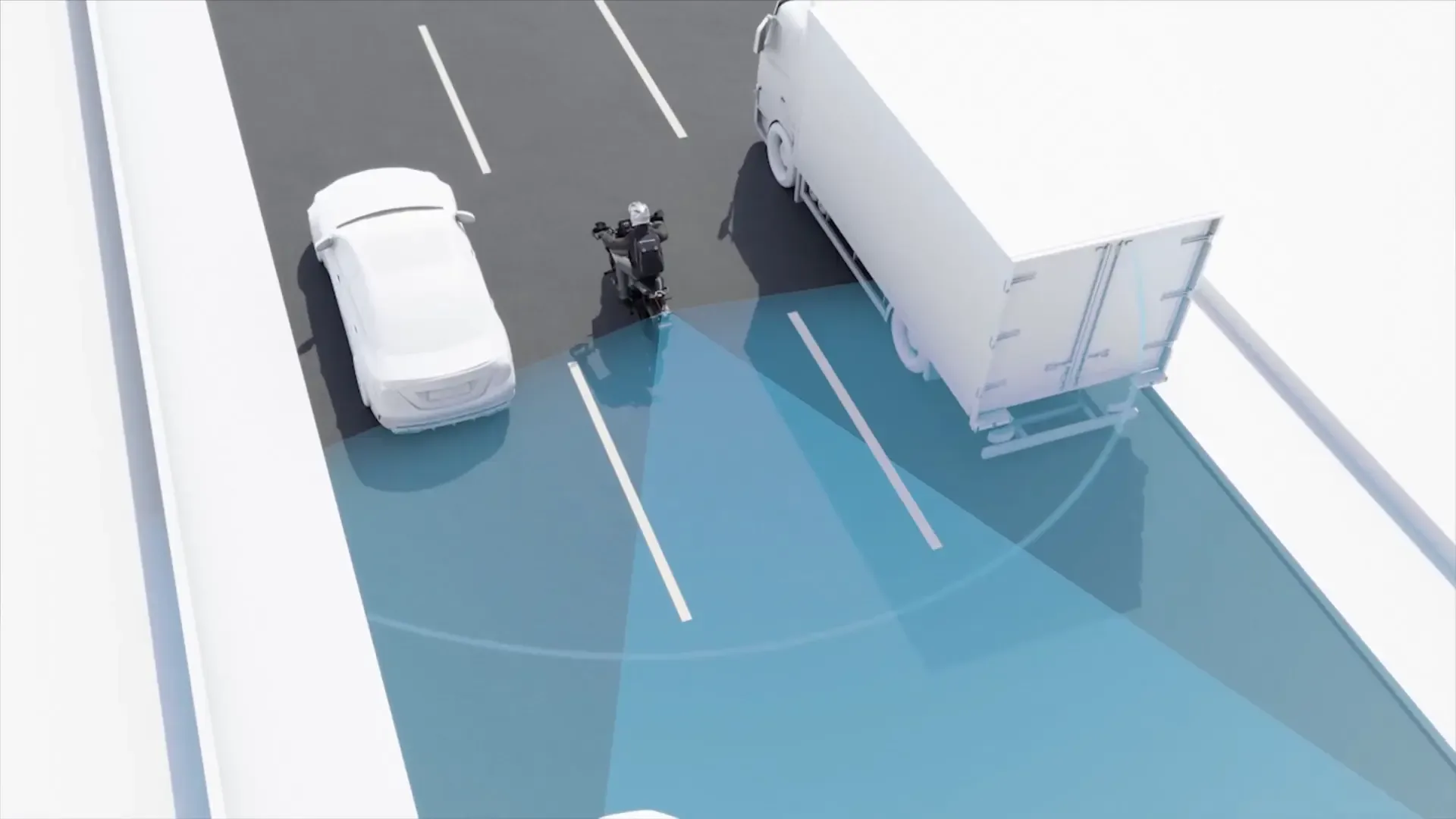
The X-47's rear radar supports blind-spot detection, lane-change assist, an overtaking alert and rear-collision warning. Front and rear dash cameras add recording, and a rear-view camera supports Park Assist. A seven-inch TFT LCD touchscreen manages the interface.
These systems can provide useful information, especially in dense traffic, but they do not replace a shoulder check or defensive riding. Radar coverage, alert timing and false-warning behaviour matter more than the number of functions on a specification sheet. Canadian weather adds another test: spray, snow, dirt and road grime can obscure sensors and cameras. The system needs clear warnings when coverage is degraded.
Radar and cameras also change the service equation. A minor rear impact, body-panel replacement or accessory installation can affect sensor alignment. Dealers need calibration procedures, diagnostic tools and access to replacement components. Owners need to know whether a warning means a blocked sensor, a software issue or a hardware fault.
Crossover ergonomics without a Canadian route yet
Ultraviolette positions the X-47 between street and adventure categories. The official product page highlights upright ergonomics, longer-travel suspension, increased ground clearance, an aluminum subframe and an 820 mm seat height. Switchable dual-channel ABS, traction control, cruise control and multiple regenerative-braking levels support the mixed-use idea.
The motorcycle's actual Canadian fit will depend on tires, suspension calibration, luggage capacity and protection for the battery and charging hardware. Gravel-road capability is different from remote backcountry suitability. A rider travelling far from a service centre needs confidence in range forecasting, recovery procedures and parts support.
A Canadian introduction would require more than the current European product specification. Transport Canada compliance, provincial registration, insurance classification, warranty coverage and high-voltage technician training would all need to be established. Battery replacement cost and long-term parts supply are equally important for resale.
The X-47 Venom shows how quickly electric motorcycles are adopting features beyond propulsion. Its 100-volt architecture addresses efficiency and charging, while radar and cameras target active safety. The next meaningful update for Canadian readers will be a named market-entry plan with homologation, local charging support, warranty terms and independently measured range in mixed and cold-weather use.