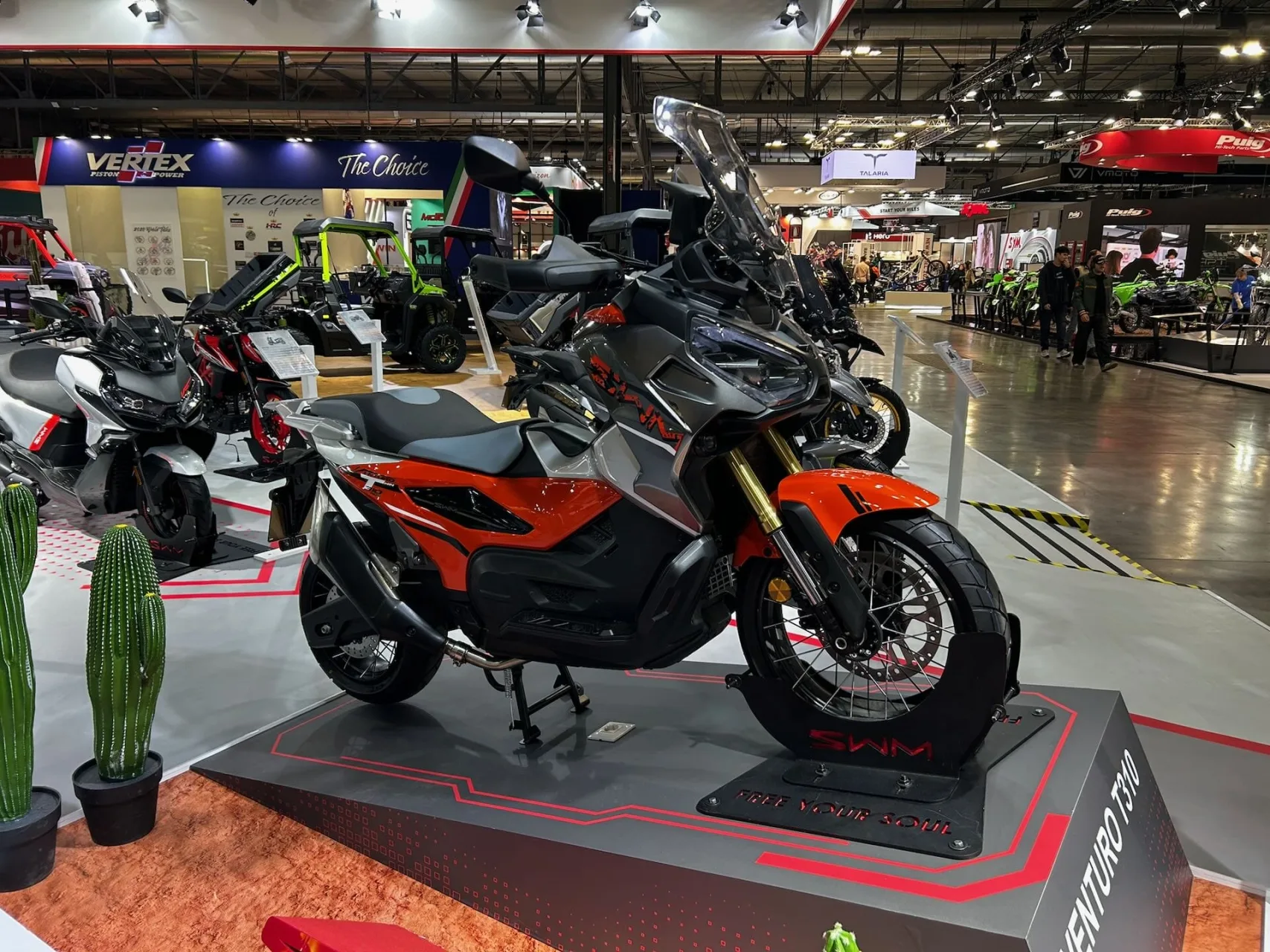
EICMA’s Nov. 8 report details SWM’s Venturo T310 ADV, an adventure-styled scooter built around an unusual 305 cc twin-cylinder engine, a continuously variable transmission and large spoked wheels.
The engine produces 30 hp, or 22 kW, and 27 Nm of torque. SWM arranges the two cylinders horizontally and uses a 180-degree crankpin offset. The layout gives the Venturo a technical identity that is different from the single-cylinder engines common in many scooters of similar displacement.
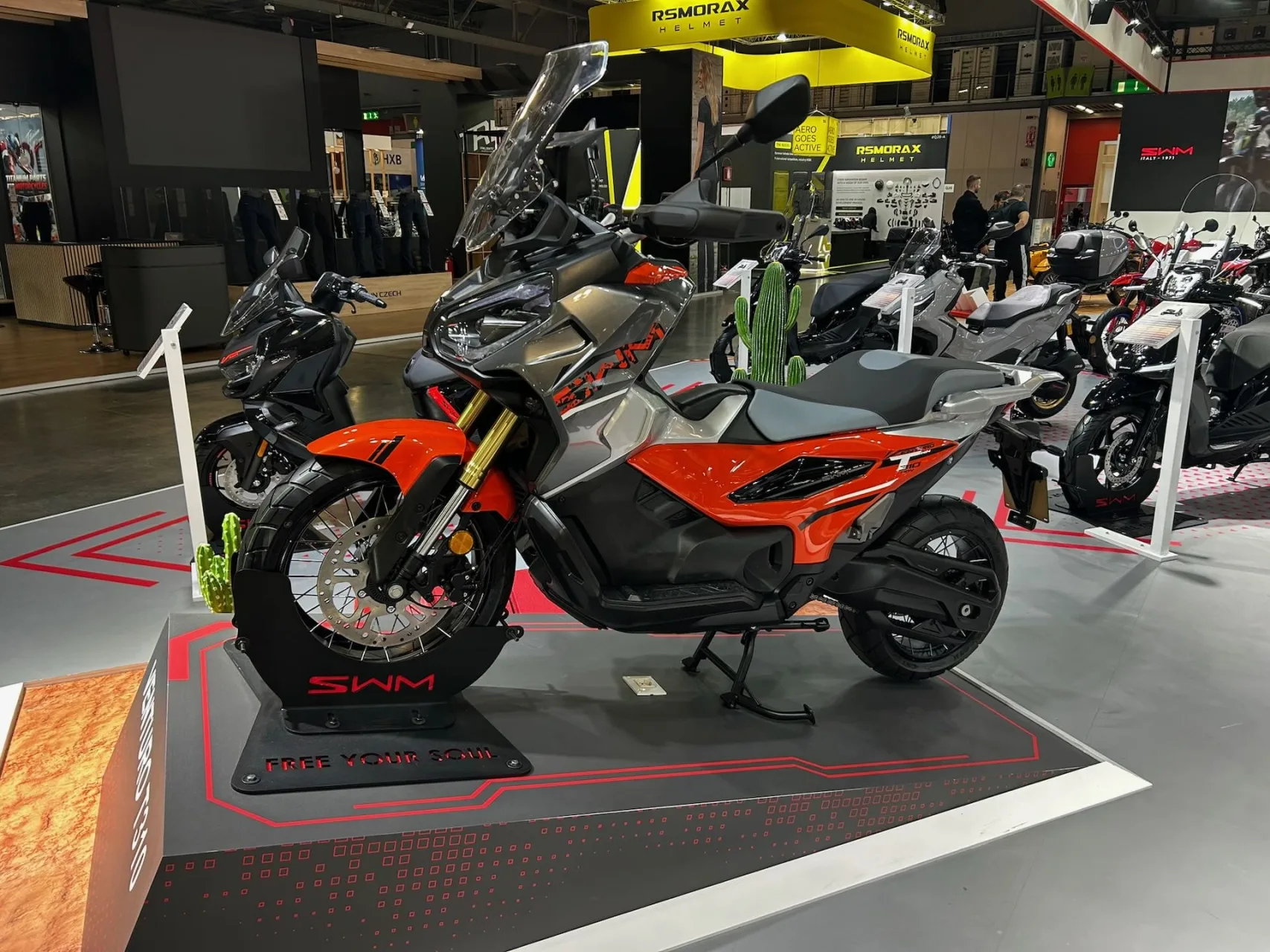
A twin-cylinder scooter with CVT convenience
SWM’s own show material identifies a CVT and dual-channel ABS. The combination is aimed at riders who want twist-and-go operation without dropping to a small urban platform. A twin can potentially spread power more smoothly than a large single, although the final character will depend on engine tuning, CVT calibration and vehicle gearing.
The published 30 hp output is not intended to challenge large adventure motorcycles. It should instead be considered in relation to city traffic, secondary-road travel and the weight the engine has to move. SWM says curb weight stays below 200 kg, but it has not provided the exact figure in the current material.
That “below 200” statement is useful as a boundary, not a final comparison number. Buyers will need the certified curb weight and payload rating before evaluating the machine against established maxi-scooters and smaller adventure bikes.
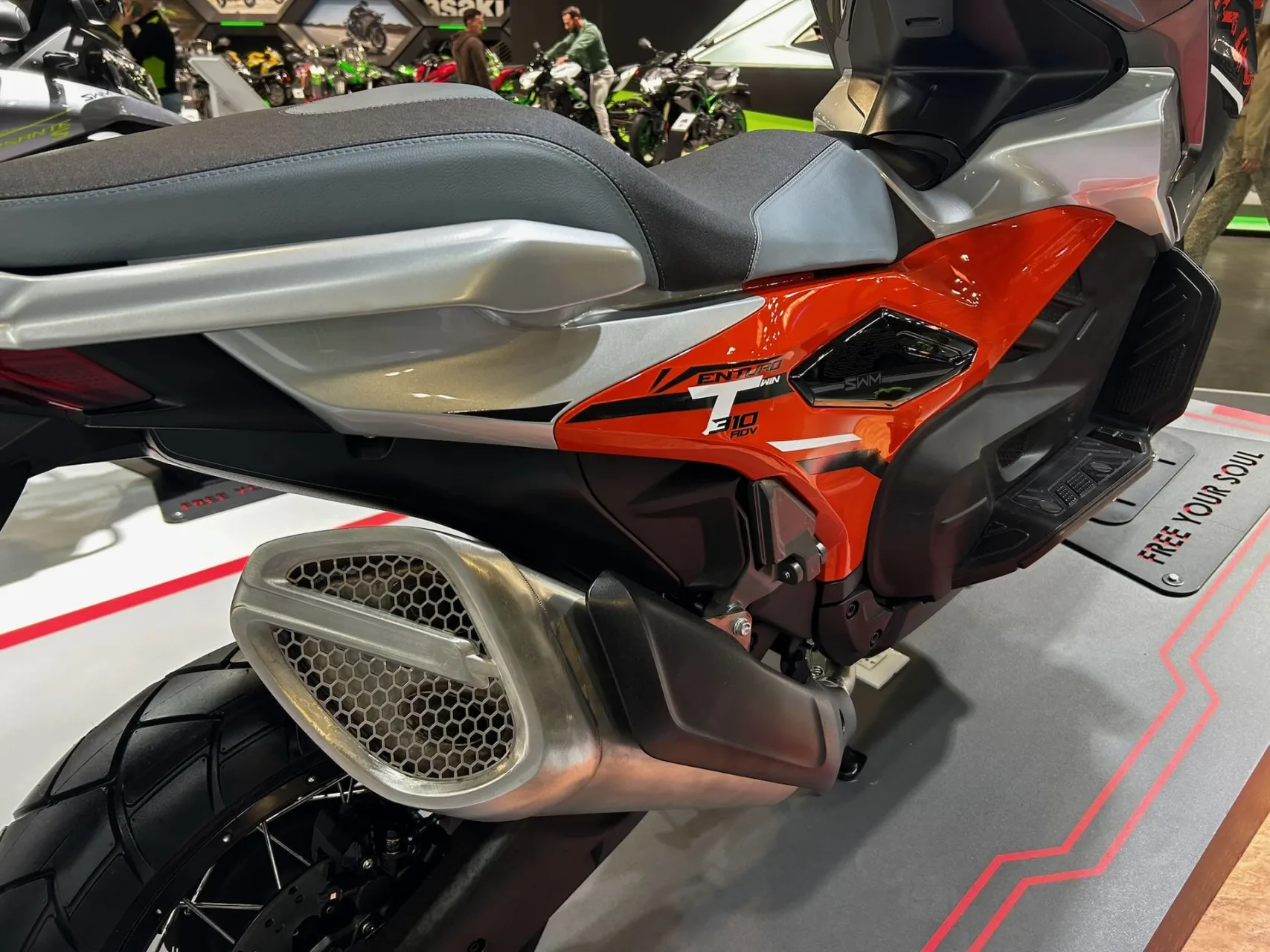
Large wheels change the proposition
The Venturo uses a 17-inch front wheel and a 15-inch rear, both spoked and fitted with tubeless semi-knobby tires. The larger front is a key part of the adventure positioning. It can roll through potholes and broken pavement more easily than a small scooter wheel, while the 15-inch rear leaves more room for bodywork and storage than a matching full-size motorcycle wheel might allow.
Spoked construction supports the visual and functional theme, and tubeless tires can simplify puncture repair compared with a conventional tube-type setup. Exact rim construction, tire sizes and approved replacement options will still matter, particularly in Canada where riders may want choices suited to cold, wet or shoulder-season conditions.
The semi-knobby tread suggests gravel-road intent, but it does not turn the Venturo into an enduro motorcycle. Ground clearance, suspension travel, wheel strength, air-intake location and underbody protection will determine how confidently it can leave pavement. Those figures have not yet been fully published.
Accessible seat height and adventure equipment
Seat height is listed at 790 mm. That is one of the model’s most practical numbers because it may make the Venturo manageable for riders who like upright adventure ergonomics but find tall motorcycles difficult at stops.
Seat width and floorboard shape will influence the real reach to the ground, so a showroom test will remain more useful than the number alone. Passenger space, under-seat capacity and load limits are also still needed before the machine can be assessed as a touring tool.
The equipment visible and described at EICMA includes handguards, a variable-section aluminum handlebar, a large digital instrument display and an integrated dash camera between the headlights. The exhaust ends in a honeycomb-patterned grille, while the twin headlight arrangement gives the front a distinctly motorcycle-like appearance.
An integrated camera can be useful for recording a ride or documenting an incident, but buyers will need details on resolution, storage, overwrite behaviour and weather sealing. Recording controls and file access will also affect everyday usability.
Where it could fit in Canada
The Venturo’s layout could appeal to Canadian riders who commute through rough urban pavement, travel on maintained gravel roads or want a lower, simpler alternative to a manual-transmission adventure motorcycle. The windscreen, upright position and large front wheel all point toward practical mixed-surface use.
Canadian availability is not confirmed. SWM has a Canadian powersports distributor for Trailhunter ATVs and Nomader side-by-sides, but that operation does not currently establish that the Italian motorcycle range or the Venturo T310 ADV will be sold through the same channel.
That distinction is important. A brand name on Canadian off-road vehicles does not automatically confirm motorcycle certification, parts stocking, dealer training or warranty coverage for a new scooter.
What dealers and riders still need
Before the Venturo can be judged as a Canadian retail product, SWM would need to identify the importer, certification status, price, colours, warranty, dealer network and delivery schedule. Full technical data should include suspension travel, ground clearance, braking dimensions, exact curb weight, payload, fuel capacity and storage volume.
Dealers would also need CVT service procedures, diagnostic tools and a reliable supply of body panels, camera components, belts, filters and wheel parts. Those ownership details matter more in a new category crossover because customers may compare the machine with both scooters and motorcycles.
The EICMA specification gives the Venturo T310 ADV a distinctive combination of hardware. The twin-cylinder engine, large spoked wheels, low seat and dash camera create a distinct combination. Whether that combination reaches Canadian roads will depend on the distribution and support announcement that has not yet been made.