Modern powersports service departments are being asked to diagnose machines that increasingly resemble rolling computer networks.
TOPDON USA is targeting that problem with a new professional diagnostic platform built specifically for motorcycles, ATVs, UTVs, side-by-sides and marine applications.
The company introduced the ONE Moto on September 22, describing it as its expansion into broader powersports and recreational-marine diagnostics. TOPDON says the platform provides full-system coverage across more than 100 vehicle makes, with dedicated marine support for nine manufacturers including Honda, Yamaha, Kawasaki and BRP.
For dealerships and independent repair shops, the significance is less about another tablet entering the tool market and more about the growing complexity of the vehicles arriving in service bays.
Powersports diagnostics are no longer simple
A modern motorcycle can contain electronic throttle control, ABS, traction control, ride modes, electronic suspension, immobilizer systems, digital dashboards and multiple networked modules.
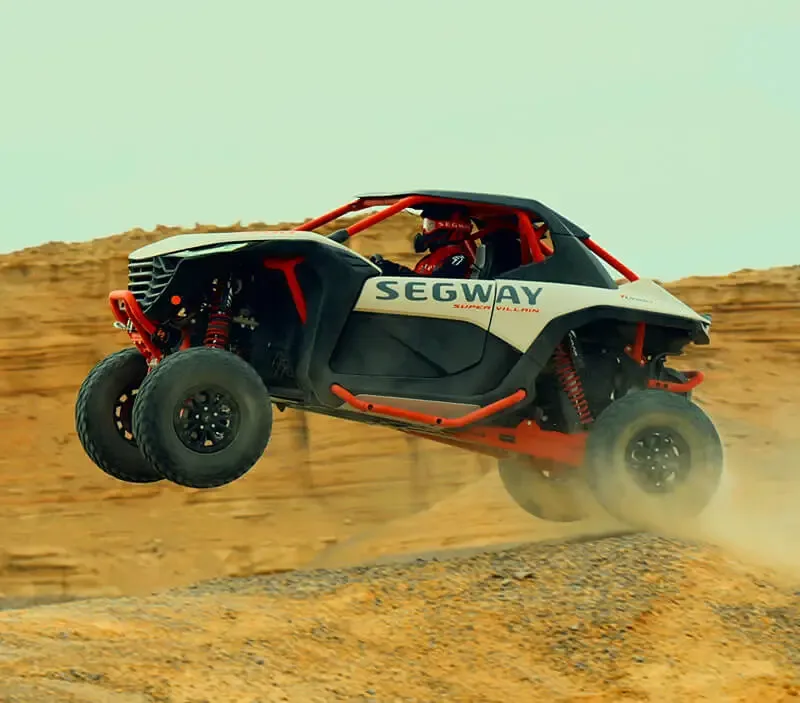
Side-by-sides have followed a similar path.
High-end machines now offer touchscreen displays, electronically controlled drivetrains, selectable steering characteristics, connected mobile applications and increasingly sophisticated engine-management systems.
Personal watercraft and marine engines add another layer of proprietary electronics.
That evolution creates a problem for multi-line dealerships and independent technicians. A shop servicing several brands can need access to multiple diagnostic systems, cables, software subscriptions and procedures.
TOPDON is positioning ONE Moto as a way to consolidate more of that work into one platform.
More than reading fault codes
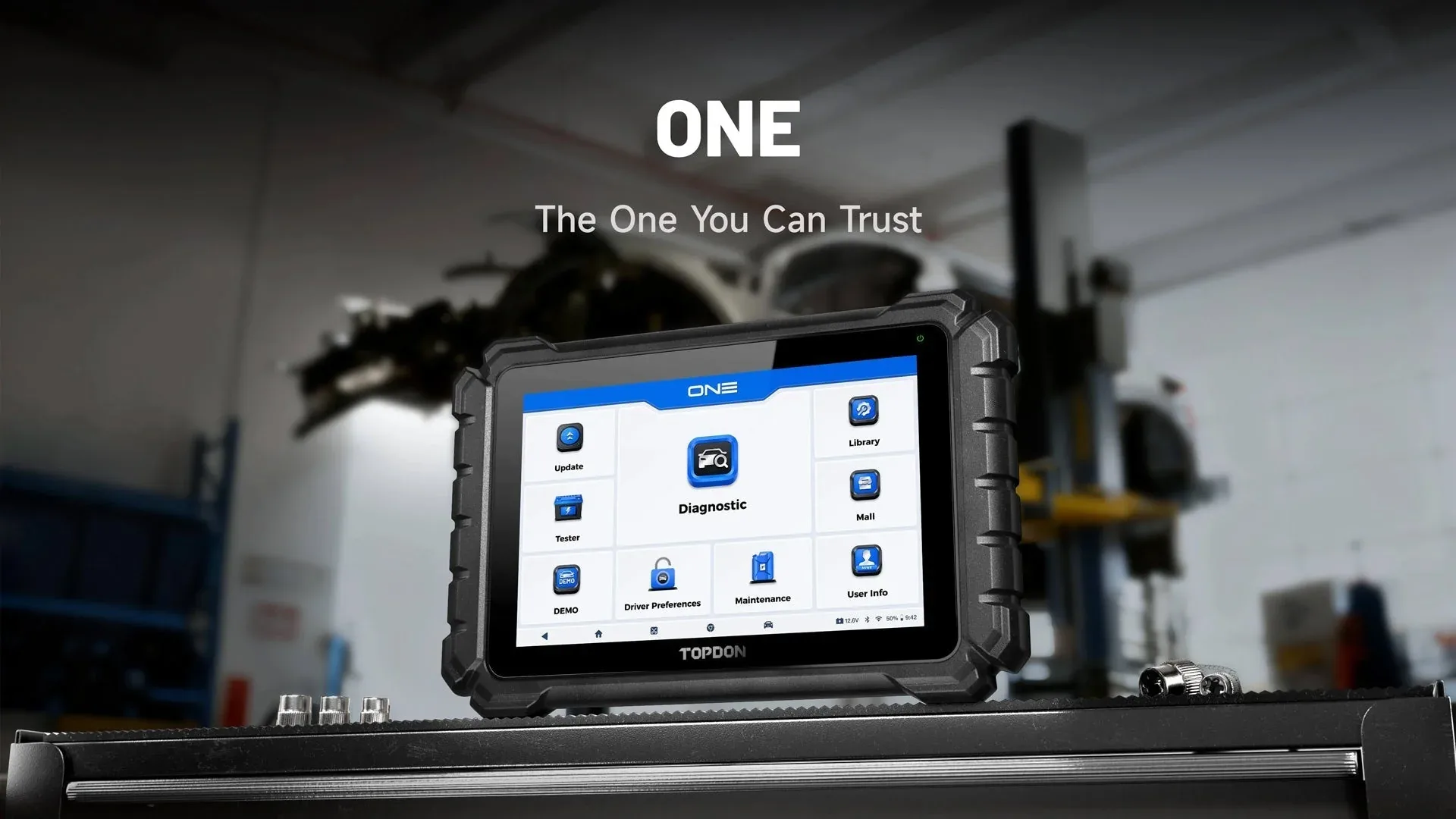
The ONE Moto is a 10.1-inch Android-based diagnostic tablet connected through TOPDON's ONE VCI interface.
The manufacturer lists support for reading and clearing diagnostic trouble codes, examining live data, accessing ECU information and performing full-system scans. It can also provide bi-directional controls, allowing a technician to command certain components during diagnosis instead of simply waiting for the vehicle to activate them.
Examples listed by TOPDON include fuel pumps, cooling fans, ABS components, injectors and relays.
That capability can shorten troubleshooting considerably.
If a cooling fan is not operating, for example, a technician needs to determine whether the problem is the fan itself, wiring, a relay, a control module or the conditions that normally command the fan on. Being able to request component operation electronically helps isolate parts of that chain.
TOPDON also lists service functions covering tasks such as oil resets, throttle-related adaptations, ABS bleeding, clutch learning, battery-system resets and tire-pressure-monitoring functions where supported.
Advanced capabilities vary by make and vehicle, an important distinction with any aftermarket diagnostic system.
ECU access is becoming more important
One of the most notable specifications is the company's claim of advanced ECU programming access for nine motorcycle manufacturers.
TOPDON's product documentation lists functions such as ECU matching, software updates and module configuration on supported vehicles. It also lists key programming and immobilizer-related service capabilities.
Those features matter because replacing an electronic component on a modern motorcycle can involve much more than installing the physical part.
A module may need to be recognized by the vehicle, configured, calibrated or paired with another system before the repair is complete.
That is one reason diagnostic-tool access has become an increasingly important part of whether independent shops can economically service newer vehicles.
Built for multi-line service departments
TOPDON lists 105 supported vehicle makes in its current ONE Moto specification sheet and supplies a connector kit containing 36 cables or adapters.
The tablet itself uses an eight-core 2.0 GHz processor, 128 GB of storage, a 10,000 mAh battery and a 16-megapixel rear camera. Wireless connectivity includes Bluetooth and dual-band Wi-Fi.
Those hardware specifications are not particularly meaningful by themselves. The value will depend on software coverage: exactly which functions work on which model years and which control modules can actually be accessed.
For a dealer considering the tool, that coverage matrix should be checked against the brands and model years that actually pass through its service department.
A shop that predominantly services one OEM may still be better served by factory diagnostic equipment.
A multi-line dealership, used-powersports retailer or independent shop has a different problem. Those businesses routinely encounter motorcycles and off-road machines from brands they do not represent.
That is where broad aftermarket diagnostic coverage becomes more compelling.
Marine support widens the potential audience
TOPDON's move into marine diagnostics is also notable for Canadian dealers.
Many Canadian powersports businesses do not operate within a single category. A dealership may sell motorcycles and ATVs while also servicing personal watercraft, outboard engines or other recreational products.
TOPDON says ONE Moto supports nine marine brands and is designed for both workshop and dockside environments.
A tool capable of following a technician from a motorcycle bay to a side-by-side and then to a marine product could reduce the amount of specialized equipment needed for basic diagnostic work.
It could also be useful in used inventory departments.
As dealers expand used-vehicle sourcing and take more trades from outside their franchise brands, accurately diagnosing warning lights and electronic faults before a unit reaches the retail floor becomes increasingly important.
The economics
TOPDON currently lists the ONE Moto at US$1,950 on its U.S. store, with two years of software updates included. The listed renewal cost after that period is US$499 per year. Canadian pricing and distribution should be confirmed separately rather than inferred from the U.S. listing.
That makes the purchase decision a straightforward shop-efficiency calculation.
If the system prevents a technician from spending an hour chasing a fault that could have been identified in minutes, or allows a dealership to complete repairs it would otherwise send elsewhere, the cost can be recovered quickly.
But diagnostic coverage is never universal, and shops should verify specific vehicle compatibility before treating any aftermarket platform as a complete replacement for OEM equipment.
Electronics are changing the service business
The larger story is the direction of powersports service.
Mechanical skill remains essential, but technicians now need to understand networks, sensors, calibration routines and software alongside engines, suspension and drivetrains.
That creates a growing technology investment for dealerships.
TOPDON's ONE Moto is one response to that change: a tool designed around the idea that a modern powersports technician may need to diagnose a motorcycle in the morning, a UTV after lunch and a marine product before the end of the day.
As powersports vehicles continue adding electronic features, tools capable of moving between those categories are likely to become increasingly important parts of the service department.