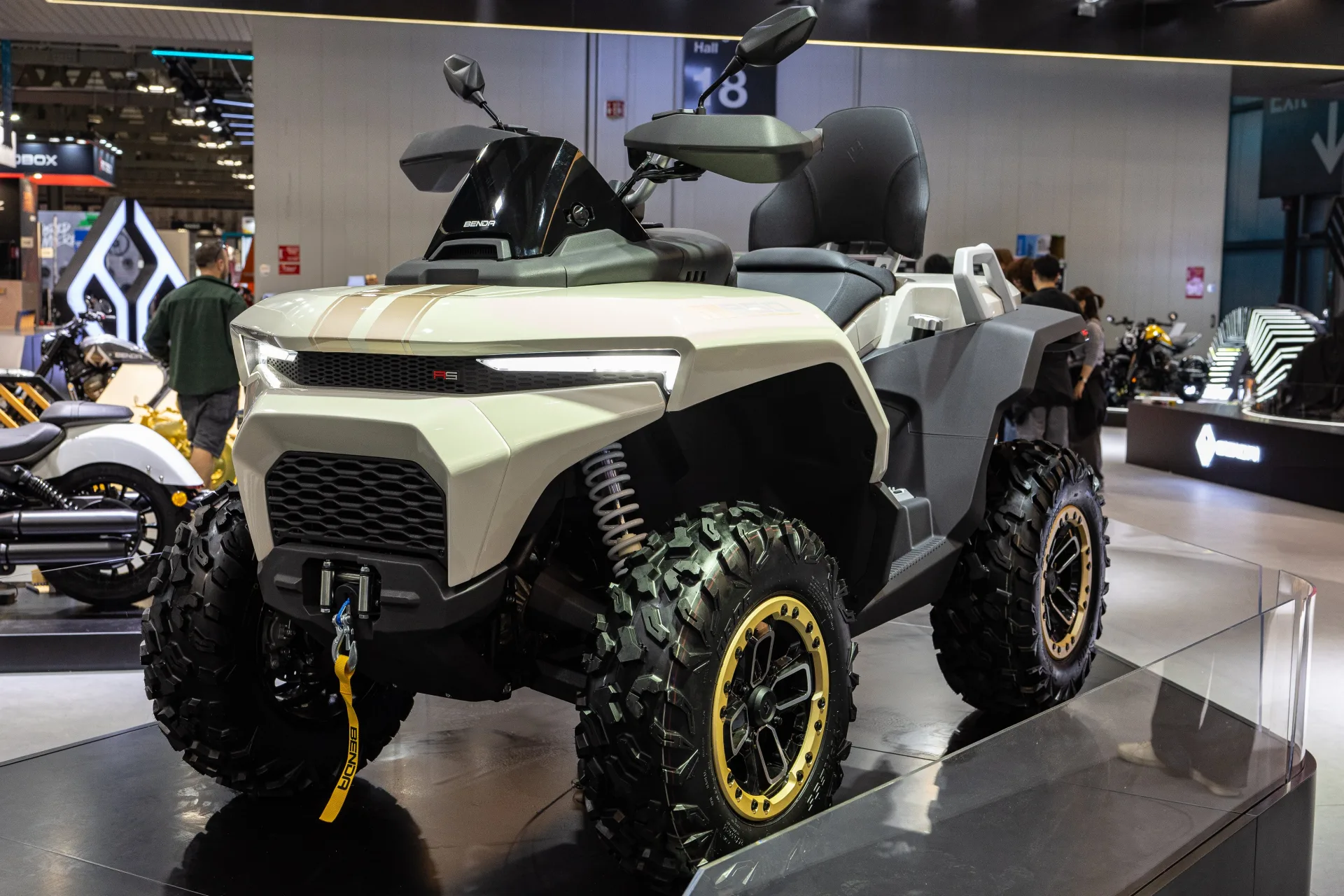
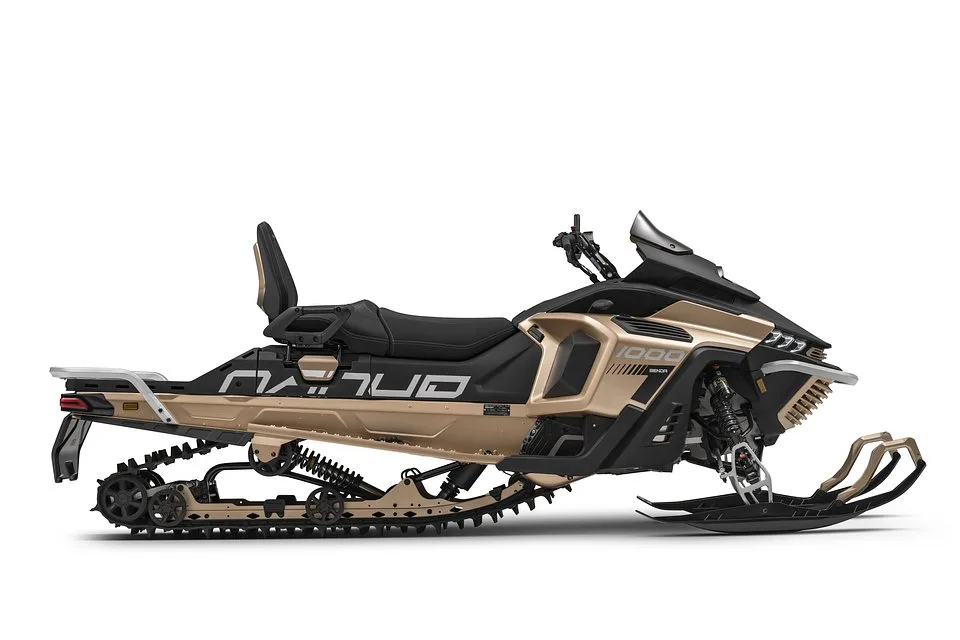
BENDA used EICMA 2026 to show that its powersports ambitions extend well beyond street motorcycles. The company presented four products covering two categories that matter directly to Canadian riders and dealers: the Redstone 400 and Redstone 850 R2 ATV prototypes, plus the NANUQ 1000 and NANUQ 300 snowmobile concepts. The announcement does not establish Canadian availability, and BENDA is explicit that specifications and timing can change. Even so, the breadth of the reveal makes it more than a styling exercise.
Two additions to the Redstone ATV family
The Redstone 400 is intended as a compact, accessible entry point. Its preliminary specification uses a 343.5 cc liquid-cooled SOHC V-twin producing about 24.2 kW and 30.5 Nm. A CVT, selectable two- and four-wheel drive, and electronically engaged differential locks give the concept the basic hardware expected of a recreational utility ATV.
BENDA lists dual A-arm suspension, adjustable hydraulic shocks and 265 mm of ground clearance. The prototype's smaller platform is meant to make the Redstone family more approachable without removing the four-wheel-drive capability and rugged appearance associated with the name. Production timing and market introduction remain unconfirmed.
The Redstone 850 R2 sits between BENDA's existing 550 and 1000-class machines. Its preliminary 877.5 cc liquid-cooled DOHC V-twin is paired with a CVT offering high and low ranges, selectable two- and four-wheel drive, and differential lock. BENDA lists 230 mm of travel at both ends, 320 mm of ground clearance and 27-inch tires. Independent torsional trailing-arm rear suspension moves the design toward the equipment level expected in a substantial work-and-recreation ATV.
Those figures are useful, but the word prototype matters. Final output, calibration, dimensions, weight, durability targets and market equipment can all change. Canadian riders should not compare these concepts directly with showroom models until certified production specifications exist.
NANUQ moves BENDA onto snow
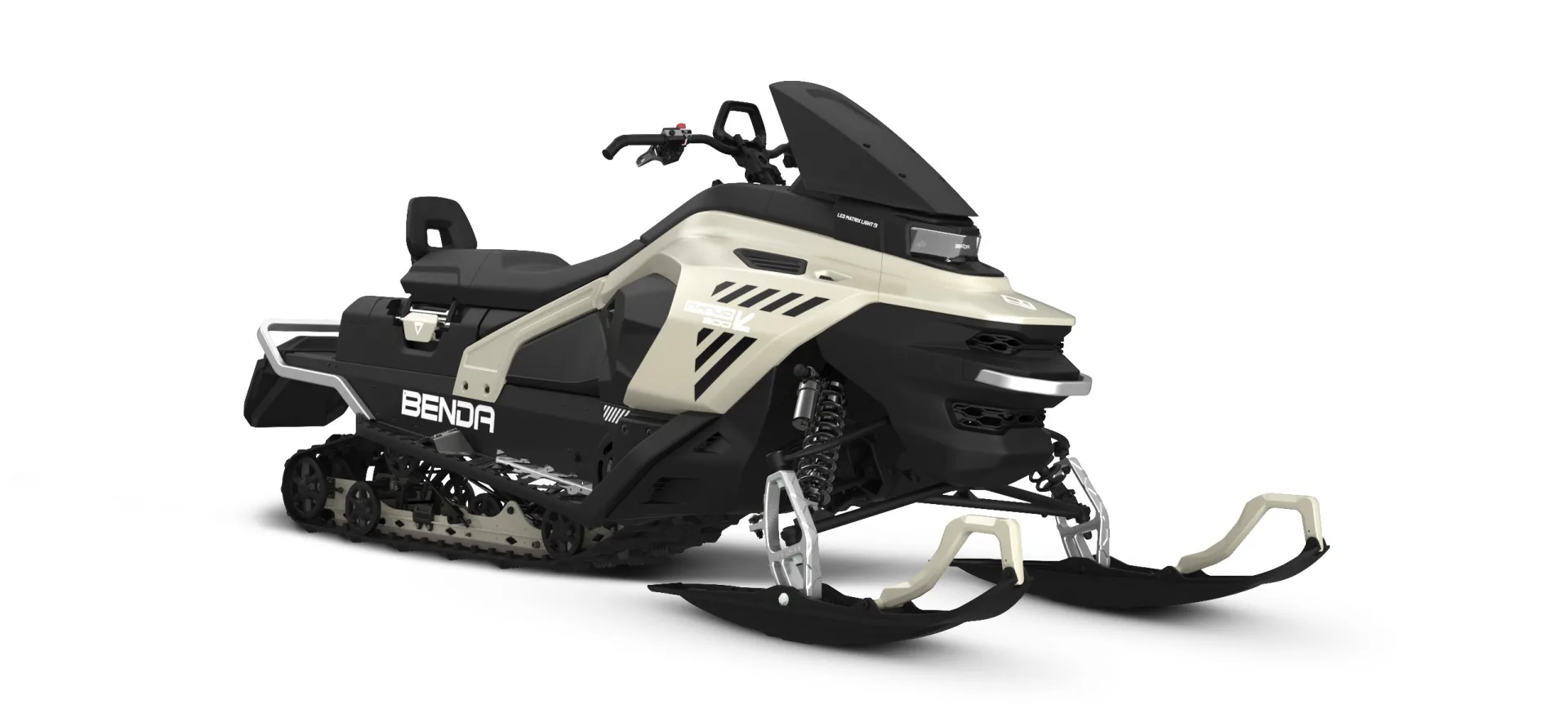
The NANUQ 1000 is the most consequential part of the reveal for Canada. BENDA describes it as an evolution of last year's ATLAS concept toward a production-oriented touring and utility snowmobile. The current specification uses a 929 cc inline three-cylinder engine producing 65 kW and 91 Nm, combined with a CVT offering high and low ranges and electronic reverse.
The chassis includes column-mounted electric power steering and double-wishbone front suspension. Touring features include heated front and rear seats, heated passenger grips and a 10.25-inch touchscreen. The long body, protective surfaces and exposed structural elements suggest a machine intended for two-up travel and practical use rather than a narrow mountain sled.
BENDA says the NANUQ 1000 could reach market as early as the 2027-28 winter, though the launch may move to the following season. That is provisional, not a sales commitment. The release does not identify Canada or the United States as launch markets.
The smaller NANUQ 300 is aimed at recreational riders and newcomers. Its current design uses a 300 cc inline twin producing 23.5 kW and 27 Nm, with a CVT and independent electronic reverse. Electric power steering, double-wishbone front suspension, a five-inch touchscreen, LED lighting and heated front and rear seats are listed. BENDA describes it as near-production, but says snow testing and development will continue. Earliest timing is the 2028-29 winter.
The Canadian opportunity and the hard part
On paper, the categories fit Canada unusually well. ATVs serve farms, acreages, trails and remote work. Snowmobiles are essential recreation and, in many regions, practical transportation. A new manufacturer could attract buyers if it offers competitive equipment and pricing. The product names and specifications alone, however, do not solve the hardest part of entering this market.
Canadian customers need cold-weather validation, emissions and safety compliance, parts warehousing, diagnostic support, warranty administration and dealers close enough to service machines during a short riding season. Snowmobiles face especially demanding expectations. A breakdown in February is not merely inconvenient when a machine is far from a road. Brand credibility depends on parts availability and rapid technical support as much as horsepower or screen size.
Dealers should therefore read the EICMA reveal as an early supplier signal. The next meaningful milestones would be completed snow testing, final specifications, production confirmation, a North American distributor and a clear warranty and parts plan. Without those elements, taking deposits or promising delivery would be premature.
The concepts still matter because BENDA has supplied more than vague silhouettes. It has identified engine layouts, chassis directions, intended users and provisional timelines. The Redstone pair shows how the company could build a full ATV ladder. The NANUQ pair suggests separate touring-utility and entry recreational roles rather than a single experimental sled.
For Canadian riders, the right reaction is interest paired with discipline. BENDA has shown machines aimed at two of this country's most important powersports categories. The announcement does not establish Canadian sales, certification, servicing or support for these models. The difference between a compelling EICMA concept and a credible Canadian product will be decided by winter testing, certification and the dealer network built around it.