Honda and Yamaha Put Electric Motocross Prototypes on the Ernée Program
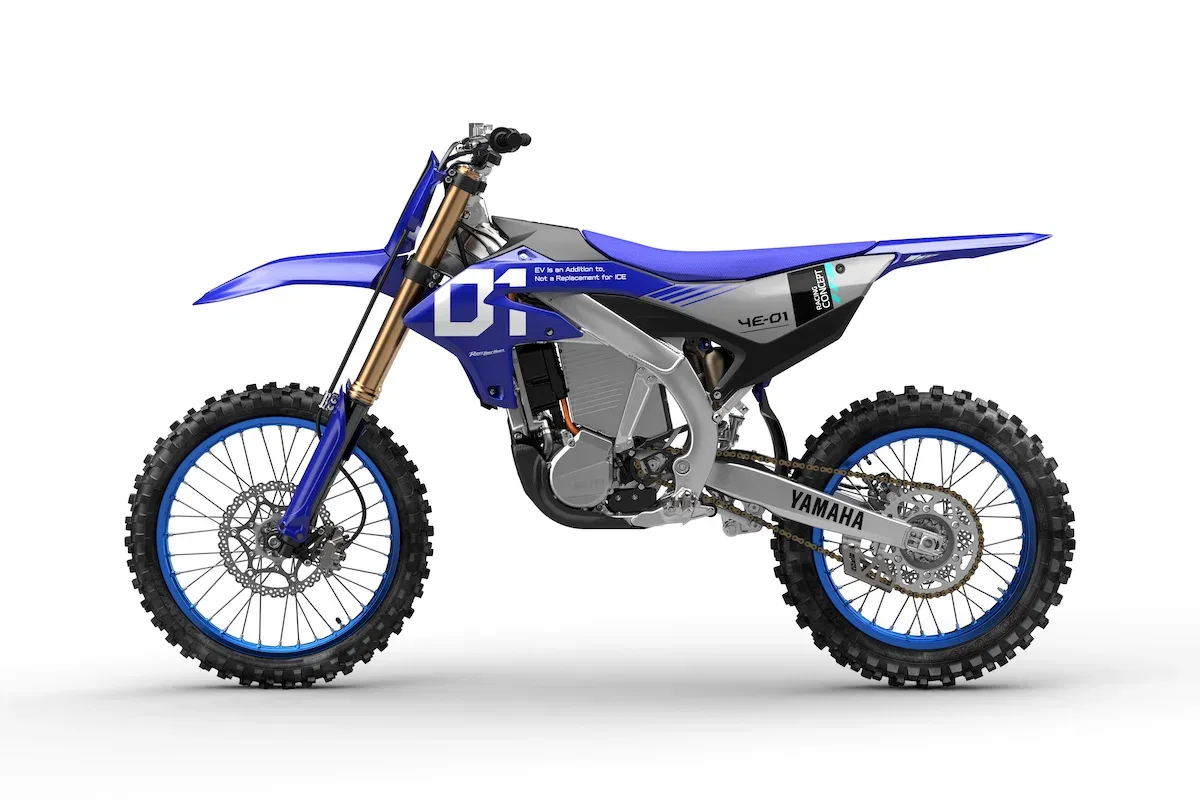
Honda and Yamaha have placed two electric motocross development programs on the public schedule at the 2026 Motocross of Nations in Ernée, France. The CR ELECTRIC PROTO and YE-01 Racing Concept are scheduled to run together in demonstrations during the October 2-4 event weekend.
Two manufacturers, two development paths
Honda's CR ELECTRIC PROTO already has competition history. Honda used an electric motocross prototype in the All Japan Motocross Championship and later entered the related CR ELECTRIC PROTO with Team HRC in the FIM E-Xplorer World Cup. Yamaha's YE-01 takes a different route, combining YZ450F-derived chassis knowledge with an electric power unit developed with French specialist Electric Motion.
The joint appearance does not mean the motorcycles share a platform. It places separate engineering projects on the same track and in front of the same audience. That creates a useful comparison of packaging, sound, acceleration and rider control, even though a demonstration is not a timed race.
Experienced riders add credibility
Honda listed Trey Canard and Justin Brayton for its side of the program. Canard has previous electric motocross race experience with Honda, while Brayton brings a long career in American supercross. Yamaha identified Ben Townley and Milko Potisek, riders with world-level motocross and major sand-racing experience.
Using established racers matters because they can expose weaknesses that a slow parade lap would hide. Motocross demands precise throttle response, predictable chassis behaviour and repeatable performance through jumps, braking bumps and ruts. A public demonstration cannot answer every endurance question, but skilled riders can show whether the prototypes behave like serious competition motorcycles.
What the YE-01 reveals
Yamaha says the YE-01 uses a liquid-cooled AC synchronous motor, a lithium-ion battery and a hydraulic wet multi-plate clutch. The clutch is especially notable because an electric motor does not require a conventional clutch to idle or change gears. Yamaha is preserving a rider control that motocross competitors use to shape drive, manage traction and adjust the motorcycle near jumps and corners.
The concept remains short on several specifications that would matter in racing or retail, including peak power, battery capacity, weight, charging time and sustained race duration. The Ernée appearance should therefore be treated as a development milestone, not a production launch.
What the Honda brings
Honda's prototype has been tested in competition settings, giving its program a body of experience beyond display halls. That does not establish a showroom timeline. Honda has not used the Ernée announcement to confirm production, Canadian availability, price or a retail specification.
The same limitation applies to Yamaha. Both machines can influence future racing and product development without being ready for customer orders. Separating technical progress from retail availability protects readers from interpreting an exciting demonstration as a sales announcement.
Why this matters in Canada
Canadian motocross riders face the same central questions as the global sport: how electric machines will fit track infrastructure, practice time, noise rules, maintenance and competition classes. Electric drive could reduce some local noise concerns, but batteries, charging and operating procedures introduce different requirements.
Dealers would need training, diagnostic capability, parts support and safe high-voltage service procedures before any comparable production machine arrived. Tracks would need to consider charging capacity, fire-response planning and class rules. None of those systems can be assumed from a prototype demonstration.
The milestone and what comes next
The October 2 opening of the event is the new milestone following the earlier prototype announcement. The scheduled joint runs move the projects from isolated manufacturer presentations into a shared public program. Verified completed laps, rider feedback and any new technical disclosure will be the next meaningful update.
The demonstration is important precisely because it remains limited. It shows two major manufacturers are willing to put advanced electric motocross machines in front of a demanding race audience. It does not prove range, cost or production readiness. Ernée can provide evidence about performance and acceptance while leaving the harder commercial questions for later.
What a serious evaluation would require
A demonstration can reveal acceleration, chassis movement and rider confidence, but a future race class will need repeatable measures. Organizers and manufacturers would have to define race duration, minimum weight, charging rules, battery handling and procedures for damaged machines. Comparable performance also requires clarity about how power is measured and controlled.
Heat is another engineering question. Motocross repeatedly loads the motor and battery under low-speed, high-torque conditions, then exposes the chassis to impacts and vibration. A motorcycle that feels strong for a few laps still has to deliver consistent output across a complete race and recover within the event schedule.
Those requirements explain why the Ernée appearance is meaningful without being conclusive. Public running creates evidence and rider feedback. Production, homologation and a viable championship require a much larger system around the motorcycles.