BRP has revealed the engineering work behind replicas of Gilles Villeneuve's unusual twin-track racing snowmobile, built in Valcourt for the Quebec film Villeneuve: Rise of a Champion.
The company announced the project on November 11, the day the film opened in Quebec theatres. Teams from BRP's racing, design and engineering groups collaborated on the machines, connecting present-day Ski-Doo technology with a defining chapter in Quebec motorsport history.
Why the “bibitte” was different
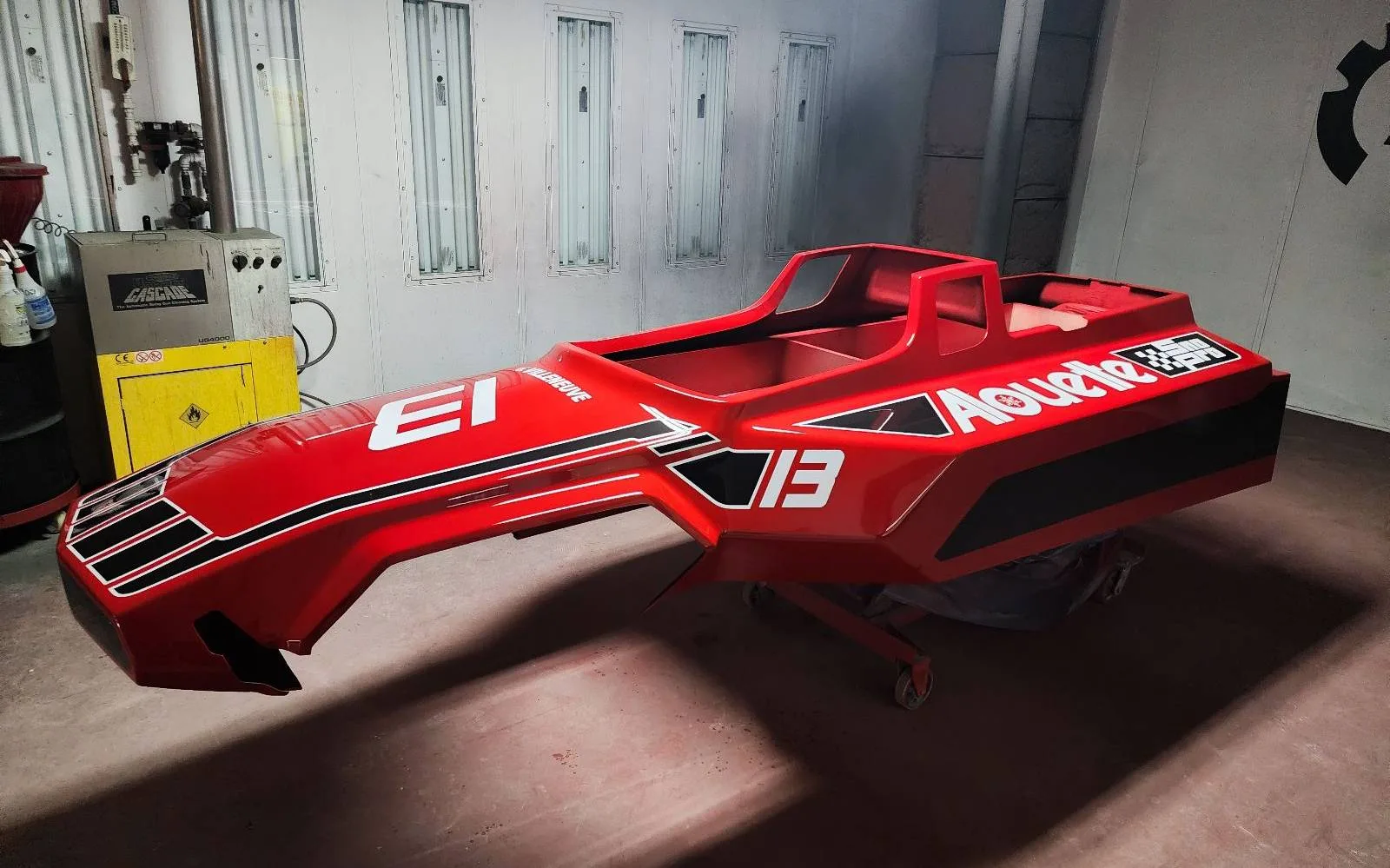
Villeneuve became famous internationally in Formula One, but snowmobile racing helped form his reputation for speed, improvisation and car control. His twin-track Alouette looked unlike the conventional sleds of the 1970s. The driver sat down inside a narrow cockpit, turned a steering wheel and drove two rear tracks.
The nickname “bibitte” is familiar in Quebec and suits the machine's unconventional appearance. It is part snowmobile, part small single-seater race car. That silhouette also made it valuable to the filmmakers: it immediately communicates that Villeneuve was experimenting with machinery long before reaching Formula One.
BRP says the exterior of its replica stays close to the original while the hidden mechanical system is modern. The machine was built about 10 per cent larger so a current powertrain and film-safety requirements could be accommodated without losing the visual identity.
Modern Ski-Doo power under historic bodywork
BRP identifies a modern 600cc Rotax two-stroke from the Ski-Doo MXZ family as the power source. BRP also fabricated parts specifically for the project, including the skis and exhaust system. The exhaust was tuned to reproduce the sound character associated with the original machine.
Safety changes were incorporated for filming. A movie vehicle has to operate repeatedly, predictably and around a production crew, often while cameras are positioned close to the action. Authentic appearance therefore had to be balanced with reliability, control and protection for the performer and crew.
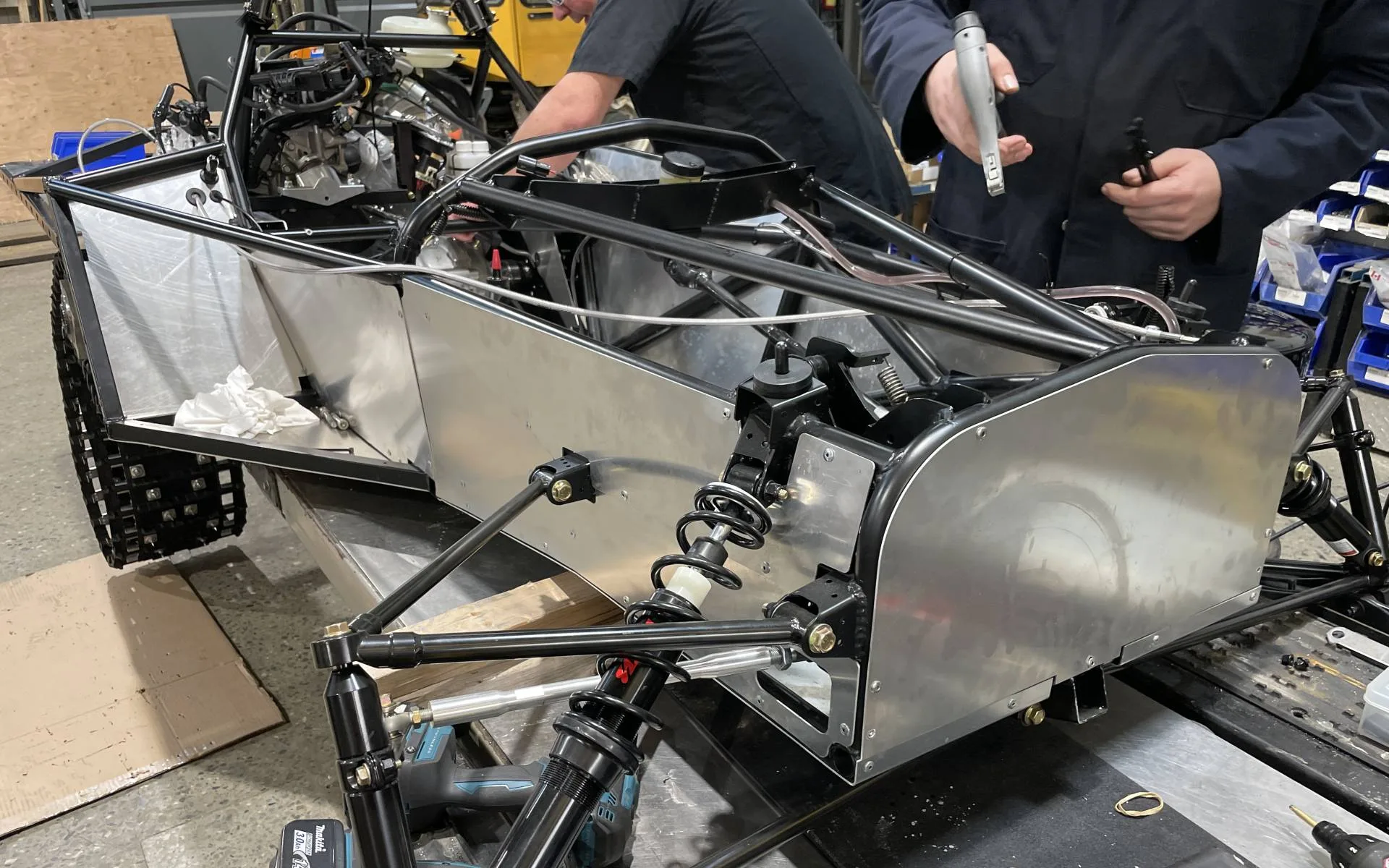
Le Guide de l'auto reports that two replicas were produced, including one configured to carry camera equipment. The builds use tubular-steel structures with aluminum panels, and period-looking bodywork was created after scanning an original shell. The publication also documents BRP components adapted from current products, showing that this was an engineered running vehicle rather than a static prop.
The result preserves the visual identity of a narrow, unconventional racing snowmobile while giving the film crew a running vehicle built with contemporary components. Recreating the shape was only part of the task. The bodywork, chassis, controls and drivetrain also had to function together during repeated filming, when consistent operation and access for maintenance matter alongside appearance.
Valcourt is central to the story
The work was completed in Valcourt, Quebec, the community most closely associated with Ski-Doo and organized snowmobile racing. BRP says the replicas were run on the Valcourt ice oval, giving the project a geographic connection that goes beyond branding.
That matters for Canadian powersports readers because the story joins manufacturing expertise, racing heritage and cultural production in one place. It demonstrates capabilities that are easy to overlook when attention rests only on the next model-year specification: design interpretation, chassis fabrication, powertrain integration, sound tuning and safe operation all had to work together.
BRP's announcement describes a film project and offers no consumer production model. For clubs and dealerships, the replicas provide a subject for discussions about design, racing history and the technical demands of preserving a recognizable shape while changing the machinery beneath it.
More than nostalgia
Heritage projects can become shallow if they stop at a famous name and a restored shape. The “bibitte” build is more substantial because it required the company to solve a modern engineering problem: how to reproduce an idiosyncratic racing machine closely enough for the camera while making it dependable and safe enough for production.
The result can also introduce a younger audience to Villeneuve's snowmobile years. Viewers who know the Ferrari story may not realize how much his early racing was rooted in Quebec winter competition. The replica makes that history physical, audible and visible.
There is a business dimension as well. Manufacturers preserve brand meaning through museums, archives, events and special builds. Those projects can strengthen community ties and remind customers that powersports development has always involved experimentation. They are most credible when the technical work is real and the historical context is handled carefully.
A working connection to racing history
BRP says the replicas ran on the Valcourt ice oval, linking the project to the same community where its specialists developed the machines. The November 11 release does not provide a public demonstration, museum-display or touring schedule. The film is the public setting identified for seeing the recreation in action.
The project brings together a Quebec racer, a Quebec manufacturer and a Quebec production through a machine that required substantial work to reproduce. Its historical value rests in the recognizable silhouette and driving layout. Its engineering value lies underneath, where modern components and custom fabrication make that appearance usable on screen. Together, those elements show how a contemporary powersports company can preserve racing heritage through a functioning vehicle.