Team Canada Begins Motocross of Nations Weekend at Ernée
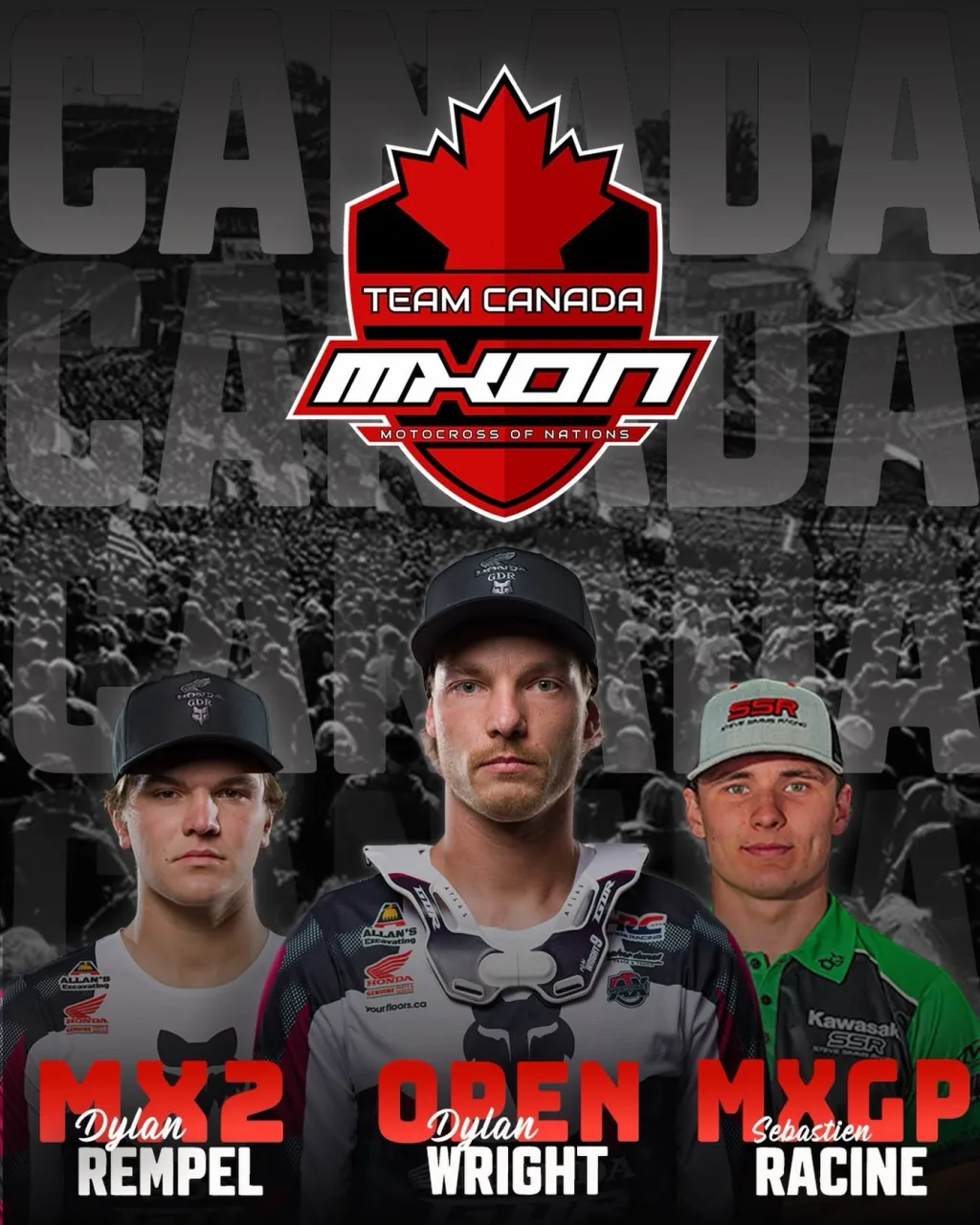
Canada's three-rider motocross squad has entered the 2026 Monster Energy FIM Motocross of Nations weekend at Ernée, France. Dylan Wright, Dylan Rempel and Sebastien Racine are scheduled to represent Canada as the international event opens October 2 and builds toward qualifying and the combined-class races.
The Canadian lineup
Wright and Rempel arrive as newly crowned Canadian champions, giving the team current domestic form in its two principal positions. Racine completes the lineup and adds another Canadian national-level rider to a format that rewards the performance of the full team rather than one individual result.
The Motocross of Nations divides riders among MXGP, MX2 and Open classes. Results are ultimately combined for the national classification, and one poor finish can reshape a country's weekend. That structure makes reliability, starts and damage limitation as important as outright speed.
Why Ernée is a major test
Ernée is one of the sport's most recognizable amphitheatre-style venues. The French crowd, elevation changes and deep racing lines create a setting that can punish mistakes and reward riders who adapt quickly. The event also attracts leading riders from multiple championships, so national teams must work with limited track time against competitors who race in different series through the year.
For Canada, the challenge includes travel, logistics and adapting equipment for a single high-pressure weekend. Teams must move motorcycles, spares and support equipment across the Atlantic while coordinating with riders' domestic programs. The result is a national effort built from private teams, sponsors, mechanics and supporters.
What happened in the current window
Earlier announcements confirmed the Canadian roster. The new milestone is operational: the October 2-4 event weekend is now underway. That moves the story from team selection to competition status and starts the period in which official practice, qualifying and race results can replace projections.
No final Canadian result existed at the morning publication check. That distinction matters. The team should be described as beginning the weekend, not as having achieved a result that has not yet occurred. Official timing and organizer updates remain the authoritative sources as sessions advance.
Why Canadian riders should care
The event places Canadian champions in a direct national-team comparison against riders from the world's strongest motocross programs. It is also a visible measure of Canada's development ladder. Domestic racing must produce riders who can adapt to international tracks, rules, travel and race intensity.
For younger competitors, the team provides a realistic pathway to follow. National titles can lead to international selection, but selection is only the beginning. Fitness, mechanical preparation, funding and experience in changing conditions all influence whether a rider can convert domestic success into a useful national score.
Dealer and industry implications
Canadian dealers and brands supporting the squad gain exposure that is different from a normal domestic round. The Canadian flag connects local racing investment with an international audience. Useful coverage should identify the people and organizations that made participation possible without treating sponsorship as a substitute for sporting results.
The weekend can also generate interest in motocross equipment, protective gear and club participation. Dealers should frame that interest responsibly. The machines and track preparation at a world-level event are specialized, and new riders need appropriate training, controlled venues and safety equipment rather than an attempt to copy professional riding outside a track.
The next verified milestone
The next publishable facts are Canada's official qualifying positions and Sunday race results. Any rider substitution, injury or operational change would also be material. Until those facts are posted, the confirmed story is that Wright, Rempel and Racine have moved from a selected roster into an active Motocross of Nations weekend.
Canada's final standing will depend on three riders navigating one of motocross racing's most demanding team formats. That makes the opening of the weekend meaningful on its own while leaving the competitive verdict to official results.
How the team format changes strategy
Unlike an individual championship, the Nations format forces each country to think about the combined score. A rider may need to protect a solid position rather than take a high-risk pass, because a fall or mechanical problem can add many points to the national total. Mechanics also have little time to diagnose damage between sessions, making preparation and spare-parts planning critical.
The classes run together in paired races, so riders face machines and competitors with different performance characteristics. Traffic management becomes part of the contest. A clean start helps, but the ability to read changing lines and avoid trouble can preserve the result Canada needs.
Official timing should remain the reference throughout the weekend. Social posts and trackside clips can appear quickly, but they may show only part of a session. A verified classification provides the context needed to distinguish an impressive individual lap from the score that actually counts for Canada.