Ski-Doo is bringing its free Avalanche Awareness Seminar program back for an eighteenth year, with more than 35 sessions planned across Canada and the United States and a substantial group of Canadian dealer stops already scheduled for this fall.
BRP announced the 2026 program on September 23 from Valcourt, Quebec. The company says more than 30,000 snowmobilers have participated in the seminars since the initiative began, making avalanche education one of Ski-Doo’s longest-running responsible-riding programs.
The seminars are free, open to riders of every snowmobile brand and designed for both newer mountain riders and experienced backcountry users. Canadian sessions will be led by Marshall Dempster, a professional avalanche forecaster, lead Avalanche Canada instructor, Level 3 lead guide and board member of the Canadian Motorized Backcountry Guides Association.
For Canadian snowmobilers, the timing is practical. The schedule begins weeks before the main winter riding season, giving riders a chance to refresh decision-making and rescue skills before they are relying on them in avalanche terrain.
More than 35 free sessions
Ski-Doo says more than 35 seminars will be held across Canada and the United States through its Responsible Rider program in partnership with Backcountry Access.
BCA is returning as a program partner for a ninth consecutive year.
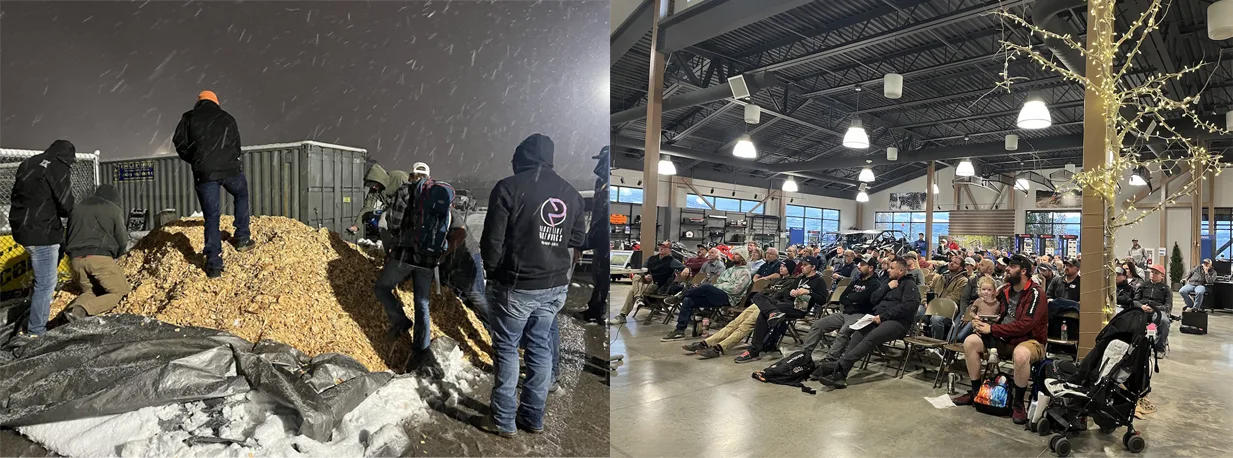
The curriculum covers avalanche awareness, route planning, rescue techniques, safety equipment and forecast resources. Many locations also include hands-on practice with avalanche transceivers, probes and shovels.
That hands-on component is important because avalanche equipment is not useful simply because it is carried.
A transceiver search, probe line or efficient shovelling technique has to be understood before an emergency. Riders need to know how their own equipment works, how to organize a group response and how to avoid losing time when conditions are already critical.
Ski-Doo is encouraging participants to attend with the people they normally ride with. The reasoning is straightforward: in avalanche terrain, the members of the riding group are usually the first people available to begin a rescue.
Professional response may take time to reach a remote location. Companion rescue therefore depends on the people already on the mountain recognizing what happened and acting effectively.
A meaningful Canadian dealer network
The Canadian schedule gives the program particular relevance to western riders.
Ski-Doo’s current Canadian seminar page lists Alberta sessions in Lloydminster on October 21, Red Deer on October 22, St. Albert on October 27, Westlock on October 28, Bonnyville on November 3, Edmonton on November 4, Wainwright on November 10, Lethbridge on November 17 and Calgary on November 18.
The Edmonton seminar is listed at Martin Motor Sports West Edmonton.
British Columbia dates include Prince George on October 29, Squamish on November 25, Langley on November 26 and Kamloops on December 2.
Saskatchewan sessions are listed for Regina on November 12 and Saskatoon on November 13.
The schedule may continue to evolve, so riders should use Ski-Doo’s official Canadian event page and confirm directly with the host dealer before travelling. BRP also encourages registration with the dealer so each location can plan its available space.
For dealers, hosting a seminar creates a different type of customer interaction from a normal sales event.
The value is educational first. A retailer can provide meeting space, help riders connect with a qualified instructor and become part of the local safety network without requiring the evening to revolve around a product promotion.
Because the sessions are open to all snowmobile brands, they can also bring together riders who would not normally share the same dealership relationship.
What riders will learn
Ski-Doo’s seminar outline includes avalanche avoidance, reading avalanche forecasts, terrain analysis, snowpack concepts, route finding, group dynamics and advanced rescue techniques.
The program places particular emphasis on transceiver use and mistakes that can slow a rescue.
Those topics matter because avalanche risk is not reduced to one decision at the moment a slope is crossed. Safer backcountry travel depends on a chain of decisions beginning before the ride: checking forecasts, selecting terrain appropriate to conditions, planning alternate routes, communicating within the group and carrying rescue equipment.
A seminar cannot replace formal avalanche training or professional instruction appropriate to a rider’s objectives. Ski-Doo explicitly encourages participants to continue their education beyond the awareness sessions.
The company and BCA also provide online learning resources, including snowmobile-specific educational material, so the in-person seminar can serve as an entry point rather than the end of the training process.
Why the whole riding group matters
One of the stronger messages in the 2026 announcement is the focus on riding partners.
Snowmobilers sometimes think of safety equipment as individual gear: one rider owns a beacon, shovel or airbag. Avalanche rescue does not work that way.
If one member of a group is buried, the others need functioning equipment and the ability to use it. Communication practices, spacing, terrain choices and rescue roles also work better when the entire group has a common understanding.
That makes the program relevant even to riders who have attended training before.
Techniques, equipment and forecast tools change, while skills that are not practiced can deteriorate. A pre-season session gives a group a reason to review equipment, discuss procedures and identify gaps before winter.
BCA is also providing prizes at seminar stops, including avalanche transceivers, probes, shovels and BC Link radios. Those giveaways may help attract attention, but the more important value is getting riders to practice with the tools they already own or expect to carry.
A Canadian safety story, not just a brand campaign
BRP is headquartered in Quebec and Ski-Doo remains one of Canada’s most recognizable powersports brands, but the significance of this program extends beyond brand identity.
The seminars address a risk that is specific to how many western Canadian riders use snowmobiles.
Mountain machines can access terrain that would be difficult to reach by other means, and modern snowmobiles are increasingly capable in deep snow and steep terrain. Greater capability can expand the areas riders explore, which makes education and judgment more important rather than less.
For dealerships, the lesson is similarly practical. Selling a mountain snowmobile creates an opportunity to discuss avalanche training, local conditions, rescue equipment and responsible access as part of ownership.
That conversation should not imply that attending one seminar makes a rider prepared for every backcountry situation. Instead, it can direct customers toward continued education and encourage riding groups to treat safety as a shared system.
With sessions beginning in October and extending into December, Canadian riders have time to make that preparation part of their pre-season routine.
The program is free, open to all brands and already has multiple western Canadian dates on the calendar. For riders who spend winter in avalanche terrain, that is a more useful September announcement than waiting until the first major snowfall to start thinking about rescue skills.