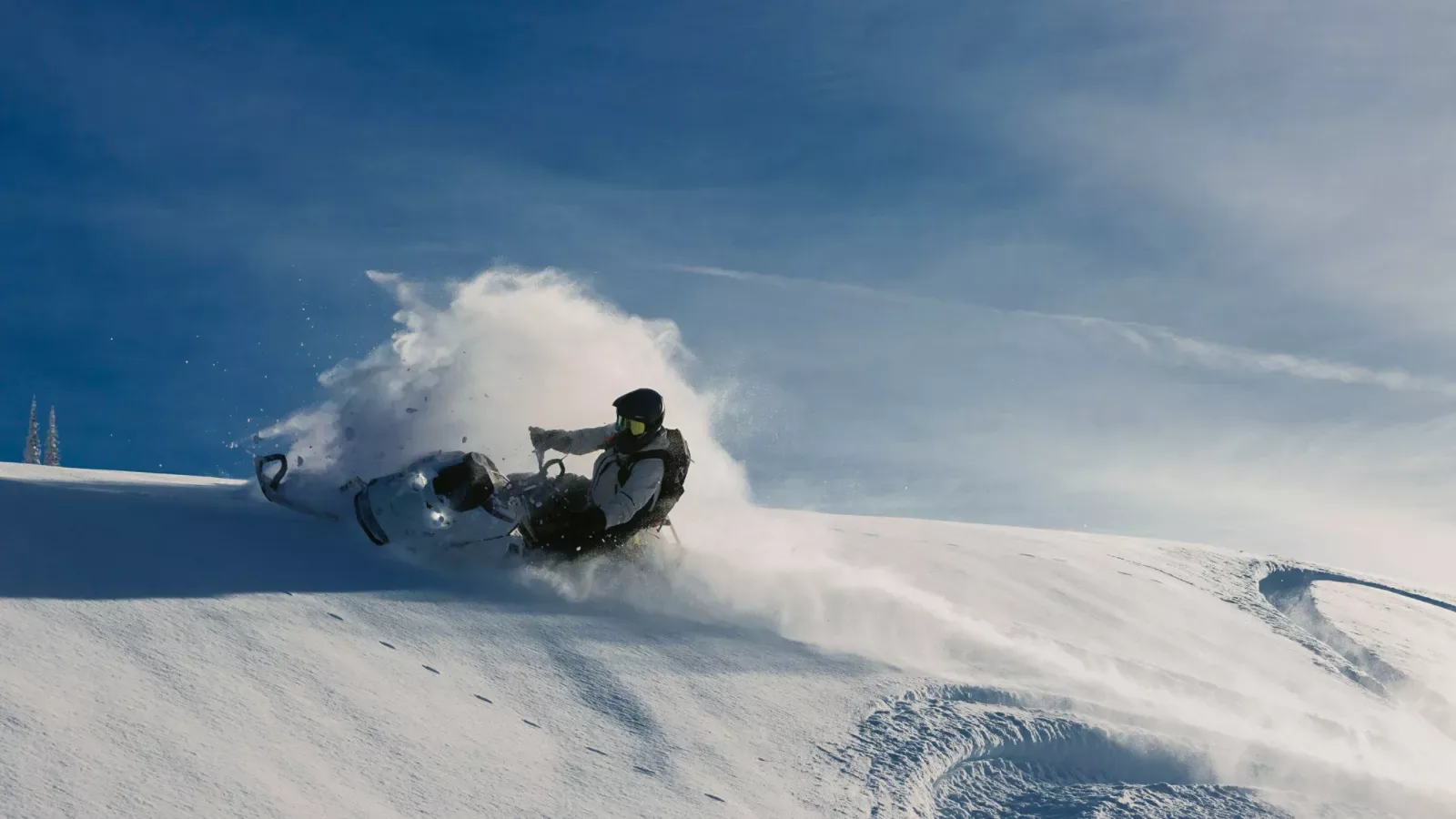
Backcountry snowmobilers in northern British Columbia have a practical preseason training opportunity tonight. Forest Power Sports in Prince George is hosting a Ski-Doo Avalanche Awareness Seminar at 6:30 p.m. local time on October 29. The free session is open to riders of all brands and ability levels, and participants are asked to bring their transceiver, shovel, probe and pack so the instruction can move beyond slides into hands-on practice.
What the seminar covers
Ski-Doo says its 2026-27 seminar program focuses on transceiver use, avalanche avoidance, daily routines for avalanche terrain, rescue efficiency, forecast interpretation, snowpack awareness, terrain analysis, route finding and group dynamics. The Prince George stop is led by certified instructor Marshall Dempster, whose motorized-access background is central to the program’s relevance for snowmobilers.
That scope is important because avalanche safety is not one skill. A transceiver helps locate a buried person, but it does not select a safe route, recognize an overhead hazard or decide when a group should turn around. A shovel and probe matter during rescue, but the best outcome is to avoid being caught. The seminar’s combination of decision-making and rescue practice reflects that hierarchy.
Why hands-on practice matters
Emergency equipment is only useful when riders can operate it quickly under stress. Transceiver searches involve switching modes, managing signal direction and distance, controlling search speed, probing systematically and organizing digging. Small mistakes can compound when visibility is poor, wind is strong or several people are trying to help at once.
Bringing personal equipment gives participants a chance to work with the controls, harness, probe mechanism and shovel they actually carry. It can also reveal setup problems before a trip: weak batteries, an unfamiliar menu, a probe that does not lock cleanly, a shovel that is difficult to assemble with gloves, or a pack layout that buries essential tools beneath non-critical gear.
The forecast is only one layer
A public avalanche forecast is a starting point, not a route approval. Conditions vary with elevation, aspect, recent loading, wind transport and local terrain. Riders must connect the regional danger rating and stated avalanche problems to the slopes above and around their planned route. A low-angle trail can still be exposed to a steeper start zone overhead.
Group dynamics deserve equal attention. A plan can fail when riders spread out, lose communication, follow a confident person without discussion or enter a slope one after another. Useful habits include agreeing on objectives before unloading, identifying conservative alternatives, exposing only one person at a time where appropriate, regrouping in safe locations and making it acceptable for any rider to call for a retreat.
A direct Canadian safety investment
BRP says it has supported backcountry rider education since 2009 and is offering dealership-hosted seminars across Canada for the new season. The Prince George session sits inside a broader schedule that includes Alberta, Saskatchewan, Quebec and additional British Columbia dates. Using dealerships as classrooms makes the program accessible to riders who may not yet be enrolled in a full Avalanche Skills Training course.
An awareness seminar is not a substitute for certified field training. It can, however, improve vocabulary, expose gaps and motivate groups to pursue the next level of instruction. Riders should leave understanding that competence is perishable. A search pattern practised once years ago is not the same as a current, timed drill with the equipment being carried this season.
What riders should verify before leaving
The official Ski-Doo schedule lists Forest Power Sports as the host and gives a 6:30 p.m. start. The dealership is at 5239 Continental Way in Prince George. Riders should confirm details with the dealership before travelling, particularly if weather or capacity could affect the session. The host’s published phone number is 250-563-1021. BRP encourages participants to register with the host dealership so staff can plan space and confirm a spot.
Participants should arrive with fresh transceiver batteries that meet the manufacturer’s recommendation, plus their shovel, probe and pack. A notebook or phone can help capture equipment changes and follow-up training questions. Anyone attending with regular riding partners will gain additional value because the group can standardize communication and rescue roles.
The dealer opportunity is larger than a product sale
For dealers, safety education builds a relationship based on rider outcomes rather than a single transaction. Staff can help customers distinguish core avalanche-rescue equipment from optional accessories, check fit and compatibility, and point toward recognized training providers without presenting a retail conversation as certification.
Tonight’s Prince George session is timely because the safest preparation happens before the first deep-snow ride. Riders who use the evening to practise, identify weak points and schedule further training will begin the season with more than new gear. They will have a clearer shared process for choosing terrain, responding to changing information and acting when minutes matter.