Canadian motorcycle roadracing will close its 2026 competition year this weekend with an event built around both the future and the history of the sport.
Shannonville Motorsport Park will host the final RACE Moto Regional round from September 25 to 27 while marking 50 years since the first motorcycle race at the venue originally known as Nelson International Raceway. A September 23 update from Canadian Superbike confirmed a substantially expanded program: national television coverage, a $10,000 purse for the featured Superbike race, the final MotoMINI FIM Canadian National races, a Saturday-night livestream with figures from the circuit’s history, and a field that mixes current regional front-runners with a significant machine from Canadian Superbike’s past.
That combination makes the anniversary more than a retrospective. It places Canadian racing history directly beside a current race weekend with championship, youth-development and broadcast stakes.
Fifty years since the first Nelson International race
The Shannonville site held its first race on October 10, 1976, during the Canadian Thanksgiving weekend. The venue was created by former racer, team owner and Honda dealer principal John Nelson, who saw a need for a motorcycle-friendly circuit in southern Ontario after the decline of other regional venues.
The track became an important part of Canadian motorcycle competition through the late 1970s, 1980s and beyond. Generations of riders, tuners, dealers, teams and organizers used Shannonville as a place to move from club and regional racing toward national competition.
This weekend’s celebration is built around that history without freezing the venue in the past.
Jim Allen will serve as Grand Marshal. Allen raced for Nelson’s Toronto-area shop during an earlier period of Canadian competition and is closely connected to the era the anniversary is recognizing.
Saturday evening is also scheduled to include a livestreamed discussion featuring competitors from Shannonville’s history talking about the circuit and their memories of John Nelson. That gives fans who cannot attend a way to engage with the anniversary beyond race results.
The $10,000 Superbike feature
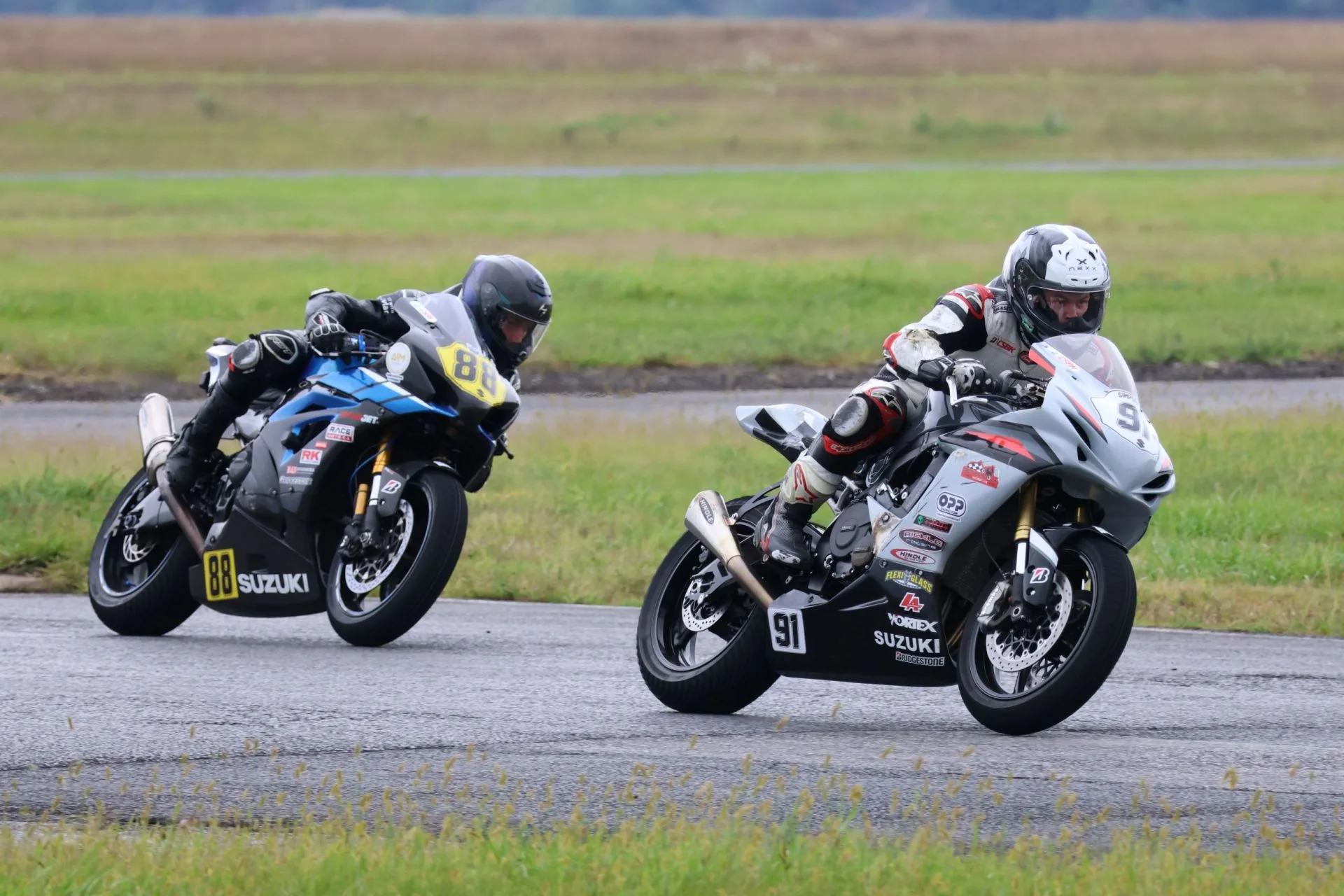
Sunday’s program will include the RACE Moto regional classes and a featured 14-lap Superbike race with a $10,000 purse supplied by Economy Lube + Tire for the top ten finishers.
Canadian Superbike says TSN network television coverage is planned for the featured class.
That combination matters at the regional level. Prize money can attract experienced riders and help offset the real cost of competition, while television exposure gives participating racers, teams and sponsors value beyond the people physically standing at the circuit.
Newly crowned RACE Moto champion Eli Daccache enters the weekend as one of the riders expected to be at the front on his Milwaukee Yamaha YZF-R1. Michael Leon is expected to return from injury on the Royal Distributing/Pro 6 BMW, while David MacKay is identified among the leading Bridgestone-supported competitors aboard a Snow City Honda CBR100RR-SP.
The class is open in terms of tire selection, adding another layer to the competition as front-running teams arrive with different technical packages.
None of those machines should be treated as direct equivalents to what a consumer buys from a dealership. Race preparation, tires, suspension setup and other modifications can significantly change a motorcycle. The useful connection is that Canadian dealers, parts suppliers and brands remain part of the infrastructure that allows riders to compete.
A 2002 Suzuki brings the anniversary onto the grid
One of the weekend’s most interesting entries directly connects the anniversary theme to competition.
Scott Miller is entering an ex-works 2002 Suzuki GSX-R1000 for three-time Canadian Superbike champion Francis Martin. Canadian Superbike says the motorcycle is in the same configuration used by Martin for Miller’s Fast Company team at Shannonville in 2002.
The machine comes from an era when Canadian Superbike rules were considerably more open than modern production-based regulations. Putting it back into a contemporary anniversary weekend gives spectators something more tangible than photographs or a static display.
It also demonstrates how quickly performance expectations evolve. A motorcycle that represented the sharp end of national racing 24 years ago now sits beside newer superbikes shaped by current electronics, chassis development, brakes and tire technology.
The value of the comparison is historical rather than commercial. It shows how Canadian racing developed and gives younger riders a physical reference point for a period they may know only from archives.
MotoMINI decides who represents Canada
Saturday’s program also looks forward.
The final races of the MotoMINI FIM Canadian National Championship for the Ohvale 160 and 190 specification classes will take place on Shannonville’s interior kart circuit. The results will determine Team Canada selection for the FIM MiniGP World Final in Valencia, Spain, in November.
That gives the weekend a legitimate development pathway.
Youth racing is most valuable when it offers more than isolated events. A structured national series, standardized machinery and a defined international qualification route give young riders and their families a clearer understanding of what progression can look like.
For Canadian dealers and clubs, that pathway is important because long-term participation depends on creating opportunities for riders before they reach full-size machinery.
Why this weekend matters to Canadian powersports
RideFirst covered the Shannonville championship picture earlier in September, when the 50th anniversary weekend was still a future checkpoint. The September 23 announcement adds the material information that makes the event timely again: the $10,000 Superbike purse, TSN coverage, Grand Marshal, livestreamed history program, confirmed heritage entry and Team Canada implications.
Those are new facts, not a repetition of the original event date.
The weekend also shows why regional motorsport deserves space beside international championships. MotoGP and WorldSBK provide enormous global visibility, but Canadian racing creates participation that riders can actually see, attend and support at home.
A local racer can meet fans in the paddock. A dealership can support a customer or team. A young rider can compete for a place on Team Canada. A historic race bike can return to the circuit where its era helped shape national competition.
That is a complete powersports ecosystem operating within one Canadian venue.
When racing concludes Sunday, the most important follow-up will be the verified Superbike result, the final MotoMINI standings and the riders selected to represent Canada in Valencia. Until then, Shannonville’s 50th anniversary weekend is one of the strongest Canadian motorcycle stories on the calendar this week.