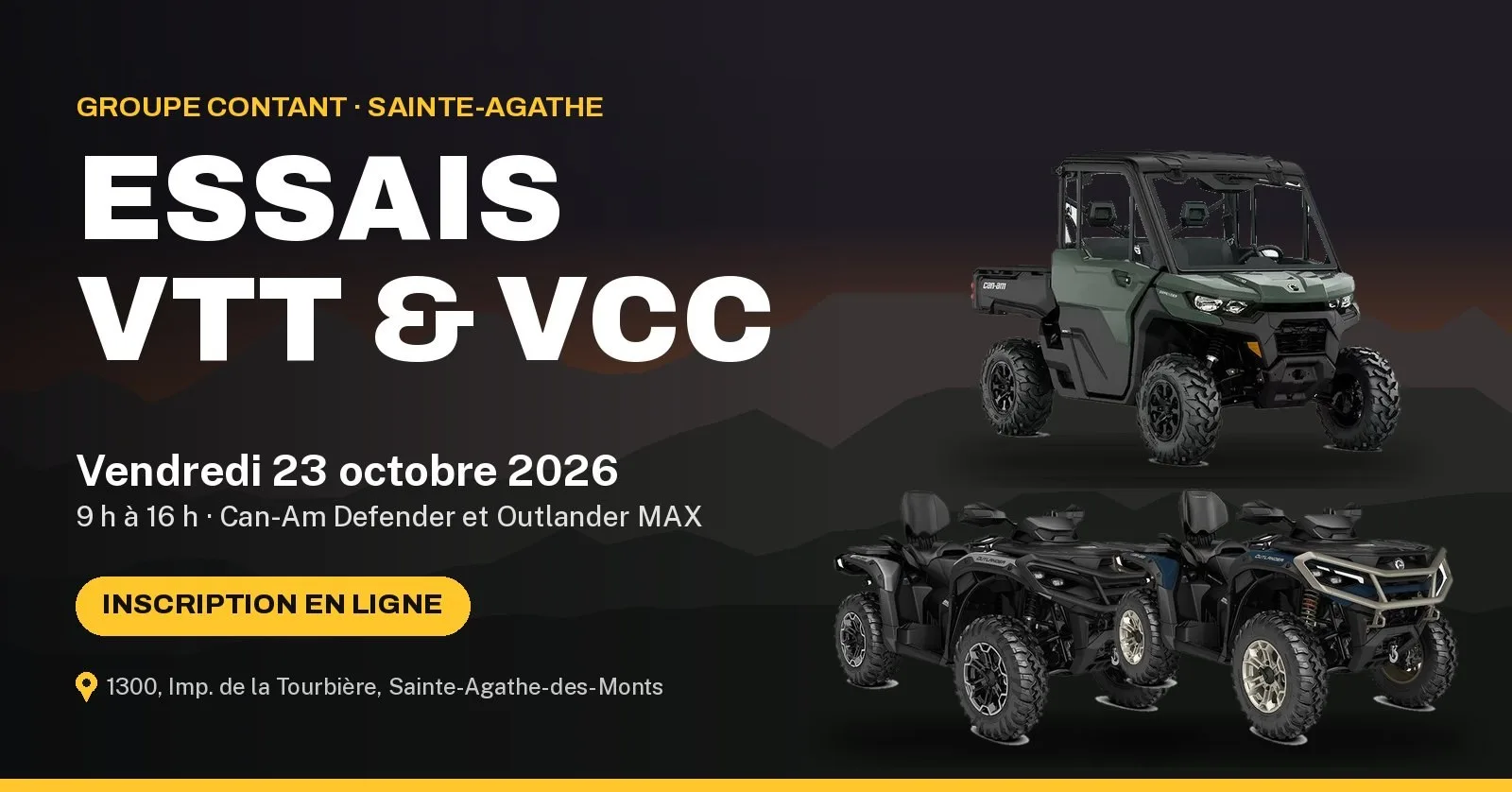
Groupe Contant’s Sainte-Agathe-des-Monts dealership is holding a one-day Can-Am test-ride event on Friday, October 23, giving Québec customers reserved time on three 2026 utility machines. The event runs from 9 a.m. to 4 p.m. at 1300 Impasse de la Tourbière. Riders choose a specific vehicle and one-hour slot through the dealer’s booking page, and the organizer says availability is limited. A valid driver’s licence is required.
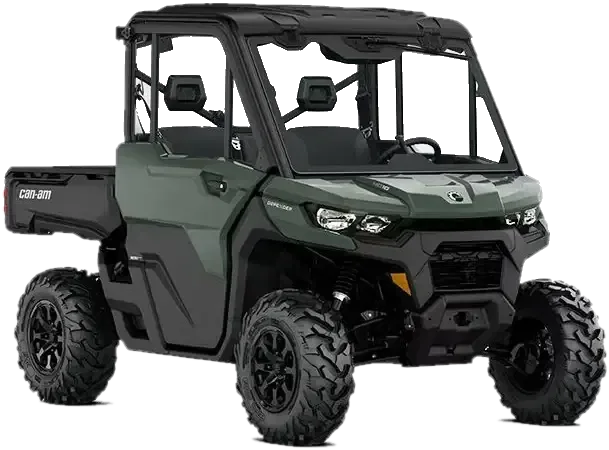
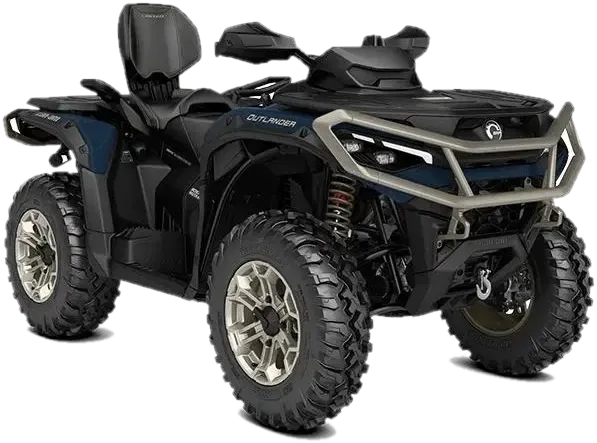
The demo fleet covers two different ownership formats. The Can-Am Defender DPS CAB HD10 is a side-by-side with an enclosed cab orientation, while the Outlander MAX Limited 1000R and Outlander MAX XT 1000R are two-up ATVs. Putting them at the same event lets shoppers compare seating, protection, storage, width and passenger accommodation instead of evaluating each machine in isolation.
A reserved demo can reveal fit issues that specification sheets cannot. Drivers should check the relationship among seat, steering wheel or handlebar, pedals, floorboards and controls. Passengers should assess entry, handholds, legroom and visibility. The useful question is not which machine feels most dramatic during a short drive, but which layout supports the owner’s actual mix of property work, trail riding, winter use and family recreation.
The Defender’s cab format may appeal to customers who value weather protection and utility, but size affects trailers, gates, garage storage and trail access. An Outlander MAX can be easier to transport and manoeuvre, while still providing a dedicated passenger position, yet it offers a very different level of enclosure and cargo capacity. Buyers should arrive with measurements and the towing limits of their vehicle and trailer.
Safety preparation matters even for a dealer-managed route. The event page explicitly requires a driver’s licence, and participants should confirm helmet, eye protection, footwear and clothing rules before leaving home. A demonstration area is not permission to ignore ordinary control checks. Riders should listen to the briefing, understand the route, identify the stop procedure and avoid using an unfamiliar machine beyond the pace set by staff.
The demo should also include low-speed evaluation. Utility machines spend substantial time loading, backing, parking, climbing slowly and negotiating tight terrain. Steering effort, throttle response, braking feel, sightlines and turning radius may matter more in daily ownership than a brief burst of speed. Customers interested in plowing, towing or carrying loads should ask how those tasks change setup and maintenance.
For the dealer, one-hour appointments create better lead quality than an unrestricted walk-in day. Staff know which model interests each participant and can prepare a machine, waiver and follow-up conversation. The commercial value depends on accurate notes and consent-based follow-up rather than pressure. A rider who discovers that a different format suits them is still a useful outcome because it reduces dissatisfaction after delivery.
Pricing and financing should remain separate from the riding impression. Customers need a written quotation that identifies freight, setup, accessories, taxes and any promotional conditions. They should also confirm warranty coverage, first-service timing, local trail rules and whether passenger use is permitted on the routes they intend to ride. A successful demo starts the buying process; it does not replace due diligence.
Today’s event is valuable because it turns three expensive machines into a direct comparison under dealer supervision. With appointments limited to the October 23 window, interested riders should check live availability before travelling. Even if every slot is filled, the format gives Canadian dealers a useful model: structured, vehicle-specific demonstrations that connect product education, safety and realistic ownership planning.
Participants should use the ride to compare noise, vibration and heat at the speeds allowed by the route. A cab can change how engine and driveline sound reach occupants, while an ATV exposes the rider more directly to the machine and environment. Neither impression is universally better. The decision should follow expected hours of use, climate and maintenance tolerance. After the drive, a short written scorecard covering comfort, control, visibility, passenger fit, storage and transport can prevent the most exciting five minutes from outweighing the practical evidence gathered during the rest of the appointment. Riders should also note whether routine checks, cargo tie-downs and recovery points remain accessible with the accessories they expect to add.