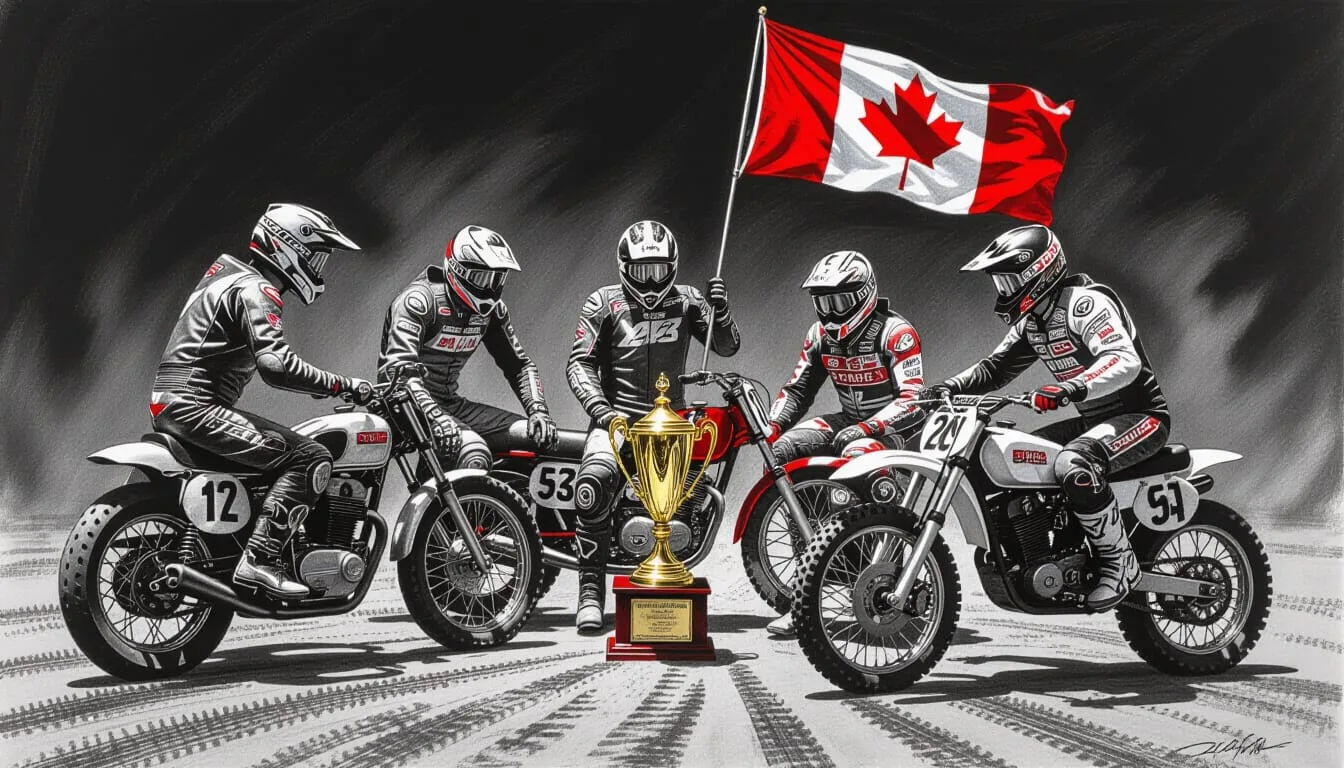
Motorcycle safety and club racing shared the same asphalt at Mission Raceway on September 6, when Westwood Motorcycle Racing Club's final 2026 round was joined by the 17th annual Bernie’s Track Walk.
The event gave families and riders access to the circuit during the lunch break while focusing attention on a difficult British Columbia safety issue: motorcycle fatalities on public roads.
Local reporting cited BC Coroners Service data showing 14 motorcycle deaths across the province during the spring, the highest spring total in a decade.
That makes the Track Walk more than a community-side event attached to a race weekend. It is a reminder that racetracks, rider education and structured riding environments can play a practical role in how the motorcycle community talks about risk.
Racing and safety on the same day
The Track Walk took place during Westwood Motorcycle Racing Club's 10th and final round of the 2026 season at Mission Raceway Park.
At 11:30 a.m., during the race-day lunch break, the circuit opened to children, families and other participants for the walk.
Motorcycling figure Bernie Ryan and former AMA Pro racer Misti Hurst were involved in the event.
Admission to the grandstands, pit area and walk was free, according to the local event coverage.
That format matters because it brings people physically onto a race circuit without requiring them to be competitors.
A racetrack can look distant or intimidating to riders who have never attended a club event. Opening the facility to families makes the environment more understandable and helps connect the public with the safety systems that structured motorsport depends on.
The road-safety message is the important part
Motorcycle deaths are not simply a racing issue.
Most serious motorcycle risk exists on public roads, where riders share space with cars, trucks, intersections, changing surfaces and unpredictable traffic.
The Track Walk's message was designed around that distinction.
Racing takes place in a controlled environment with technical inspection, marshals, flags, run groups, rules and emergency procedures. Public-road riding does not provide the same controlled conditions.
That is why track participation and rider education can be useful even for people who never intend to race.
Learning braking, vision, body position and machine control in a structured environment can give riders a place to build skills without turning public roads into practice areas.
Why the BC fatality figure deserves attention
The reported 14 motorcycle deaths during the spring represent the highest spring total in British Columbia in a decade.
One statistic cannot explain every crash.
Motorcycle collisions can involve rider decisions, other road users, speed, impairment, visibility, intersections, road design, weather, inexperience and many other factors.
It would be irresponsible to reduce the issue to one cause.
The useful takeaway is that the number is high enough to justify renewed attention from riders, families, clubs, dealers and public agencies.
Safety campaigns work best when they avoid blaming one group and instead focus on behaviours and conditions that can actually be changed.
What dealers can do
Dealerships are one of the first places new and returning riders interact with the motorcycle community.
That creates an opportunity to make safety information part of the ownership experience.
A salesperson can explain the value of proper protective gear without turning the conversation into fear.
A service department can emphasize tire condition, brake maintenance, lighting and suspension condition.
Dealers can also direct customers toward recognized rider-training programs, track days and local clubs.
Those steps are particularly important for riders returning after years away from motorcycles or moving rapidly into larger and more powerful machines.
The goal is not to discourage riding. It is to support riding that is sustainable.
The track-day pathway matters
For many riders, the gap between public-road riding and organized racing feels enormous.
Track days reduce that gap.
A rider can enter a controlled circuit environment, receive instruction, ride in an experience-appropriate group and learn procedures without immediately becoming a racer.
That experience can improve confidence while also revealing weaknesses.
A rider may discover that braking technique, corner entry, vision or body position needs work. Learning that on a racetrack is preferable to discovering it during an emergency on a public road.
Clubs such as WMRC also give riders a path toward competition if they want to go further.
Why family access matters
The Track Walk specifically invited children and families.
That may seem secondary to the racing, but it can have long-term value.
Young people who see motorcycles only through social-media clips may receive a distorted picture of riding.
A visit to a sanctioned event exposes them to preparation, technical inspection, rules, protective equipment and respect for a controlled facility.
It also shows that motorsport is supported by volunteers, officials, families and community organizations.
That broader picture can help separate responsible motorcycle culture from reckless-road imagery.
Dealer and community partnerships
Safety programs often work best when they involve more than one organization.
A club understands riding and competition.
A dealership understands customers and equipment.
Training providers understand skill development.
Public agencies can provide collision data and education.
When those groups work together, the message becomes more credible.
A dealership sponsoring a track walk or rider school can contribute in ways that go beyond putting a logo on a poster: gear checks, mechanical-inspection clinics, beginner nights and referrals to qualified instructors are all examples.
What riders should take from the event
The most useful lesson is not that every rider needs to race.
It is that motorcycling rewards deliberate skill development.
Riders can improve braking.
They can practice vision.
They can learn how tire condition changes handling.
They can choose protective equipment that fits properly.
They can recognize when fatigue or weather makes a ride less safe.
None of those steps removes risk completely. They can, however, improve the margin a rider has when something unexpected happens.
What to watch next
The final WMRC race results will close the club's 2026 competition season, while the broader safety conversation will continue beyond the track.
Useful follow-up developments would include confirmed provincial motorcycle-fatality data for the full year, new rider-training initiatives, measurable participation growth in track programs or additional road-safety partnerships involving clubs and dealerships.
Those would provide evidence of whether the community response is expanding beyond a single event.
Bottom line
The 17th annual Bernie’s Track Walk at Mission Raceway brought families onto the circuit during WMRC's final 2026 race day while drawing attention to motorcycle road safety in British Columbia.
With local reporting citing 14 motorcycle deaths in the province during the spring — the highest spring total in a decade — the event carried a message that extends far beyond racing.
Structured track environments, rider education, proper equipment and dealer support cannot eliminate motorcycle risk, but they can give riders better tools to manage it.
For the Canadian motorcycle community, that is a more useful takeaway than treating safety and enthusiasm as opposing ideas.