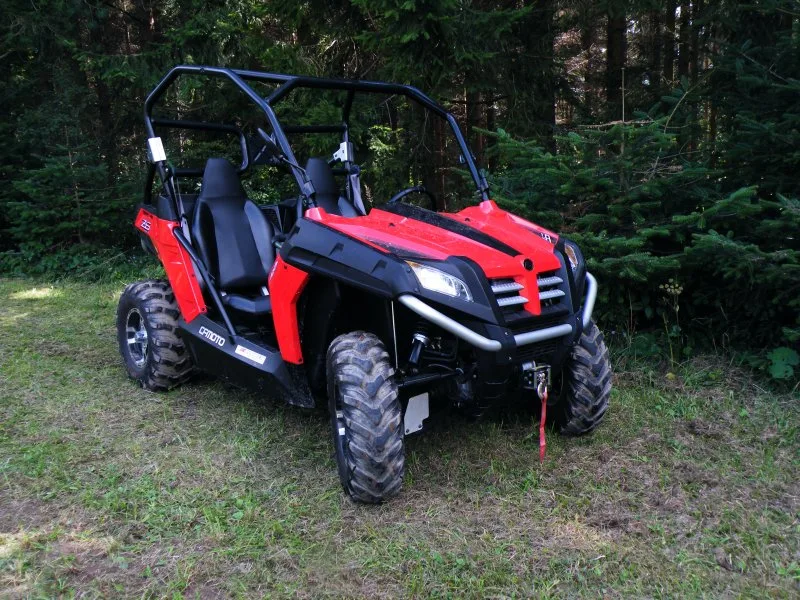
Championship Chase 2026 takes over Free Flow MX Park near Belleville, Ontario, today with a schedule built around UTV and side-by-side qualifying, short-course competition and main races. Can X Racing lists registration from 8 a.m., a drivers’ meeting at 9 a.m., course familiarization beginning at 9:15 and qualifying at 10. Awards are scheduled for 6 p.m. The race-day program runs from morning registration through evening awards, giving competitors a full day of qualifying and wheel-to-wheel competition.
A full competition day
The organizer’s published timetable separates stock, UTV and SxS competition from modified and unlimited classes. Short-course sessions begin late in the morning, followed by main races in the afternoon. That structure asks teams to shift quickly from learning the course to producing a qualifying effort and then managing a longer contest.
A one-day format leaves little room to correct a preventable preparation problem. Tire condition, wheel fasteners, steering components, cooling, belts and safety equipment need attention before the machine enters the course. Drivers and co-drivers must also arrive ready for the mandatory meeting and staging times. Missing a parade to the start can result in being moved to the back of the grid under the published rules.
Pre-running is controlled, not competitive
Can X Racing states that the parade lap and pre-running are intended to familiarize competitors with the route. Drivers and co-drivers must wear full race gear, and the organizer limits pre-running to a cruising pace rather than race speed. Aggressive passing is prohibited. Slower vehicles are expected to keep right, and approaching drivers are instructed to use a horn before a safe pass.
Those details matter because reconnaissance can create risk when competitors treat it like an unofficial qualifying session. A controlled lap gives teams the chance to identify braking points, surface changes and road crossings without the pressure of a timed result. The organizer also instructs drivers to treat road crossings as stop signs, give civilian traffic the right of way and avoid passing on roadways.
Bonus points raise the stakes
The event’s published scoring table awards bonus points by finishing position, with 12 for first, 10 for second and descending values through the field. Remaining finishers receive two points. That system gives the race a championship consequence beyond a single-day trophy. A competitor’s decision may be shaped by the points needed, not only by the possibility of winning one heat.
Finishing therefore has strategic value. A team that cannot maintain the leader’s pace may still protect a meaningful points result by managing the machine. Conversely, an aggressive attempt to gain one position can become expensive if it produces a mechanical failure or a non-finish.
What spectators need to know
The organizer lists onsite spectator admission at $20 for the weekend, including dry camping, with children 12 and under admitted free. It says spectator tickets are cash-only and that attendees receive wristbands distinguishing racers from spectators. Restricted course areas remain off limits without the correct credential.
Spectators should use designated safe areas and follow staff directions. Off-road courses can place vehicles close to changing surfaces, dust and debris. A location that looks clear before a race may become hazardous once machines are moving at speed. The organizer’s map and barriers take priority over a better camera angle.
Why this Canadian event matters
Ontario off-road racing gives riders a structured place to compete and creates work for organizers, marshals, photographers, parts suppliers and nearby businesses. It also reveals how customers use UTVs and side-by-sides under loads that ordinary trail riding may never produce. That experience can improve conversations about maintenance and safety when it is translated responsibly.
Dealers should avoid implying that recreational machines are race-ready without inspection or class-specific preparation. Competition use can affect warranty, service intervals and component life. Customers need clear guidance about approved equipment, protective gear and the difference between a showroom configuration and a machine prepared for a sanctioned event.
Competitors qualify in the morning, race through the afternoon and pursue both event finishes and championship bonus points at a Canadian off-road venue. Once the scheduled awards are complete, official results will show how the day affected the championship standings. Travellers should check same-day organizer notices for weather or operational changes.