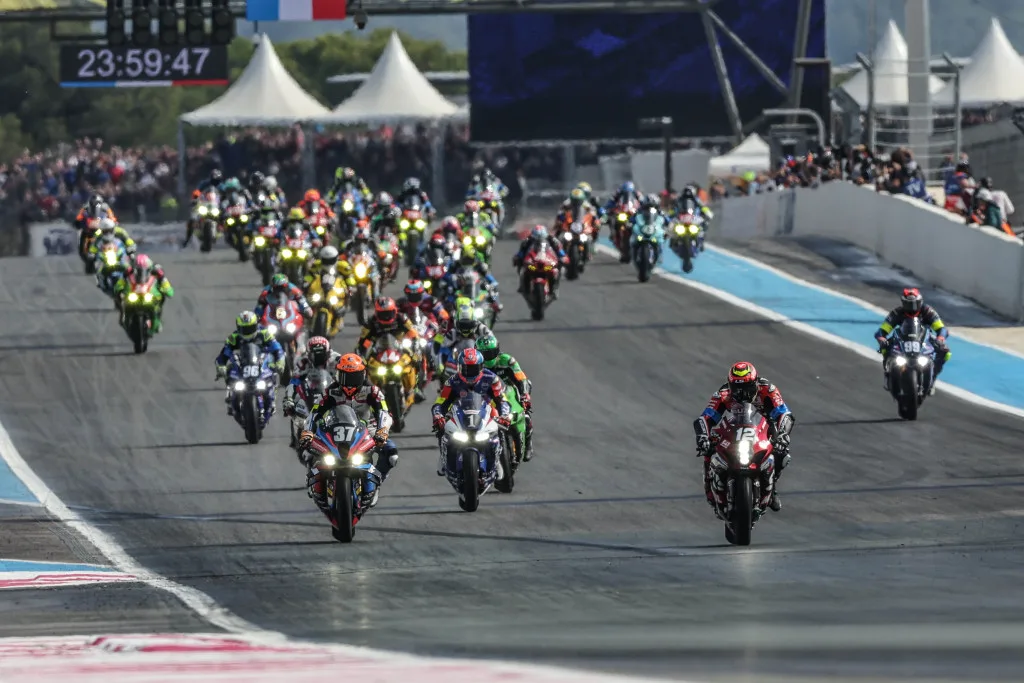
The Bol d’Or opens its 2026 event program Thursday, September 17, at Circuit Paul Ricard, bringing 56 teams to the final round of the FIM Endurance World Championship. The official entry material divides the field across four classes, with the 24-hour race anchoring a September 17–20 schedule. That opening-day timing makes Wednesday the practical moment for fans, teams and suppliers to verify the roster and program.
A broad field for the finale
FIM EWC says 17 teams are entered in the headline Formula EWC class, including five Yamahas, four BMWs, four Kawasakis, three Hondas and one Suzuki. The balance of the 56-team field is spread across the other categories, which give production-based machinery and alternative technical packages distinct competitive homes. The entry count describes teams, not individual riders, and it can still change before official track activity.
The championship finale adds consequence beyond one race result. Endurance racing rewards speed, but it also exposes preparation, rider handoffs, pit execution, lighting, fuel strategy and the ability to repair a motorcycle under pressure. A team can lead for hours and still lose time through a small mechanical issue or procedural error. That combination is why a 24-hour event provides different evidence from a sprint weekend.
Circuit Paul Ricard adds its own demands. Long high-speed sections, changing temperatures and night running require teams to manage tires, brakes, fuel and visibility over repeated stints. The event source does not publish a universal setup, and spectators should be wary of technical claims that pretend one configuration suits every brand, rider or weather condition.
What starts Thursday
The event dates run from Thursday through Sunday, with practice, qualifying and support activity leading into the 24-hour contest. The race itself is the centrepiece, but opening day matters because it begins official scrutiny of riders, machines and team execution. Final session times, access rules and any schedule changes should be checked through the organizer because weather or operational decisions can alter the program.
For Canadian viewers, France’s time zone makes the live schedule especially important. A date posted without a time zone can lead to a missed session, and streaming availability may differ by country. Fans should use authorized Canadian broadcast or subscription information rather than assuming that a European event page guarantees access.
Canadian industry relevance
The Bol d’Or is not a Canadian retail launch, but its four-class field is useful to dealers and riders interested in durability. Endurance racing makes consumables and service visible: tire consistency, brake life, lighting, chain and sprocket care, fastener checks, fluid management and pit organization all contribute. The exact competition components are specialized, so the lesson is disciplined maintenance rather than direct parts transfer to a street motorcycle.
Dealers can use the event to explain why maintenance intervals and installation quality matter on ordinary machines. A customer planning touring or track use benefits from documented tire condition, brake inspection, chain adjustment, charging-system checks and correctly torqued fasteners. That advice should follow the owner’s manual and model-specific service information, not a race-team schedule.
The manufacturer spread also gives brand followers multiple entry points. Five marques are represented in Formula EWC alone, but the number of teams does not predict the winner. Factory support, rider lineups, class rules and execution all matter. A strong result for one race bike should likewise not be converted into a blanket reliability claim for every production model wearing the same badge.
An image of endurance, not a current race photograph
The accompanying hero is a freely licensed overview of Circuit Paul Ricard rather than an image of the 2026 field. That distinction is deliberate: it accurately depicts the venue without implying that an older or unrelated motorcycle photograph shows this year’s entrants. Race-specific imagery should be updated only when the organizer publishes a verifiable current asset with clear provenance.
What comes next
Thursday practice and qualifying will establish the first competitive order, followed by final grid confirmation and the race. Material follow-up triggers include a pole result, a significant entry change, a championship-deciding retirement or the final class and title results. For now, the verified news is that the finale has reached its opening window with 56 teams, four classes and a full endurance test waiting at Paul Ricard.