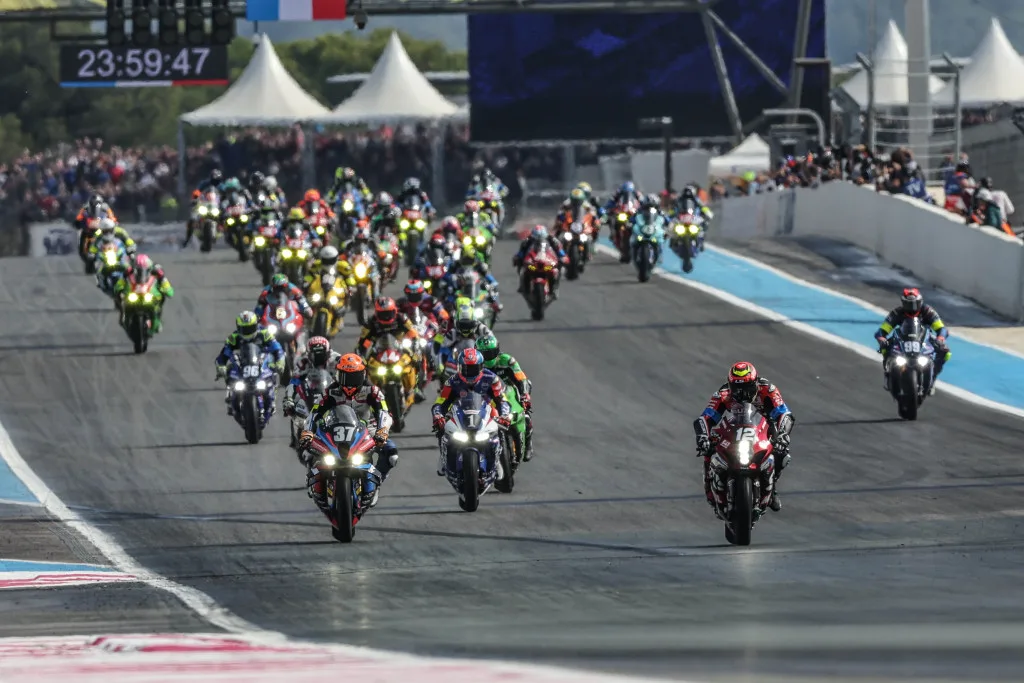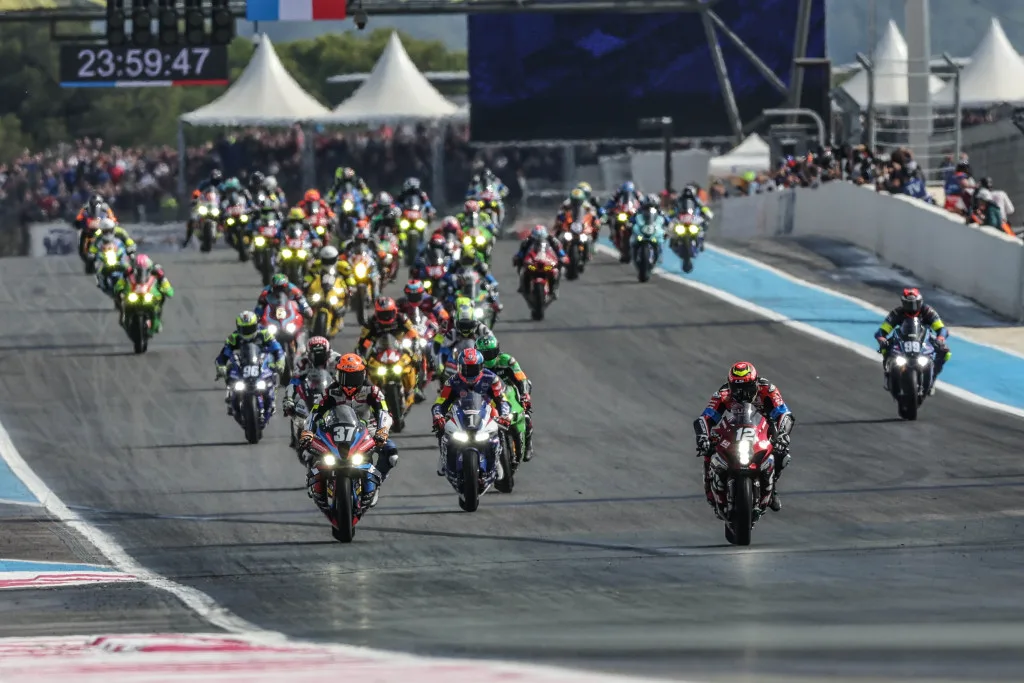
The 2026 Bol d’Or is now underway at Circuit Paul Ricard, where 56 teams have entered the final round of the FIM Endurance World Championship.
Opening-day activity on September 17 moves the event beyond the entry-list stage and into the operational work that determines whether a team is ready for a 24-hour race. Administrative checks, technical scrutineering and track sessions begin a four-day program that culminates in the endurance race at Le Castellet, France.
The Bol d’Or runs through September 20 and closes a four-round FIM EWC season.
A 24-hour race begins long before the flag
Endurance racing places unusual pressure on preparation.
A team needs a fast motorcycle, but it also needs a machine that can be refuelled, serviced and repaired repeatedly. Three riders need settings they can all use. Crew members need procedures that remain accurate after hours of continuous work.
Opening day is where those systems begin meeting real event conditions.
Technical scrutineering confirms that motorcycles and equipment comply with regulations. Administrative checks establish the people and documents behind each entry. Practice gives teams their first opportunity to compare planned setups with actual grip, temperature and track conditions.
None of those tasks produces a trophy, but errors at this stage can shape the entire weekend.
Fifty-six teams across four classes
FIM EWC has confirmed 56 teams for the 2026 Bol d’Or.
The field is divided across four classes, putting motorcycles with different technical rules and performance levels on the same circuit.
Formula EWC contains the top-specification endurance machines. Superstock retains a closer relationship to production-based motorcycles. Other classes add additional technical approaches to the field.
That multi-class structure changes the race for everyone.
Faster riders have to manage traffic without taking unnecessary risks, while slower-class teams need predictable lines and situational awareness. The challenge becomes even harder at night, when fatigue, lighting and closing speeds can make routine overtaking more demanding.
The outright result receives the most attention, but each class has its own competitive story.
Paul Ricard closes the championship
The 89th Bol d’Or is also the final round of the 2026 FIM Endurance World Championship.
The season has already included the 24 Heures Motos, the 8 Hours of Spa and the Suzuka 8 Hours.
That gives Paul Ricard two levels of significance.
Winning the Bol d’Or is a major achievement on its own, while the final championship standings also depend on what happens over the weekend.
Endurance points can be influenced by more than finishing position because teams must first survive the mechanical and operational demands of the event.
A fast motorcycle that spends too much time in the garage can lose to a slightly slower package that runs cleanly for 24 hours.
Preparation is part of performance
The opening sessions give teams a chance to establish a baseline before the race.
Lap time matters, but it is not the only useful number.
Teams need to understand tyre degradation, fuel range, rider comfort, brake wear and how the motorcycle behaves as temperature changes.
A setup that works for one rider over a qualifying lap may be less effective when three riders have to share the motorcycle through daytime heat and overnight running.
That compromise is central to endurance racing.
The crew also needs to rehearse the work that will happen dozens of times during the race. Refuelling, wheel changes, brake inspection, rider changes and routine checks all have to be quick without becoming careless.
Seconds saved in a pit stop can be valuable. A mistake that creates a penalty, unsafe release or mechanical problem can erase far more time.
Why endurance racing matters beyond France
The Bol d’Or is a French event, but the technical lessons have broader relevance for riders and service departments.
Endurance racing rewards disciplined inspection, organized parts storage, accurate records and preventative maintenance.
Those same habits matter in Canadian powersports service work.
A technician preparing a motorcycle for a long-distance trip or a track weekend may not face a 24-hour race, but the basic questions are similar: are the wear items within specification, are fasteners checked, are fluids fresh, are tyres appropriate, and is there a plan if something fails?
Race teams turn those questions into a highly structured system because every delay is visible on the timing screen.
Production links need careful interpretation
Endurance championships can create strong interest in manufacturers because recognizable brands compete directly.
The 2026 Formula EWC field includes motorcycles from manufacturers such as Yamaha, BMW, Kawasaki, Honda and Suzuki.
That does not mean a race result proves that one showroom motorcycle is universally more durable than another.
Factory and endurance teams use specialized preparation, race parts, specific tyres and highly trained crews. Rules also differ by class.
The useful connection is technical rather than simplistic: endurance racing shows how teams manage heat, wear, fuel, tyres, braking and serviceability under extreme operating cycles.
Buyers should still evaluate road motorcycles based on their own specifications, intended use and maintenance requirements.
What to watch through the weekend
Practice and qualifying will establish the first meaningful performance order, but endurance racing rarely ends where qualifying starts.
Weather, traffic, mechanical problems, crashes and pit execution can change the hierarchy repeatedly.
Rider consistency becomes increasingly important as the race moves into darkness and fatigue accumulates.
Teams that lose early time may also have to decide whether to increase pace and risk or continue with a conservative strategy.
The championship dimension adds another calculation because some teams may need to balance an individual race result against the points required for the season standings.
Bottom line
The 2026 Bol d’Or is active at Circuit Paul Ricard with 56 teams preparing for the season-ending 24-hour race.
Opening-day checks and track work are the first practical test of the systems each team will rely on through September 20.
The race will eventually be decided on the circuit, but endurance competition makes one principle unusually clear: speed only matters when the motorcycle, riders and crew can sustain it for the full distance.