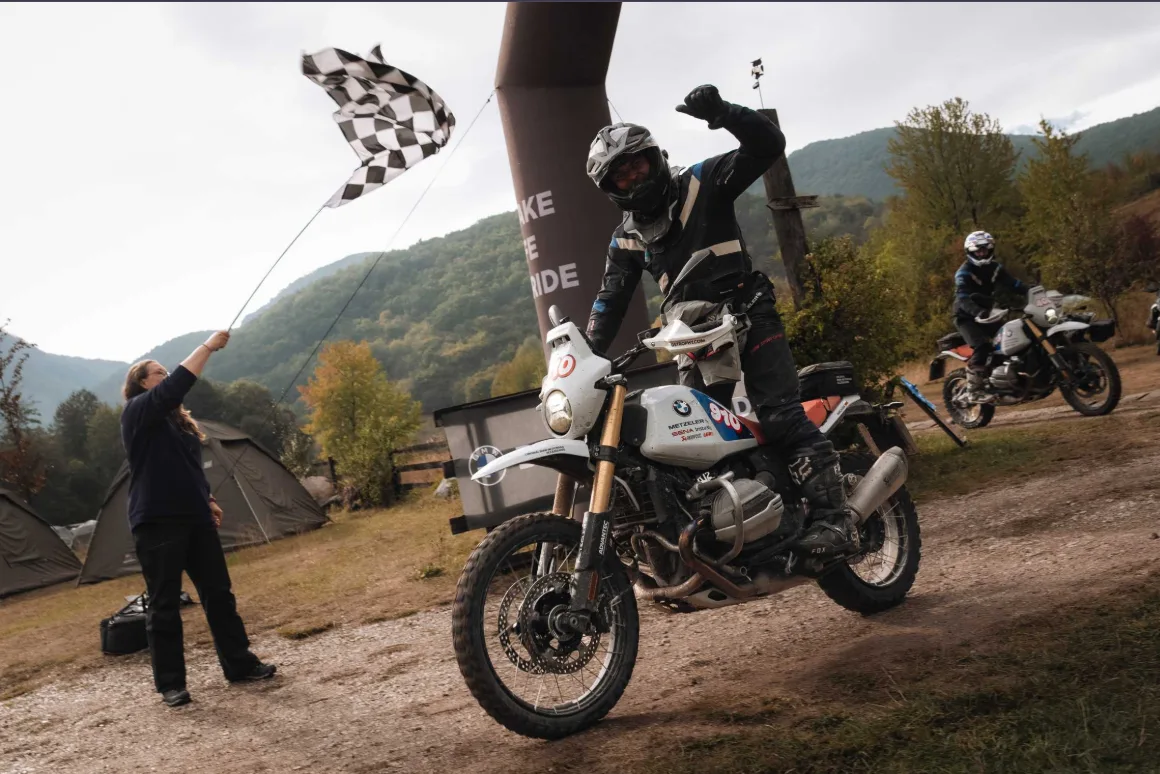
The 2026 BMW Motorrad International GS Trophy has concluded in Romania after six days and roughly 1,500 kilometres through the Carpathians, with Team Germany winning the men's competition and Team Europe taking the women's title.
BMW says 30 riders from 13 nations took part in the event.
The route mixed paved travel with extensive off-road sections, including forest tracks, mountain paths, riverbeds and high-altitude terrain. Around half of the total distance was completed away from paved roads.
Six long days tested more than speed
The GS Trophy is structured differently from a conventional race.
BMW emphasizes navigation, teamwork, riding accuracy and problem-solving rather than outright lap times.
That format shaped the 2026 event.
Three consecutive days required riders to spend 11 to 12 hours moving, and one of the longest stages covered more than 300 kilometres, including approximately 170 kilometres of trail.
Those distances make consistency more important than one fast section.
A team has to keep moving, manage fatigue and make good decisions even when the terrain becomes slower and more technical.
Germany and Europe topped the standings
Team Germany won the men's classification with 203 points.
Team Europe finished second with 147, followed by Ukraine with 144.
Australia scored 138, Japan 135, Korea 131, the International team 128 and China 102.
In the women's category, Team Europe won with 200 points.
The International women's team finished second on 184, followed by Australia on 164, China on 159 and Germany on 146.
The points reflect performance across the event's riding and team challenges rather than a single final race.
Romania provided a demanding backdrop
BMW's event summary describes a route that changed constantly.
Riders encountered narrow forest tracks, washed-out mountain paths, riverbeds, fog, wet ground and cold high-altitude conditions.
That variety is a large part of what separates an adventure event from a conventional circuit competition.
Traction changes from one section to the next. Visibility can deteriorate. A rider who is comfortable on gravel may find mud or a steep rocky climb much more demanding.
Long days also make small mistakes more likely.
Fatigue changes decision-making, and poor hydration or concentration can become as important as technical riding ability.
The R 12 G/S carried every competitor
BMW supplied the R 12 G/S as the competition motorcycle for the 2026 Trophy.
Using a common machine puts more emphasis on rider adaptation and team execution because competitors are not choosing completely different motorcycles for different terrain.
It also gives BMW a highly visible real-world environment for the model.
That should not be confused with an ordinary customer test ride.
GS Trophy motorcycles are used in a professionally organized event with route planning, support crews and experienced riders.
The conditions may resemble the type of terrain adventure owners seek, but the event itself is much more controlled than an unsupported backcountry trip.
Adventure riding rewards preparation
The lessons from an event like the GS Trophy translate well to Canadian adventure riding even when the specific route is overseas.
Long-distance off-road travel places unusual demands on basic preparation.
Tyre choice has to match the terrain. Riders need enough range between fuel stops. Luggage must stay secure. Controls need to remain usable while standing. Navigation equipment has to survive vibration, rain and repeated handling.
Personal preparation matters as much as motorcycle setup.
Hydration, layers, food, communication and the ability to make conservative decisions late in the day can determine whether a trip remains enjoyable.
For Canadian riders travelling in remote areas, recovery and emergency planning also deserve attention because outside help may be much farther away than it is at an organized international event.
Teamwork is built into the scoring
BMW repeatedly positions the GS Trophy around team spirit.
That changes the way competitors approach difficult sections.
The strongest individual rider cannot simply disappear down the trail if the format requires the team to solve challenges together.
That resembles real adventure travel more closely than a sprint race.
Riders on a multi-day trip often need to help with navigation, mechanical problems, luggage, recovery or route decisions.
A group that communicates well can make better progress than one in which every rider is focused only on personal pace.
What the result means for Canadian riders
The Romanian event does not create a Canadian product launch or pricing change.
Its relevance is cultural and technical.
Adventure motorcycling continues to attract riders who want a machine capable of road travel and unpaved exploration, and the GS Trophy showcases that style of use at a highly organized level.
Canadian dealers serving adventure riders can take the same practical focus: setup, protection, luggage, tyres, navigation and rider training often matter more than adding unnecessary power.
Customers also benefit from realistic conversations about the terrain they actually intend to ride.
A 1,500-kilometre test of consistency
After six days, Team Germany and Team Europe leave Romania as the men's and women's GS Trophy winners.
The numbers tell part of the story - 30 riders, 13 nations and roughly 1,500 kilometres - but the format is built around endurance, judgement and teamwork as much as riding pace.
That combination is what keeps the GS Trophy distinct from conventional motorcycle competition.
It presents adventure riding as a discipline where the rider, machine and team all have to keep working long after the first difficult section is over.