“Why Would We Not Do It Now?”
How an Alberta couple went from new riders in Edson to nearly 38,000 kilometres across the Americas
When RideFirst caught up with Bret and Tanya, the Alberta couple behind Morrisons Enroute were speaking to us from Colombia.
They had been on the road for roughly 420 days.
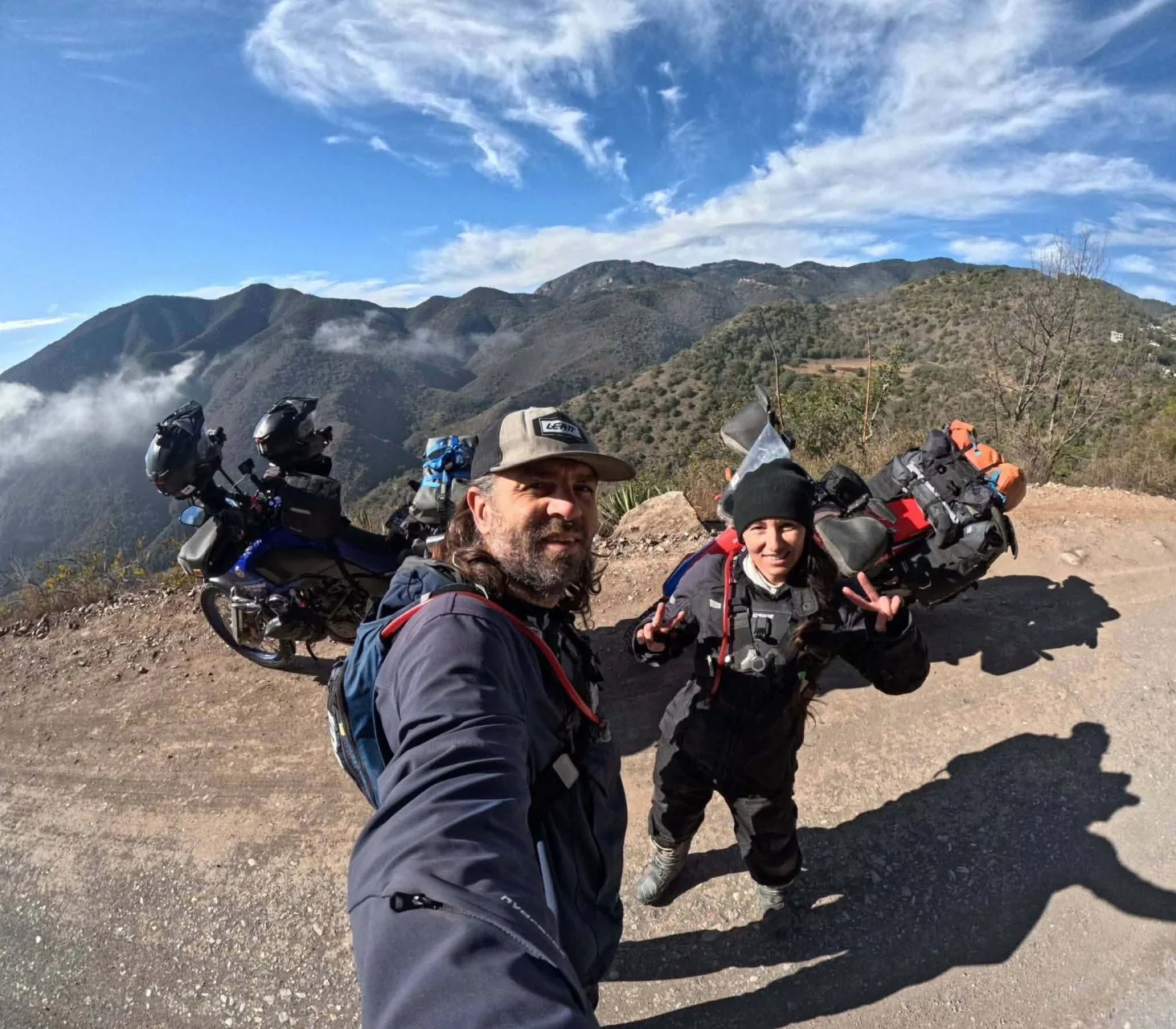
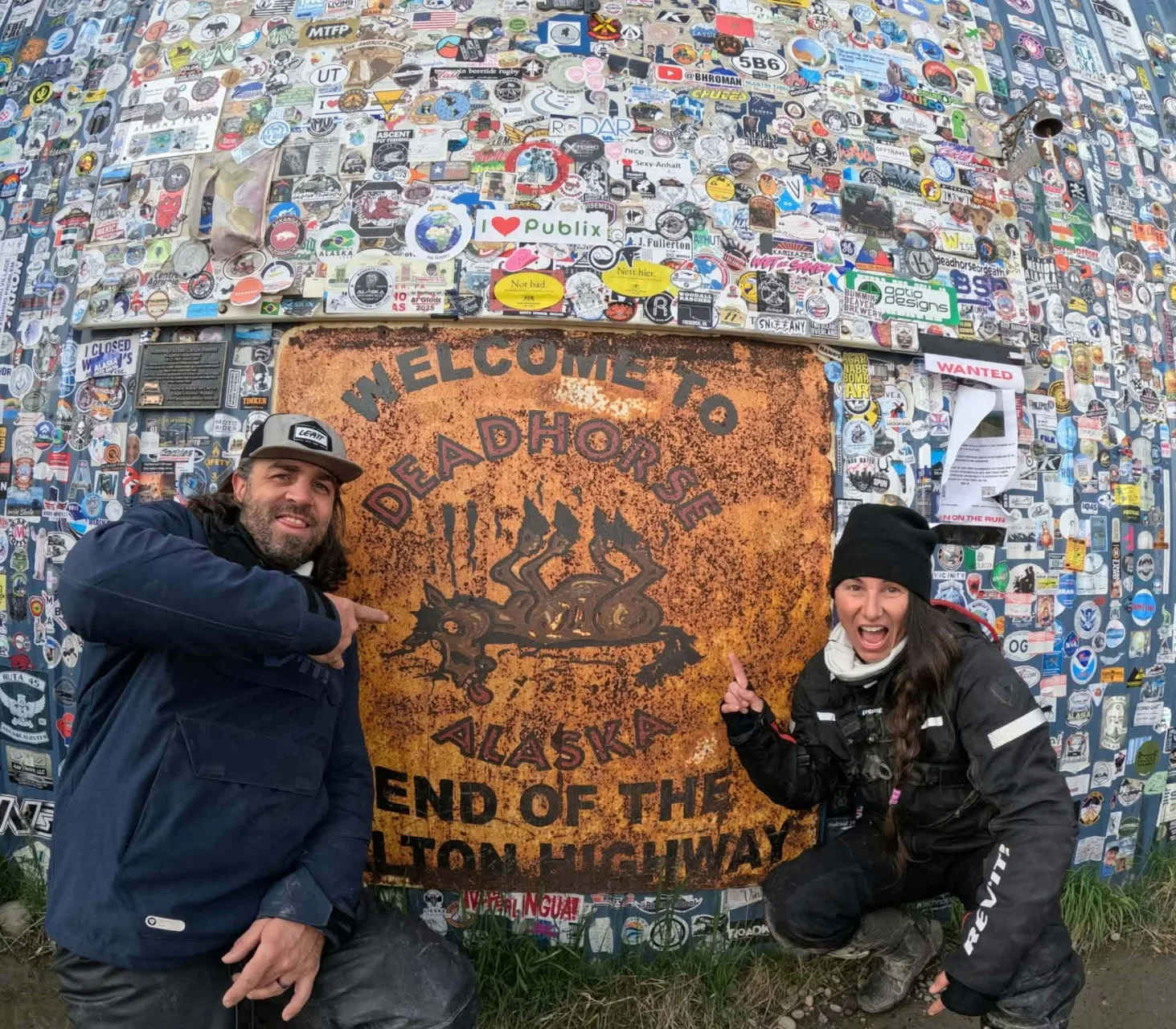
Their motorcycles — Bret’s Yamaha Ténéré 700 and Tanya’s Honda CRF300L Rally — had carried them north from Edson, Alberta to Prudhoe Bay, Alaska, before turning south and beginning the long journey through the United States, Central America and into South America.
By the time of our conversation, they were just shy of 38,000 kilometres into the trip.
That alone would make for a remarkable motorcycle story.
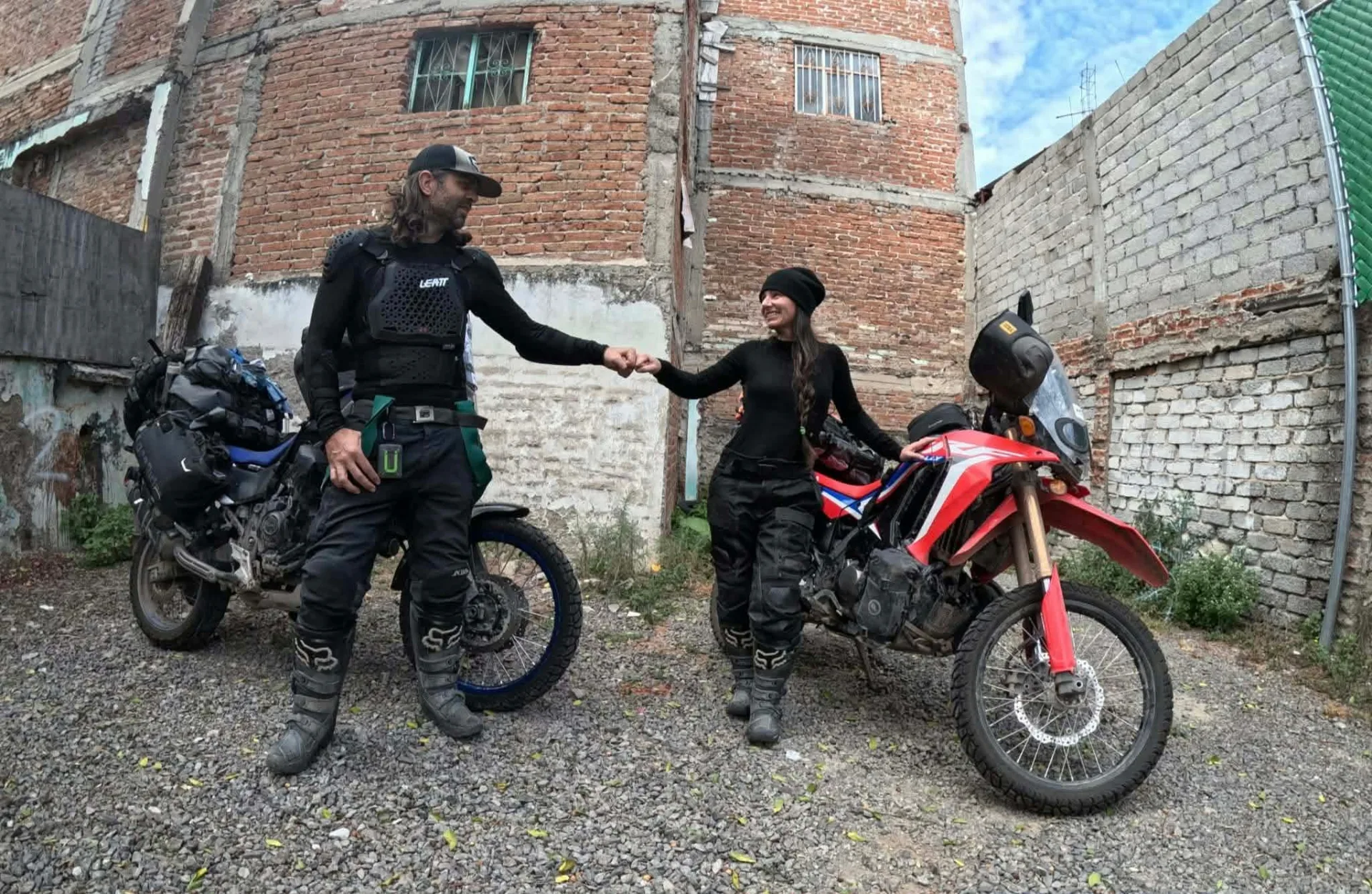
Then Tanya mentioned something that changed the scale of it completely.
She had received her motorcycle licence one week before they left.
And before that?
They had already purchased the motorcycles before Tanya had ever even sat on one.
For many riders, a trip like this would be the culmination of years — maybe decades — of riding experience.
For Bret and Tanya, it became the classroom.
---
The motorcycles weren’t the original plan
Travel itself was nothing new to them.
Beginning around 2010, Bret and Tanya spent years backpacking through different countries. Their cycle was simple: travel until the money ran low, return to Canada, work, save and leave again.
Eventually, buses became less appealing.
So they started looking for another way to travel.
For a while, the answer appeared to be sailing.
They researched sailboats for years, saved money, travelled to the United Kingdom for training and began seriously considering a life that could take them through Europe by water.
Then Tanya spent nearly 28 hours sick during a ferry crossing.
The sailboat plan suddenly became considerably less attractive.
Next came the idea of an overland vehicle, but the cost and complications of taking an expensive vehicle internationally pushed them in another direction.
Then Bret asked a question.
What about motorbikes?
He had watched other people travelling on motorcycles and began wondering why they couldn’t do the same.
There was one obvious problem.
They weren’t motorcycle riders.
Bret was familiar with using a clutch, but he still had to learn how to actually ride a motorcycle. Tanya was starting even further back — she had never used a clutch before.
Still, the idea stuck.
It was the middle of winter. They were working in Fort McMurray.
“Maybe motorbikes,” he suggested.
Tanya said yes.
And that was apparently enough to get things moving.
---
Learning to ride when the bike barely fits
For Tanya, there was another challenge beyond simply learning clutch control, shifting and balance.
She is roughly five-foot-one.
Adventure motorcycles are not generally designed around riders of that height.
After getting comfortable during a riding course on a Honda Rebel — a motorcycle she could easily reach the ground on — she climbed onto the bike they had bought for the journey.
Suddenly, touching the ground was a different story.
She could barely get a foot down.
The bike weighed hundreds of pounds.
There wasn’t a magic solution.
They lowered what they could, adjusted the setup, and Tanya learned how to shift her body when stopping so she could get one foot firmly onto the ground.
She spent weeks riding around a field, initially staying in first gear until the fundamentals became familiar.
Then she kept progressing.
The internet, predictably, had opinions.
People told them they were rushing.
They needed more experience.
It was dangerous.
They should stay home.
Tanya’s answer was simple: winter was coming to Alberta.
Staying home would mean parking the motorcycle for months.
Leaving meant she could gain experience every day.
“We’re doing a day trip at a time,” they recalled.
They just weren’t returning to the same home each night.
---
Edson to Alaska — then turn south
They left from Edson, Alberta and headed north.
Their first major objective was Prudhoe Bay, Alaska.
They rode through Alberta, continued north and eventually tackled the Dalton Highway before turning the motorcycles south again.
From there, the trip became much less structured.
They began looking for back roads.
Fire roads.
Dirt.
Trails.
Routes that would get them away from the main highways and into the places they actually wanted to experience.
In the United States, they used Backcountry Discovery Routes where possible, including portions of Idaho and Utah.
Farther south, where established motorcycle routes became less obvious, Bret began researching tracks used by bikepackers and cyclists, connecting whatever roads and trails looked promising.
Sometimes those routes work perfectly.
Sometimes a bicycle can go somewhere a loaded adventure motorcycle probably shouldn’t.
Then they turn around and find another way.
They don’t plan particularly far ahead.
If they discover a road they want to explore, they take it.
If they decide another direction looks better, the route changes.
Hotels aren’t typically booked weeks in advance.
Sometimes Bret is still looking for the next place to stay that afternoon.
For two people on a journey spanning continents, the plan can be surprisingly simple:
Keep generally heading south.
---
When the plan fails, figure it out
Adventure travel is easy to romanticize when all anyone sees is the photograph.
A motorcycle parked in front of a mountain.
A perfect dirt road disappearing toward the horizon.
A campsite under the stars.
The less glamorous part is everything that happens when something breaks.
And things break.
At one point in Mexico, Tanya’s Honda developed a leaking head gasket.
Bret isn’t a trained motorcycle mechanic.
That didn’t matter very much when the motorcycle still needed to move.
So he started researching.
He watched what he could find online, looked at the machine and worked through the problem.
In a hotel parking lot.
His reasoning was refreshingly straightforward.
The motorcycle had been assembled somehow.
Therefore, it had to be possible to disassemble it and put it back together.
“You just Google it quick, look at a YouTube video,” he said. “In my mind it all makes sense. It comes apart, it’s got to go back together.”
Later in the interview he summarized the experience even more plainly.
He had never done the repair before.
He was in a hotel parking lot in Mexico.
He watched what information he could find and started removing whatever needed to come off until he could reach the engine.
Then he figured it out.
That mentality has become part of the journey.
They change tires.
Troubleshoot problems.
Find parts in countries where the part that seemed easy to source back home suddenly becomes difficult or dramatically more expensive.
And they go through tires at a pace most recreational riders never experience.
By the time of our interview, Bret was on his third rear tire and third front tire. Tanya was already on her fifth rear tire and third front.
This is not weekend mileage.
The motorcycles are being used constantly.
---
Sometimes the hotel is an abandoned school
Their approach to travel also means accepting that not every day ends neatly.
In Colombia, they suffered a flat while riding in the mountains late in the day.
They were far from the next town.
And they make a point of not riding at night.
A local woman told them about an abandoned school approximately five minutes away.
There was a basketball court where they could put up their tent.
So that became their accommodation for the night.
For many travellers, that situation might reinforce every fear they had about being far from home.
For Bret and Tanya, travelling by motorcycle has done something almost opposite.
It has made them feel better about people.
---
“Faith back in humanity”
They had already spent years travelling before motorcycles entered the picture.
But they say travelling on two wheels changed the way they interact with the world around them.
“Travelling on motorbike has given us the faith back in humanity that you lose when people are commenting on Facebook or the news or all of that stuff,” they told RideFirst.
They say they have met more people during this motorcycle journey than they did through years of backpacking.
The motorcycles start conversations.
Children wave.
Older riders stop to talk.
People want to know where they came from, where they’re going and what they’re riding.
“It can be a little kid on the street in Las Vegas or a 98-year-old man in the mountains of Colombia,” they said.
“Everybody loves motorbikes.”
That connection is part of what makes travelling by motorcycle different for them.
Inside a vehicle, the landscape can become something viewed through glass.
On a motorcycle, they describe themselves as being inside the experience.
Temperature.
Smell.
Rain.
Mud.
Gravel.
Elevation.
The condition of the road.
There isn’t much opportunity to zone out.
As Tanya put it during our conversation, they sometimes wonder whether there was life before bikes.
---
Work hard. Leave. Repeat.
One of the most revealing moments of our conversation came almost at the end.
Bret and Tanya had spent years working in Fort McMurray before this journey began.
During one stretch, they said they lived in camp for around two years.
Their rotation was 18 days on, three days off.
The workdays could run 16 to 18 hours.
Why put themselves through that?
“Just to do this.”
That context matters.
From the outside, an indefinite motorcycle trip can look like abandoning responsibility.
Their version required years of work and saving first.
They didn't discover some secret that eliminates the cost of travelling.
They prioritized it.
If the money eventually runs low, the solution isn't complicated.
They can go home.
Work again.
Save again.
Return to the motorcycles.
That has been part of their lives for years.
The important part is that work remains the means.
It isn't allowed to become the reason the journey never happens.
---
The videos were supposed to be for family
Morrisons Enroute has grown into more than a record of where they've been.
Tanya spends significant time editing their videos, working with footage from helmet cameras, motorcycle-mounted cameras, an Insta360, a drone and other equipment.
One video can take an entire day to assemble.
Longer or more complicated days sometimes turn into multiple videos.
When they stay somewhere for a week, it often isn't because they are taking a vacation from travelling.
Bret works on motorcycles and whatever else needs attention.
Tanya edits.
Then they leave again.
But building an audience wasn't the original objective.
The videos were for their family.
Parents.
Grandparents.
Cousins.
People back home who wanted to see where they were.
They decided early that if the channel grew, great.
If it didn't, the videos still had a purpose.
That may also explain why the difficult moments aren't necessarily removed.
They show struggles.
Arguments.
Mistakes.
Tanya learning as a shorter new rider.
Things going wrong.
The journey isn't presented as effortless.
And people have noticed.
One viewer told them that watching Tanya learn and seeing the difficult parts of the experience helped convince his wife and daughter to begin riding.
Another older viewer told them the videos reminded him of the motorcycle journeys he had shared with his late wife.
Those messages have become more important to Bret and Tanya than any follower count.
“Changing one person's life makes it worthwhile,” they said.
---
Giving the route away
Their website has also become a practical resource for other riders.
Bret records GPX files from many of their routes and makes them available for others to download.
The reason is simple.
He had struggled to find good tracks himself and frequently found useful routes locked behind surprisingly high prices.
If he's already recording the route for himself, he sees little reason not to let someone else use it.
For a journey built around figuring things out as they go, it fits the philosophy surprisingly well.
Learn something.
Document it.
Give the next person a head start.
---
Colombia raises the bar
After nearly 38,000 kilometres, choosing a favourite place is not particularly easy.
Bret and Tanya had travelled extensively even before beginning this motorcycle journey.
But Colombia had quickly climbed near the top of the list.
The Andes, dirt roads and seemingly endless opportunities to get off the pavement have made it particularly memorable on motorcycles.
Guatemala is another standout.
They rode through volcanic landscapes, camped near a volcano and experienced terrain unlike much of what had come before.
But even after everything they had already seen, Colombia was making a serious argument for itself.
And they had barely explored all of it.
South America could keep them occupied for another year and a half or two years.
After that?
There is still more world.
They joked that perhaps eventually they will simply run out of places to ride.
Then, when they are older and motorcycles no longer make sense for the kind of adventure they want, maybe they will return to Canada, get an overland vehicle or camper and keep exploring another way.
The vehicle may change.
The travelling probably won't.
---
Why not now?
During the journey, Bret and Tanya met an older rider heading for Alaska.
He had originally planned the trip with a group of friends.
The trip kept getting postponed.
Someone couldn't go.
The timing wasn't right.
Maybe next year.
Eventually, the rider picked a date.
He told the others when he was leaving.
If they showed up, they could come.
If they didn't, he was going anyway.
When the day arrived, he left alone.
Bret and Tanya understood the lesson.
There will always be another reason to wait.
More money to make.
Something else to finish.
Another responsibility.
Another year.
But time doesn't accumulate like money.
“For us, money is — we can go make money whenever,” they said.
“We're never going to be as young as we are right now, and we're both healthy, we're both fit and able to do it.”
Then comes the question that perhaps explains the entire journey better than anything else they said during our hour together:
“Why would we not do it now?”
They left Edson as new motorcycle riders.
Tanya had held her licence for a week.
They rode north to Alaska.
Turned around.
Kept going.
Nearly 38,000 kilometres later, we found them in Colombia.
There are still breakdowns ahead.
There will almost certainly be wrong turns, bad roads, worn-out tires and places where the plan falls apart.
There will also be roads they haven't seen yet.
People they haven't met.
And another place farther south to point the motorcycles tomorrow.
For Bret and Tanya, that appears to be enough reason to keep going.
---
Follow Morrisons Enroute
Bret and Tanya document the journey through Morrisons Enroute, sharing videos from the road along with the gear they use, motorcycle upgrades, camping equipment and GPX files from their routes.
- Website: https://morrisonsenroute.com/
- YouTube: https://youtube.com/@morrisonsenroute?si=8xHVfJn_vwcTlPE7
- Instagram: https://www.instagram.com/morrisons_enroute?igsh=MWx6Z2o4anV3eWVxeQ==
- Facebook: https://www.facebook.com/share/1HUkTV2Zbn/
- TikTok: https://www.tiktok.com/@morrisonsenroute?_r=1&_t=ZS-93vWMQ3L4oW
- Buy Me a Coffee: https://buymeacoffee.com/morrisonsenroute
Readers who want to support the journey can contribute through Buy Me a Coffee. Bret and Tanya share how contributions are used toward expenses such as fuel, food, tires, camping and accommodation.