Three Canadian organizations will receive new Polaris TRAILS GRANTS for work that ranges from winter bridge upgrades in New Brunswick to snowmobile-trail repairs in Manitoba and stewardship by an Ontario-based responsible-recreation organization.
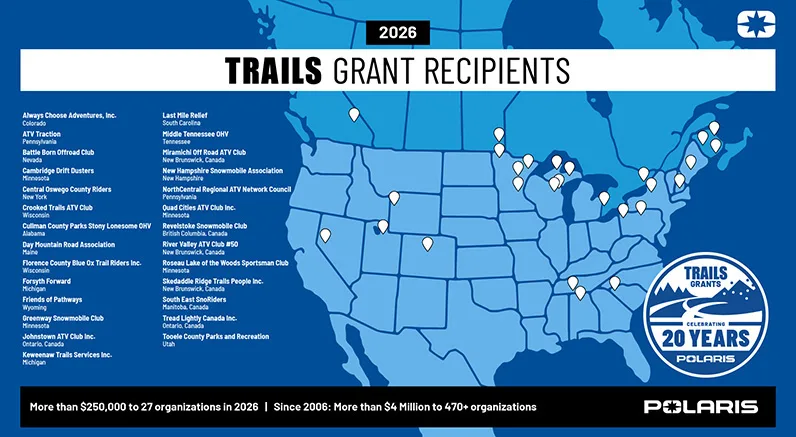
Polaris announced the fall 2026 awards on November 10. The company is distributing nearly US$125,000 among 13 off-road and snowmobile organizations in Canada and the United States, with individual awards of up to US$10,000. Combined with the spring round, Polaris says it has given more than US$250,000 to 27 organizations this year as the program marks its 20th anniversary.
Three Canadian projects make the fall list
Miramichi Off Road ATV Club in Miramichi, New Brunswick, will use its award to upgrade bridges for safer winter crossings. The official announcement does not identify the bridges, construction schedule or final project budget, so those details remain to be confirmed by the club.
South East SnoRiders in Woodridge, Manitoba, was selected to repair and rebuild a section of Trail 263 damaged by animal activity. The award addresses a specific maintenance need on a named trail, linking the funding directly to the condition of the riding network. Polaris did not disclose the precise location, length of the affected section or completion date.
Tread Lightly Canada Inc., based in Sarnia, Ontario, will receive support for trail maintenance, rider education, volunteer engagement and resource protection. The program description is broader than the two infrastructure projects, but it connects physical trail work with the education and stewardship needed to sustain motorized access.
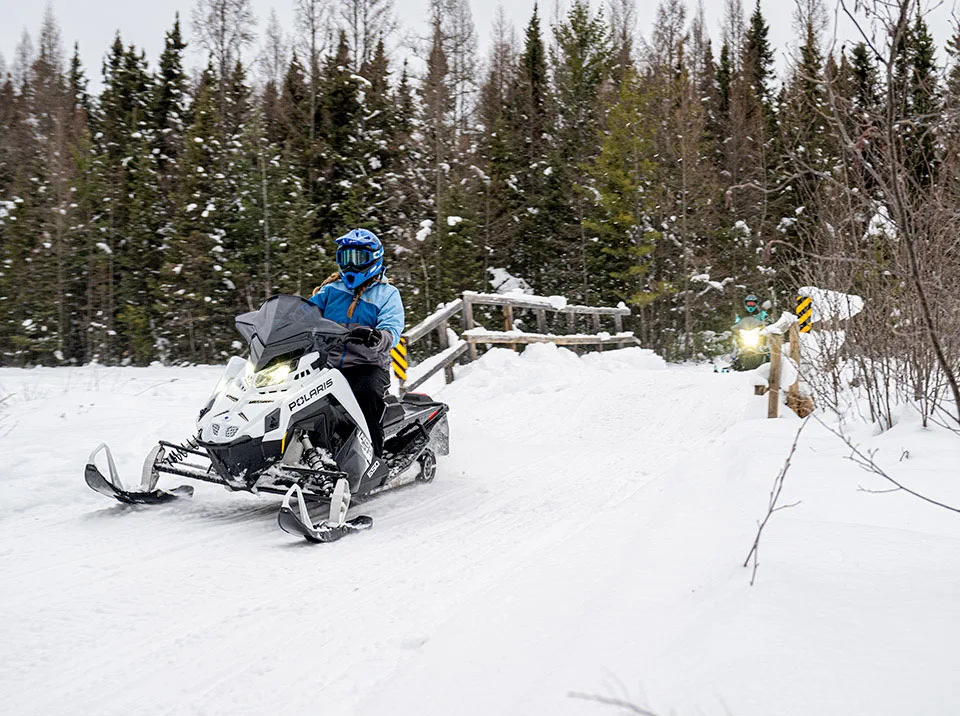
Together, the three awards show how trail access depends on many kinds of local capacity. A bridge can determine whether a winter route is safely connected. Damage to one snowmobile-trail segment can disrupt a larger network. Education and volunteer coordination can reduce conflict, improve maintenance and help organizations document responsible use.
Small grants can unlock practical work
The company did not publish the exact amount assigned to each recipient. The maximum individual award is US$10,000, so the scale of the work will also depend on project costs and any additional resources available to the organization. For volunteer clubs, financial support can help complement donated labour and local knowledge. Materials, equipment and specialist work can create cash costs even when much of a project depends on volunteers.
That leverage is one reason manufacturer-backed trail programs matter to the powersports market. Vehicles are only useful when riders have legal, maintained places to operate them. A dealership can sell an ATV or snowmobile, but it cannot create a sustainable riding network by itself. Clubs, land managers, associations, municipalities and volunteers carry much of that responsibility.
Polaris says the TRAILS GRANTS program has invested more than US$4 million in nearly 470 organizations since it began. The awards are made twice a year and support trail development and maintenance, safety and education, and efforts to preserve access to outdoor recreation. Applications for the spring 2027 round are available through the company's program page.
Why the Canadian details matter
The Canadian recipients are geographically diverse and cover both off-road and snowmobile use. That matters because access problems are often local. A national participation strategy can be weakened by a washed-out crossing, an unusable trail section or too few volunteers in one region. Regional stories can therefore be commercially important even when the dollar amount is modest.
For dealers, the immediate opportunity is not to turn a grant into a sales pitch. It is to understand what the recipient organizations are trying to accomplish and support the work without taking it over. Shops can help communicate volunteer days, share verified trail-status information, encourage responsible riding and direct customers toward local club membership. When appropriate, they can also contribute parts, equipment or staff time under arrangements set by the organization.
The award announcement does not establish a construction timetable or confirm that the work is complete. Miramichi's bridges and Manitoba's Trail 263 remain projects identified for grant support, while Tread Lightly Canada's award covers a broader set of maintenance and stewardship activities. Riders planning a trip still need current trail-status information from the relevant club or land manager; a funding announcement alone does not confirm that a route is open.
Access is an industry issue
Trail funding is sometimes treated as community philanthropy separated from the commercial side of powersports. In practice, the connection is direct. Customers are more likely to buy, maintain and replace machines when they have safe, legal and enjoyable places to ride. Clubs benefit when dealers and manufacturers recognize access as a long-term participation issue rather than a one-time marketing theme.
The November 10 award round provides a concrete Canadian example. The planned work targets safer winter crossings in New Brunswick, a damaged trail section in Manitoba, and maintenance, education and volunteer engagement through an Ontario-based organization. None is a complete solution to motorized-recreation access, but each addresses a real piece of the system that Canadian riders rely on.