Aprilia Sweeps Indonesia as MotoGP Title Lead Changes Again
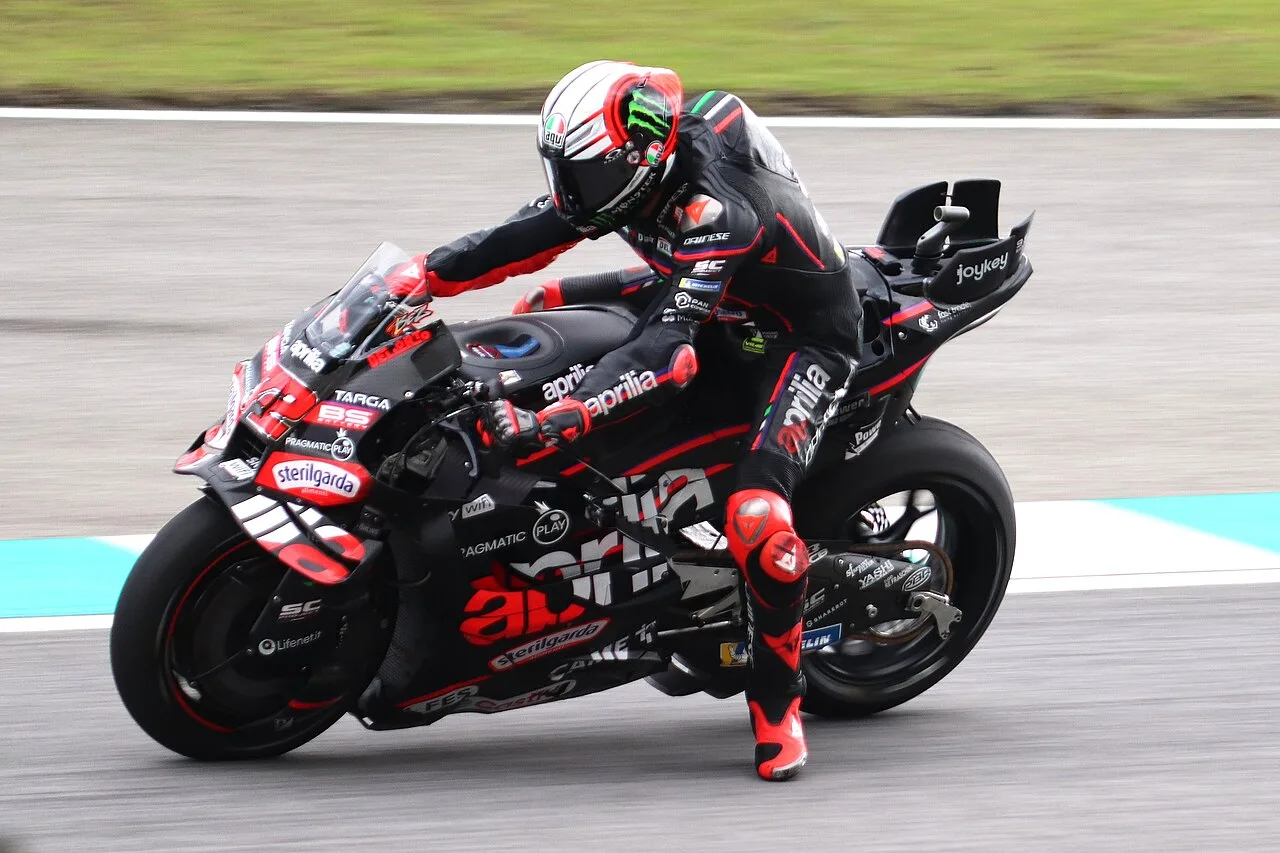
Marco Bezzecchi won Sunday’s Indonesian Grand Prix at Mandalika as Aprilia completed an unprecedented sweep of the first four MotoGP positions. Raul Fernandez finished second despite racing with two fractured fingers, Jorge Martin took third and Ai Ogura moved through to fourth. The result returned Martin to the championship lead and left the title fight separated by only two points.
Fernandez started from pole and controlled the opening half of the race, building his advantage while managing an injured braking hand. Bezzecchi remained close enough to attack and made the decisive pass with nine laps remaining. He then protected the lead to earn his first victory in several rounds and the 300th premier-class Grand Prix win by an Italian rider. Fernandez’s second place was remarkable given that he had to adjust his braking technique around the damaged fingers.
Martin’s third place mattered beyond the podium. Saturday’s sprint had briefly put Marc Marquez at the top of the standings, but the longer Sunday race reversed that order. Martin left Indonesia with 355 points, two ahead of Marquez on 353. Marquez finished sixth after fighting Pedro Acosta and struggling to match the corner speed and tire management of the Aprilia group.
The scale of Aprilia’s result is the central technical story. A manufacturer taking all four leading positions requires more than one exceptional rider. The factory team and the Trackhouse-supported machines all found performance at a circuit built around fast changes of direction, sustained corner speed and careful tire use. Bezzecchi, Fernandez, Martin and Ogura delivered different race narratives, but every route ended with an RS-GP ahead of the best non-Aprilia motorcycle.
For Canadian riders and dealers, the result is relevant even without a Canadian competitor on the grid. MotoGP shapes the sportbike market’s technology story, brand visibility and customer interest. A dominant weekend can change what enthusiasts ask about in showrooms: chassis balance, aerodynamic development, ride-height systems, data analysis and the connection between racing programs and production motorcycles. Aprilia’s sweep gives its dealer network a rare, easily understood performance headline.
The championship standings also ensure that the news will carry into the next round. Martin cannot manage a two-point margin conservatively, and Marquez has no room for a poor weekend. Bezzecchi remains mathematically involved after the victory, adding a third strategic variable. Team decisions, tire choices and the allocation of development parts will be judged against a contest that can change with a single sprint or Grand Prix.
Mandalika exposed how quickly momentum can turn. Marquez won the sprint and moved into the lead on Saturday. Less than a day later, Martin’s consistent Sunday podium restored his advantage. That contrast is a useful reminder that the sprint format creates two distinct scoring opportunities, but the full-distance race still applies the larger test of tire life, physical condition and setup adaptability.
The weekend also illustrated the value of satellite participation. Fernandez and Ogura put Trackhouse machinery into second and fourth, proving that Aprilia’s result was not confined to the factory garage. That distribution gives engineers a broader data set and gives the manufacturer more strategic presence around the title contenders. It also strengthens the case that customer-team support can be a competitive asset rather than merely extra grid capacity.
Canadian consumers should resist a direct one-to-one comparison between the prototype RS-GP and a street motorcycle. MotoGP machines are purpose-built racers, and their devices, materials and operating conditions differ sharply from road models. The meaningful connection is organizational: racing investment develops engineering staff, software methods and brand credibility. Dealers can use the result honestly by celebrating the achievement without implying that a showroom motorcycle is identical to Bezzecchi’s winner.
The next questions concern repeatability. Aprilia’s advantage in Indonesia was decisive, yet each circuit presents a different mix of braking, acceleration and grip. Bezzecchi’s return to the top step keeps pressure on both title contenders, Fernandez must recover from his hand injuries, and Martin has to defend a lead small enough to disappear in one position change. Indonesia did not settle the championship. It made the remaining rounds more consequential while giving Aprilia one of the strongest single-race results in modern MotoGP history. Every point now carries visible weight.