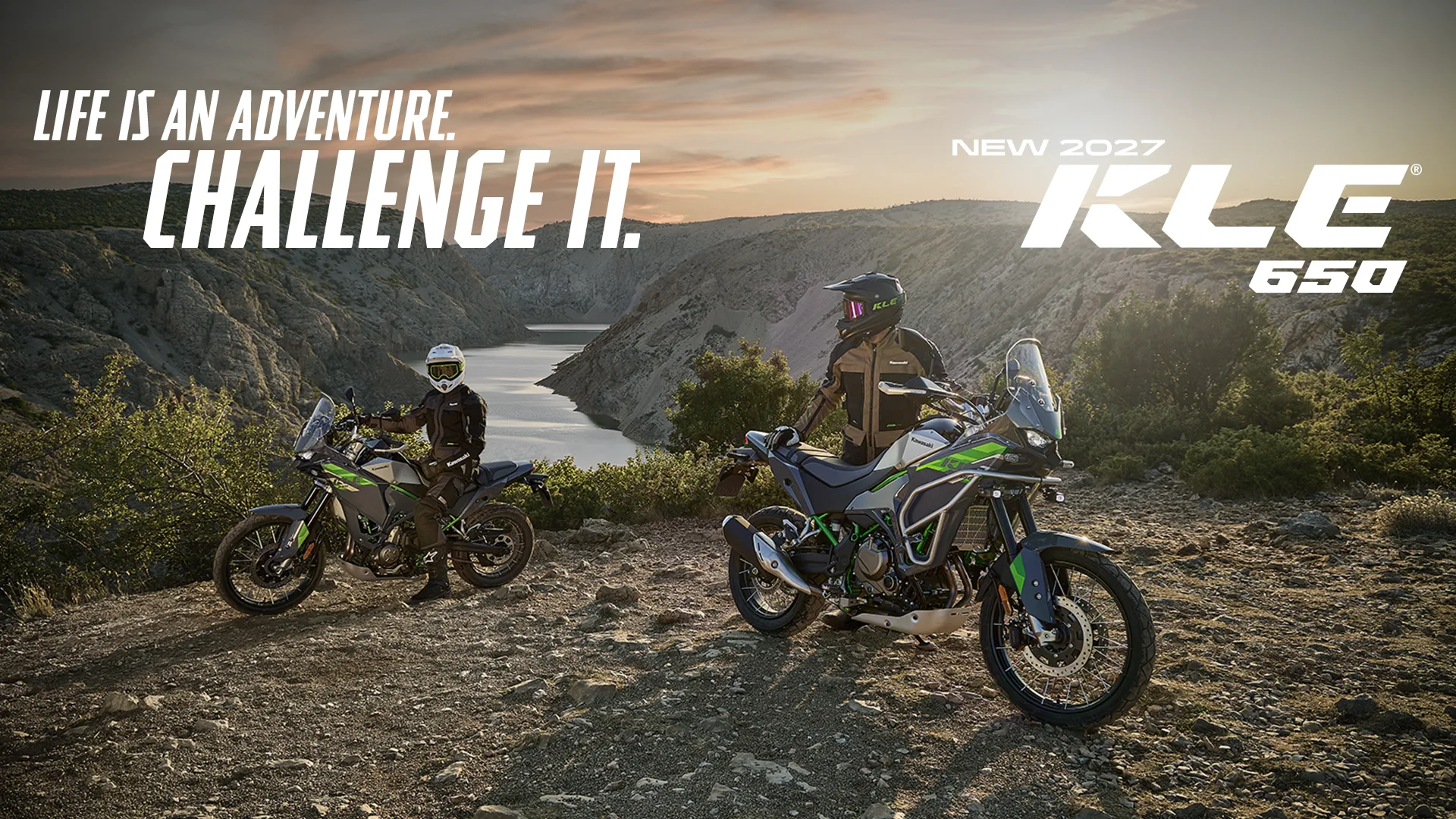
Kawasaki’s Canadian catalogue now gives adventure-bike shoppers a local price for the 2027 KLE500 SE Smartride: $9,599 before freight, preparation, taxes and other applicable charges. The conventional KLE500 is listed at $8,199 and the KLE500 SE at $8,999. The wider North American launch round was published October 27, and the Canadian listings establish that the Smartride version is offered here, rather than leaving buyers to extrapolate from European equipment announcements or U.S. prices.
A $600 decision above the SE
The Canadian price structure puts the Smartride model $600 above the conventional SE and $1,400 above the base KLE500. That makes the buying question more precise than whether an automated clutch sounds appealing. A customer already considering the SE can assess the extra cost against the starting-clutch system and tubeless spoke wheels. Someone comparing with the base motorcycle also needs to account for the SE equipment included in that larger price difference.
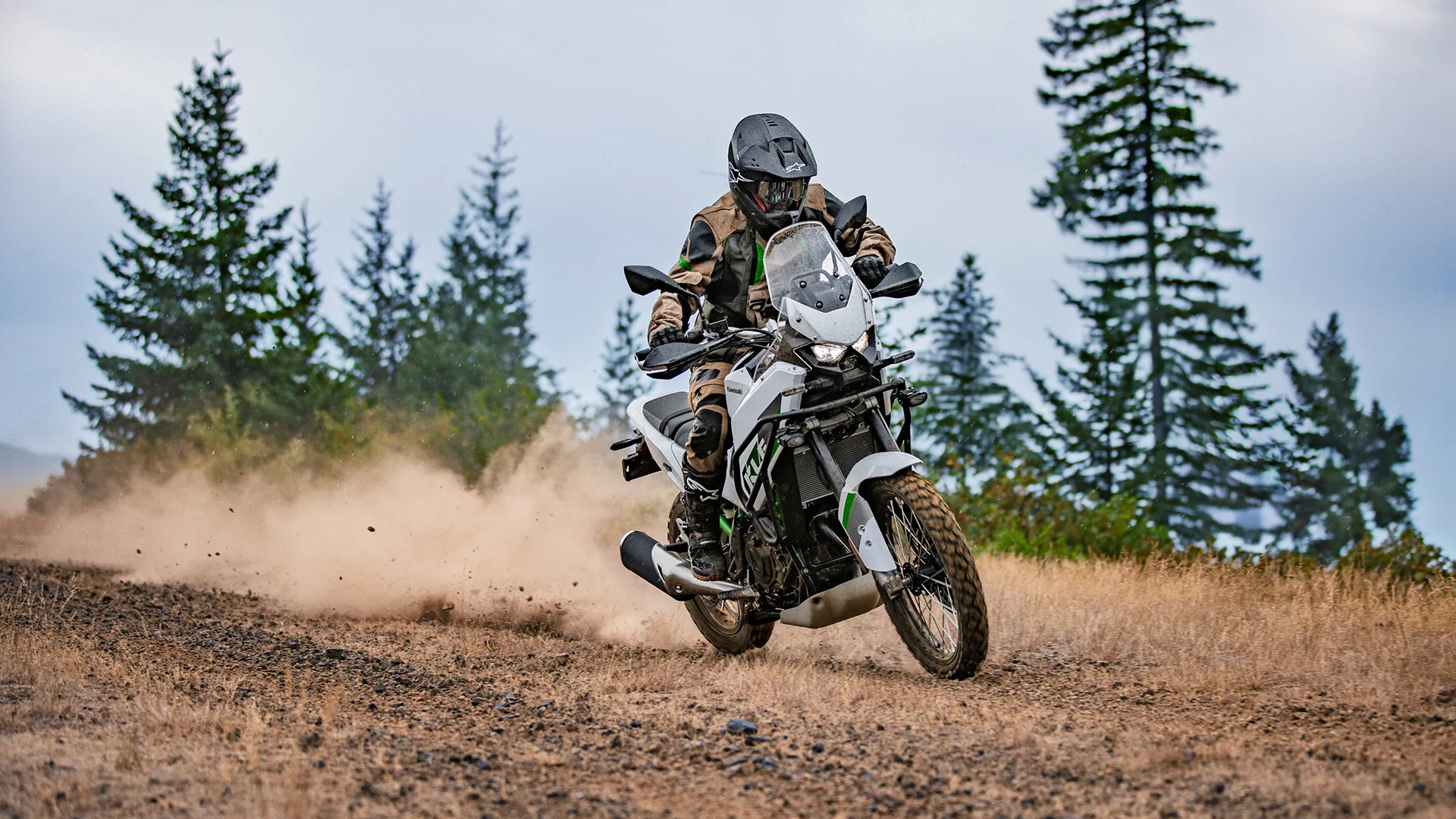
These are Canadian-dollar MSRPs, not complete purchase totals. Kawasaki’s pricing information treats destination and preparation separately, and taxes depend on the purchase location. Riders should obtain an itemized quote for the exact model, colour and accessories they want. An American MSRP converted at the current exchange rate is no longer the appropriate starting point when Canadian figures are published.
What Smartride actually automates
Smartride combines a mechanical centrifugal starting clutch with a conventional multi-disc clutch operated by the lever. The starting clutch manages engagement when pulling away and disengagement when stopping. Gear selection remains the rider’s responsibility, and the normal clutch lever is still used for gear changes while riding. The system requires no electronic actuator to perform its starting-clutch function. Kawasaki also describes an engine-brake cam that keeps the starting clutch engaged during deceleration until the motorcycle has almost stopped. That is intended to preserve engine braking as engine speed falls, rather than allowing the centrifugal starting clutch to disengage prematurely.
That distinction matters during a demonstration. Smartride is not an automatic gearbox, and it does not remove the need to understand throttle control, braking or balance. Its attraction is reducing repeated clutch work at the moments when a rider is starting, pausing or stopping. Experienced riders may value that convenience just as much as newcomers, particularly during commuting or travel with frequent interruptions.
A familiar adventure platform
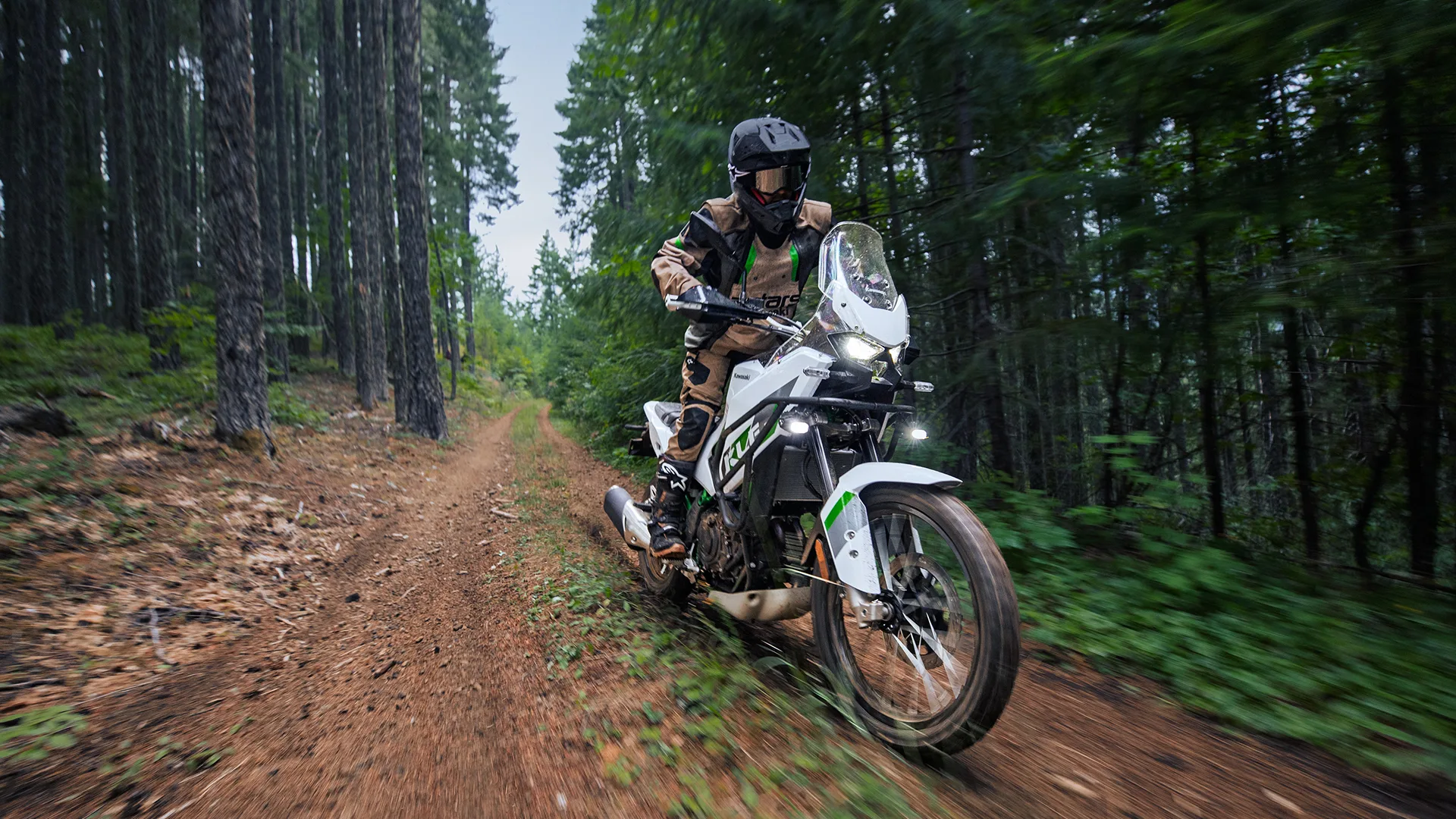
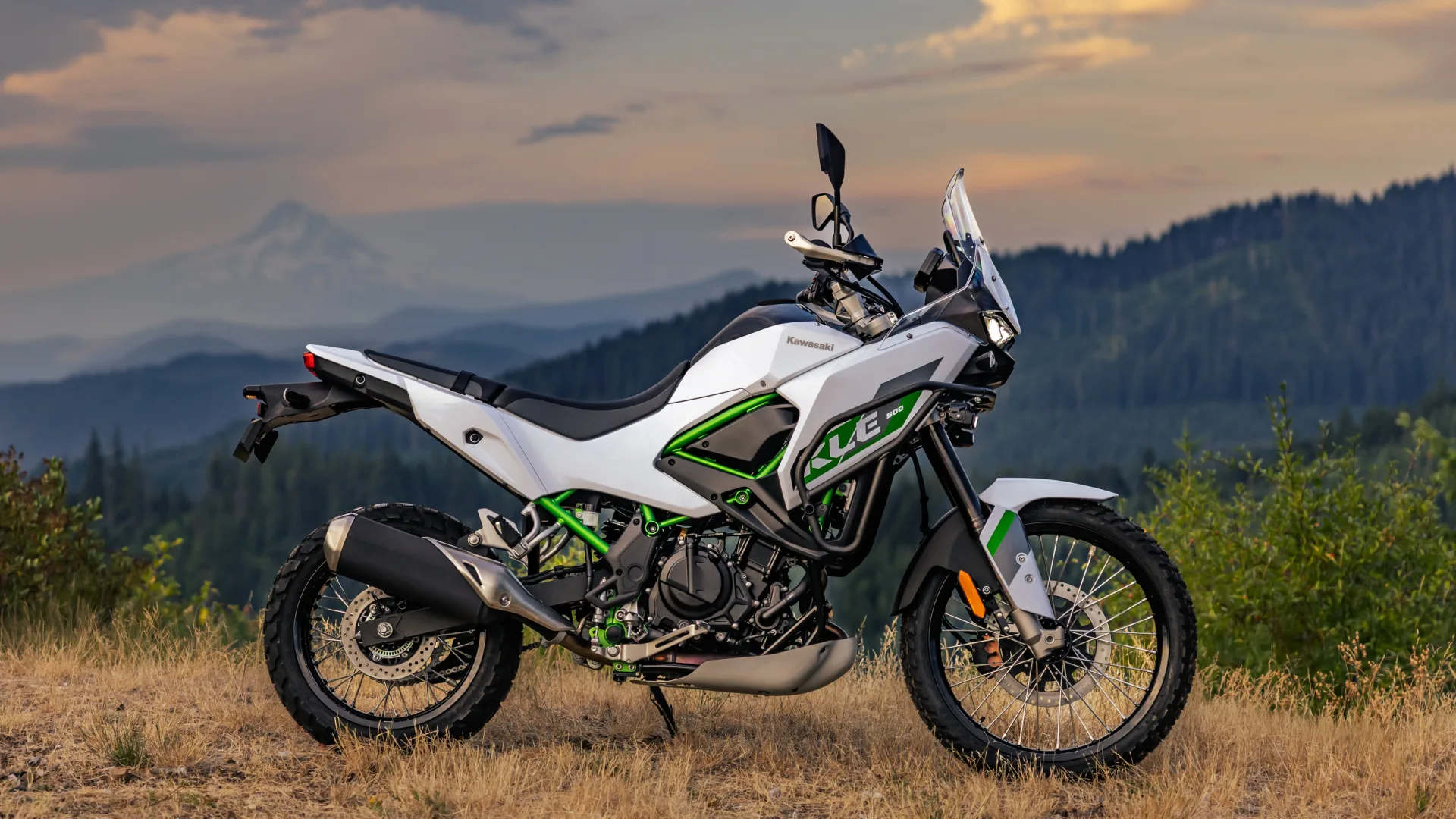
The KLE500 family uses a liquid-cooled, fuel-injected 451 cc parallel twin, a six-speed transmission and a high-tensile-steel trellis frame. A 21-inch front wheel and 17-inch rear wheel retain the rally-style layout, while the upright riding position allows the rider to change between seated and standing control. The platform is intended to combine everyday road use with unpaved-road versatility.
Canadian specifications for the Smartride version list a 43 mm inverted fork with 210 mm of travel and a New Uni-Trak rear suspension with 200 mm of travel. The listed seat height is 870 mm, fuel capacity is 16 litres and curb weight is 198 kg. Curb weight includes operating fluids and fuel; it should not be compared directly with another model’s dry-weight claim.
Equipment distinguishes the three choices
The base motorcycle has an LCD instrument panel and smartphone connectivity. SE equipment includes a 4.3-inch TFT display, LED turn signals, a taller windscreen, metal-reinforced handguards and a larger skid plate. The Smartride version builds on the SE package and adds its clutch system and tubeless-tire wheel arrangement.
Tubeless construction can make an appropriate tread puncture easier to address without removing an inner tube. It does not make the motorcycle immune to tire or rim damage, and it does not turn every puncture into a roadside repair. Touring buyers should consider the complete wheel, tire and luggage setup they intend to use, rather than valuing a feature in isolation.
Fit and supply still require a dealer conversation
A published Canadian model listing resolves the market-availability question, but it does not guarantee a particular dealer has stock or an immediate allocation. Customers should confirm the delivery estimate attached to their order, the available colours and the final equipment on the motorcycle being supplied. A deposit should be tied to a clearly identified version, especially when conventional and Smartride SE models look similar.
Fit remains equally important. The tall seat and adventure layout may suit a rider in motion while requiring more care during parking or when carrying luggage. A showroom assessment and an explanation of clutch operation are useful before ordering. For Canadian shoppers, the meaningful change is that the comparison can now begin with confirmed local model listings and Canadian prices, followed by a practical assessment of which version best matches the intended riding.