Bultaco has returned to the motorcycle market with the Rally GT 300, a lightweight adventure-style model developed with Spanish manufacturer Leonart and aimed at accessible everyday use rather than premium performance.
A historic name on an existing platform
Leonart's official Bultaco collaboration page describes the Rally GT 300 as the first model from the partnership. It is developed on Leonart's Rally 300 platform and has been prepared with input from the Bultaco Racing team.

The motorcycle uses a 292 cc single-cylinder, liquid-cooled engine rated by the manufacturer at 28 horsepower and 25 Nm of torque. Listed equipment includes a six-speed transmission, inverted fork, rear monoshock, disc brakes with ABS, 19-inch front and 17-inch rear wheels, a five-inch TFT display, full-LED lighting and an integrated dash camera.
Leonart lists a 150 kg weight, 883 mm seat height and 16-litre fuel tank. The Spanish price is €3,999 including VAT, excluding registration and delivery. That price and the financing examples shown on the Spanish site are not Canadian offers.
Why the positioning matters
The most important part of the launch may be the price-category strategy. Instead of returning as an expensive heritage collectible, Bultaco is using a practical small-displacement platform intended for commuting and light exploration.

That approach can lower the barrier for younger riders, urban users and customers who like adventure styling but do not want the weight or cost of a large ADV motorcycle. It also reflects broader category momentum toward approachable 300-to-500 cc machines.
Brand revival still carries risk. Nostalgia can create attention, but customers ultimately need confidence in parts, warranty support, resale value and dealer coverage. The collaboration gives Bultaco a production platform, but long-term credibility will depend on execution after the first deliveries.
Canadian availability is not confirmed
Neither Bultaco nor Leonart has announced Canadian distribution, Canadian certification, pricing or delivery timing for the Rally GT 300. RideFirst should treat it as a European launch with strategic relevance, not an incoming Canadian model.
If the company considers Canada, it would need a compliant import pathway, bilingual documentation where required, parts distribution, warranty administration and a dealer-support plan. The Spanish retail price cannot be converted into a meaningful Canadian MSRP by exchange rate alone.
What Canadian dealers can learn
The launch shows how a dormant brand can re-enter through a focused category rather than a full range. For dealers, that creates both opportunity and caution. A recognizable name can generate leads, but a single low-volume model may not support technician training or parts investment without a credible roadmap.
Dealers evaluating emerging brands should ask who owns homologation, how warranty claims are paid, which parts are stocked locally, what diagnostic tools are required and whether the manufacturer will protect residual values as the lineup expands.
Marketplace and editorial implications
RideFirst can cover the Rally GT 300 as a global category-development story while clearly marking Canadian availability as unconfirmed. RideMarket should not create model inventory pages or price claims until a verified Canadian seller and actual units exist.
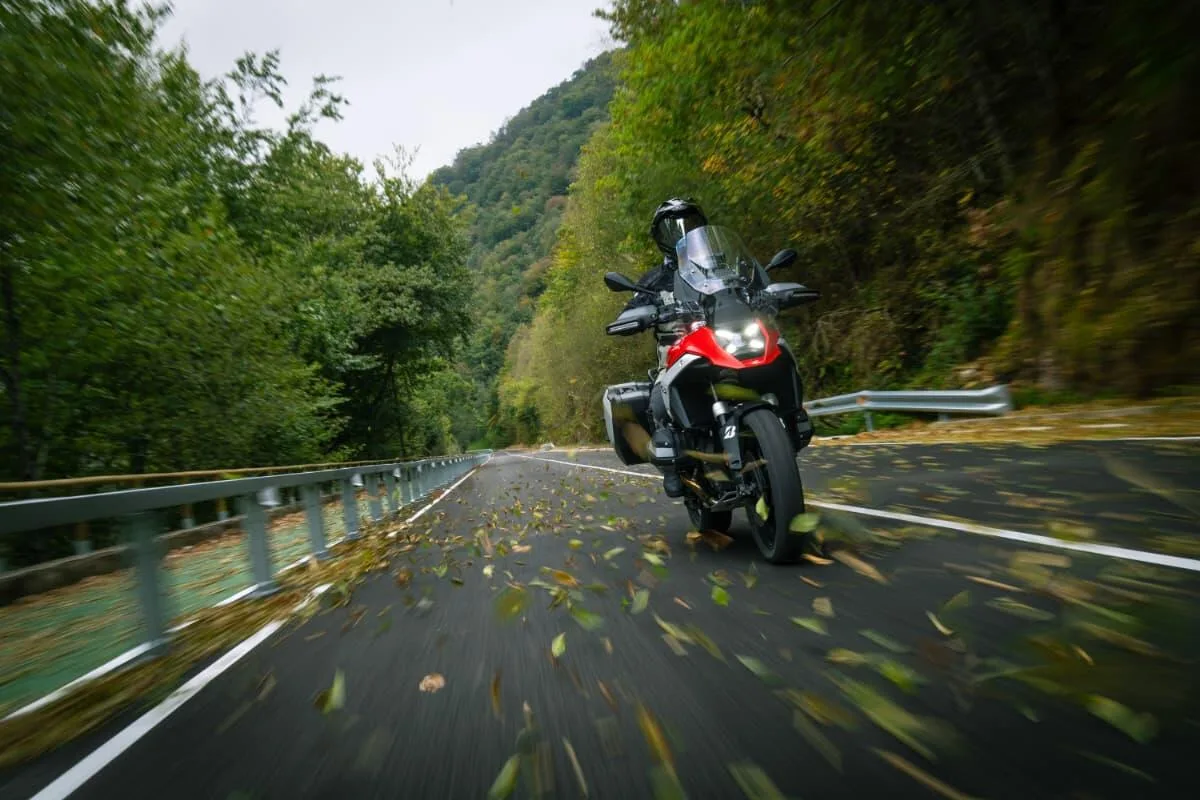
The official photography is useful because it shows genuine product details: the adventure profile, orange and black variants, integrated camera and TFT hardware. Those visuals help readers understand the proposition without implying local availability.
What comes next
The real test is whether Bultaco and Leonart deliver the model at the advertised Spanish price, support early owners and establish broader European distribution. A Canadian move would require separate confirmation.
For now, the Rally GT 300 is a credible signal that historic motorcycle names can return through affordable, globally sourced platforms. Whether that becomes a durable business will depend much more on ownership support than on the badge alone.