FIM Six Days Shortens Day Four as Italy Holds the World Trophy Lead
Day Four of the 100th FIM Six Days Enduro of Nations in Portugal was shortened after organizers reduced the planned Grândola-to-Santiago do Cacém route from two laps to one. The revised schedule left riders with three timed special tests and added liaison time to improve visibility on the trail and in the tests.
Italy remained in control of the World Trophy classification and carried a lead of three minutes and 39 seconds over France into the penultimate day of racing.
The shortened format limited the amount of time available for France to attack the leaders, but it did not remove the risk that defines the Six Days. With only three tests on the schedule, a mechanical problem or major mistake carried more weight because there were fewer opportunities to recover lost time.
That became clear in the fight for third. Sweden began Day Four only 11 seconds ahead of the United States, but American rider Steward Baylor stopped during the final special test and lost substantial time before continuing.
Sweden ended the day with a two-minute-and-41-second advantage over the United States. Spain is now only 17 seconds behind the Americans in fifth, setting up a close fight for fourth during the final full day of special tests.
Chile holds sixth in the World Trophy and continues one of its strongest Six Days performances. The depth of the leading national teams remains a defining factor because every rider’s ability to finish cleanly affects the team result.
The biggest change came in the Junior World Trophy. France entered Day Four as the leader, but Thibault Giraudon suffered a mechanical problem before the opening test and was forced to retire.
Italy immediately moved into the Junior lead and finished the day three minutes and 36 seconds ahead of the United States. Spain is third, while the Czech Republic and Australia remain close behind in fourth and fifth.
The United States also strengthened its position in the Women’s World Trophy. All three American riders finished inside the top five on Day Four, allowing the defending champions to extend their advantage over Australia to more than five minutes.
France remains third in the Women’s classification and holds a substantial margin over New Zealand. The category continues to demonstrate how a strong three-rider result can protect a national team even when conditions become increasingly difficult.
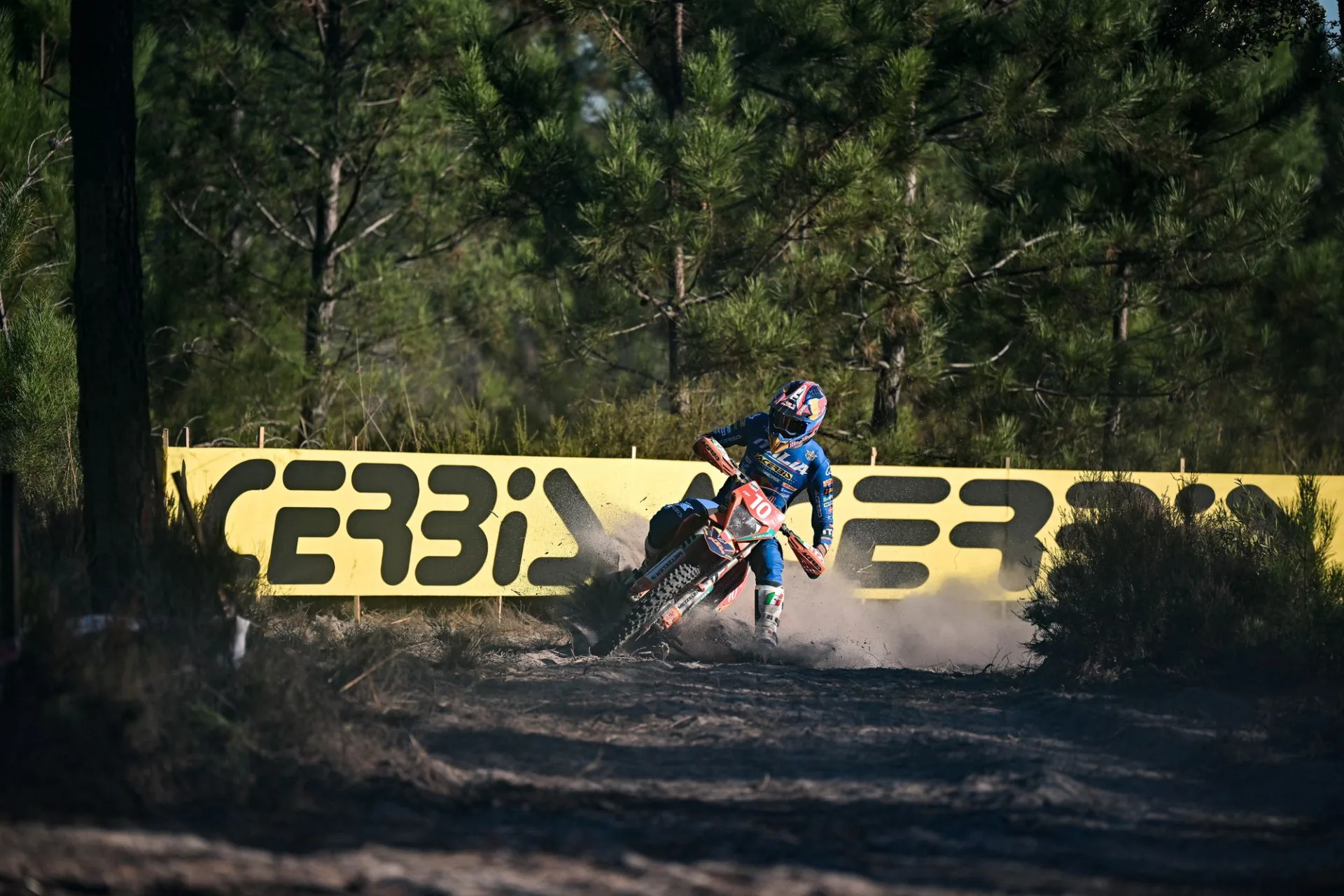
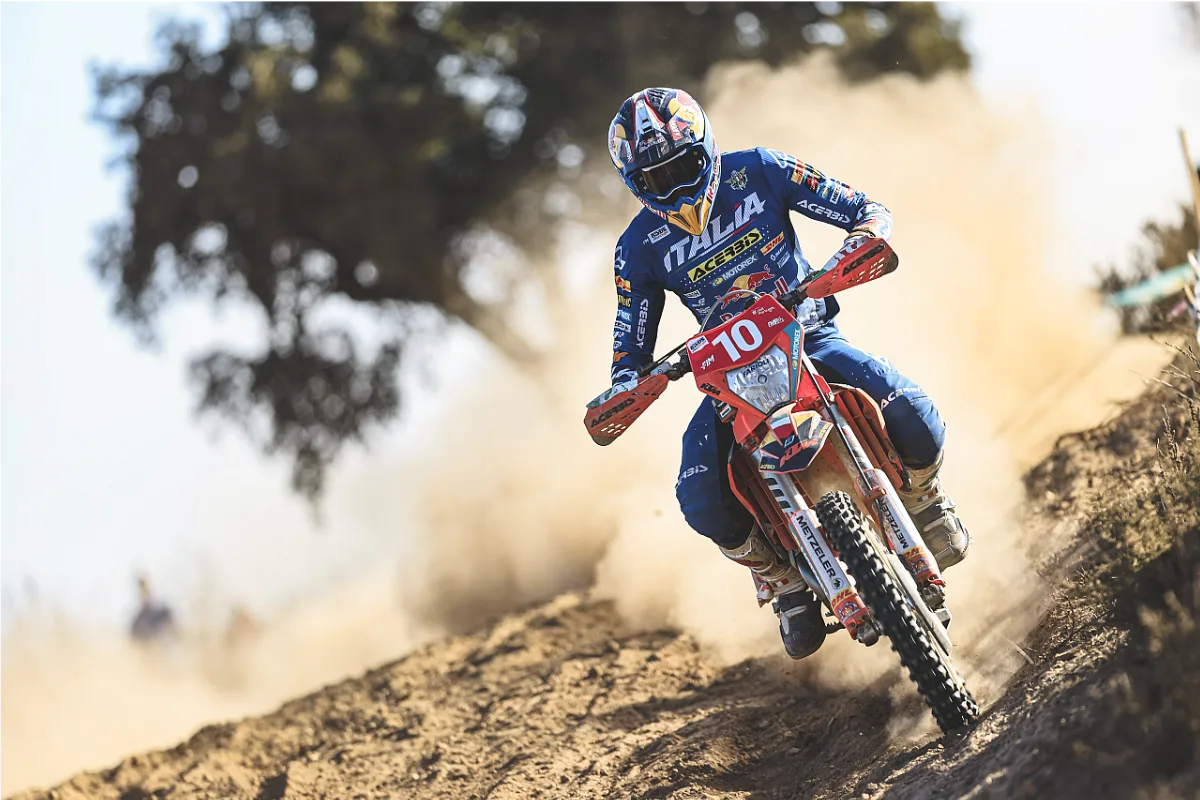
The individual fight remains close. Spain’s Josep García won the shortened Day Four by three seconds over Italy’s Andrea Verona. Verona still leads the overall individual classification by 12 seconds with two days remaining.
García also earned his fourth consecutive Enduro1 class victory. Verona led Enduro2, while Great Britain’s Brad Freeman took his first Enduro3 win of the week.
The shortened schedule changed the rhythm of the day but not the importance of machine preparation. Riders still had to manage dust, visibility, filtration, chain condition, tires, brakes, cooling systems and strict time controls across a multi-day competition.
That is especially relevant to Canadian riders following the event. Canada entered the centenary Six Days with Men’s, Junior and Women’s Trophy teams plus club and individual riders, making the event one of the country’s largest international enduro efforts of the year.
The Canadian teams continue into the final stages of an event where reliability can matter as much as raw special-test speed. A clean day can preserve hours of work, while one retirement can reshape an entire national classification.
Day Five moves the field onto the new Grândola-to-Alcácer do Sal loop for the final full day of traditional special tests. Saturday then closes the event with the Final Cross Test in Sines.
With Italy leading World Trophy, Italy also moving to the front of Junior World Trophy and the United States controlling the Women’s category, the final two days will determine whether those advantages survive the last major mechanical and competitive tests of the centenary event.