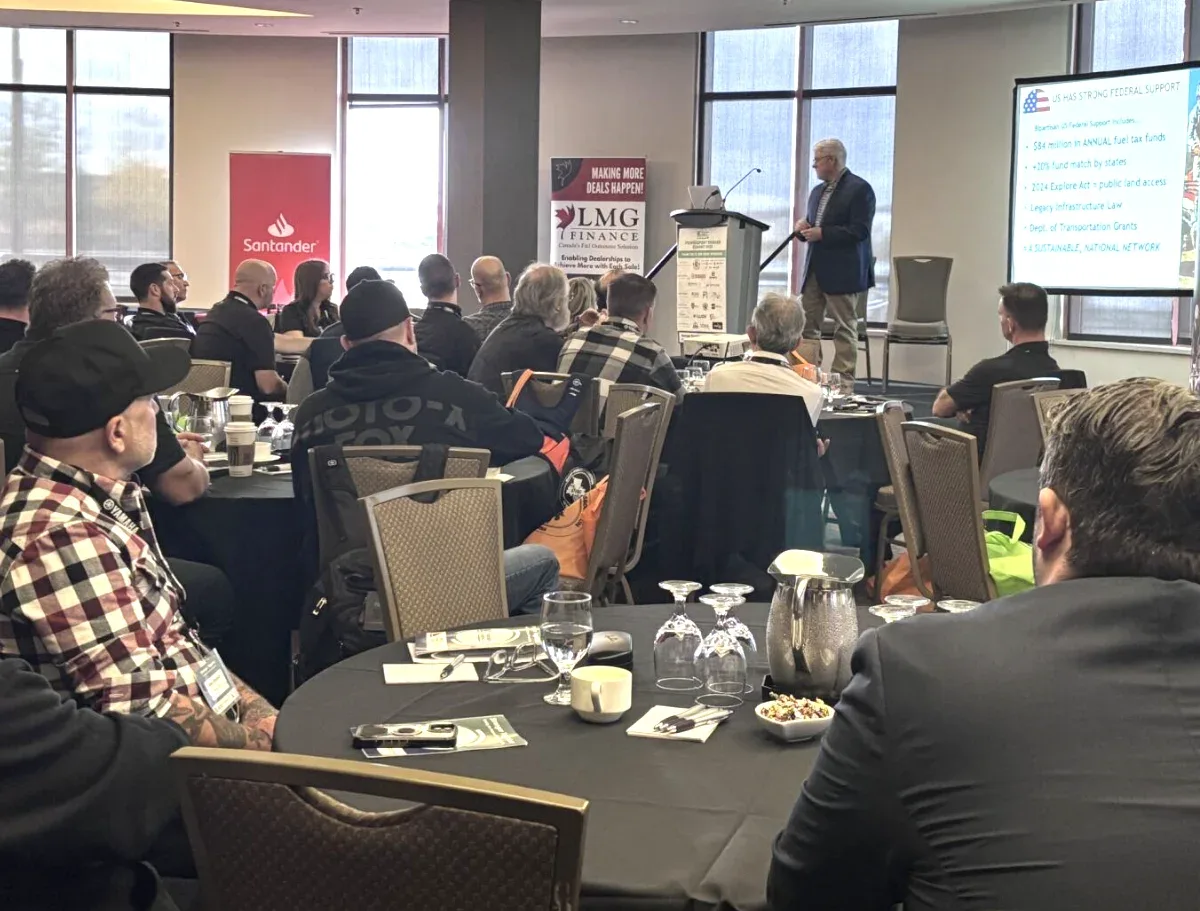
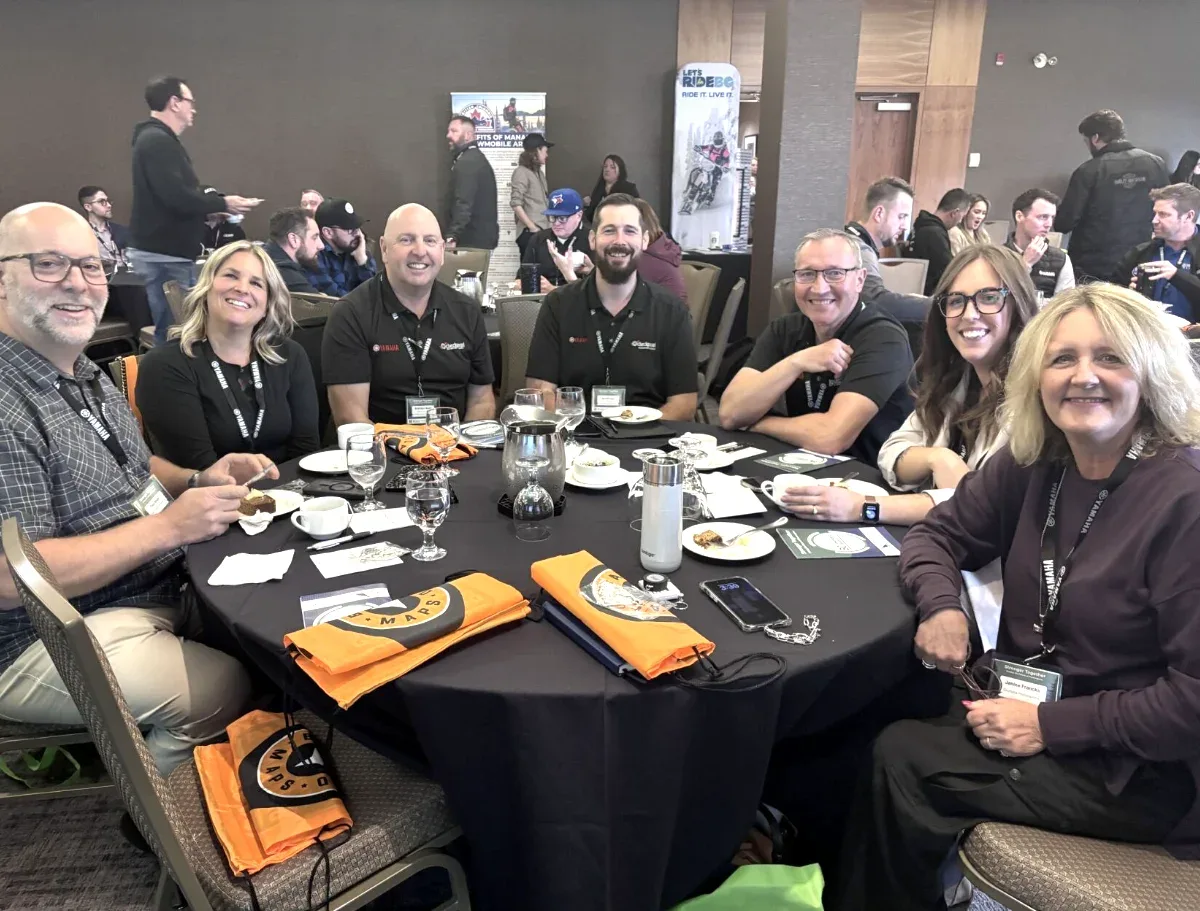
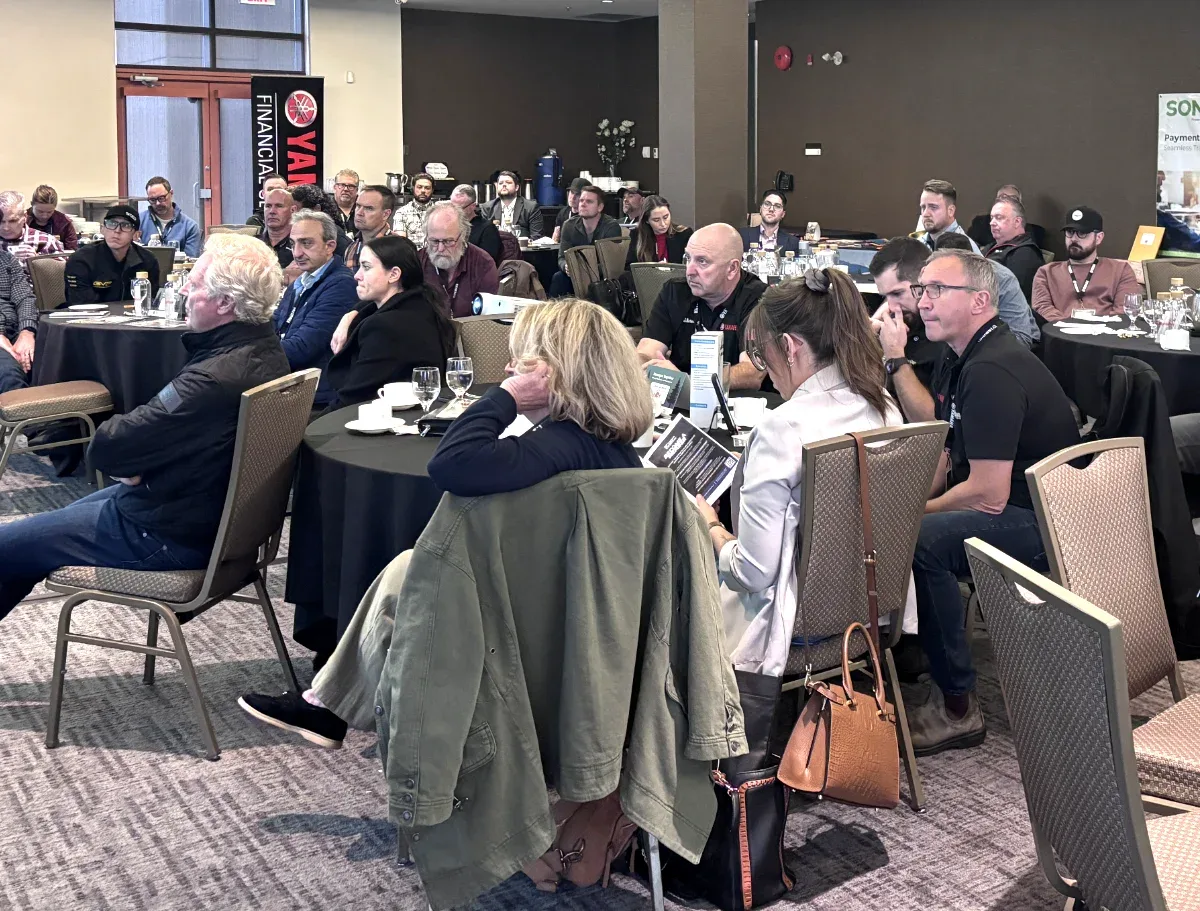
The sold-out 2026 B.C. Powersports Dealers Summit is bringing the industry together at River Rock Casino Resort in Richmond on Nov. 8–9. The B.C. Powersports Dealers Association's published program combines dealership performance, fraud prevention and customer growth with provincial regulation and access to riding areas.
For a specialist retail sector, a sellout is more than an attendance update. The published program is built around the operating questions that can decide whether a dealership finishes a season with healthy cash flow or a crowded floorplan. It also puts provincial regulation and motorized-recreation access in the same room as finance, inventory and customer-acquisition discussions.
A business agenda rooted in dealer pressure points
The summit schedule ranges from dealership profitability and used-inventory management to artificial intelligence, fraud, cybersecurity and financing red flags. It also includes discussions intended to broaden the customer base, including how powersports businesses can better reach women and families.
That mix reflects the number of jobs a modern powersports dealership is expected to perform. A store is not simply a vehicle seller. It is often a lender-facing finance office, a parts warehouse, a service operation, a safety educator, a local event partner and an advocate for places to ride. Weakness in any one area can affect the rest of the business.
Used inventory is a clear example. A pre-owned motorcycle, ATV, side-by-side or snowmobile can bring a new customer into the sport at a lower entry cost, but only if the unit is appraised accurately, reconditioned efficiently and priced for its real local market. If it stays too long, carrying costs and seasonal depreciation can quickly erode the margin that looked attractive at trade-in.
Finance creates a similar balancing act. Accessible credit can turn interest into a sale, yet fraud controls, identity verification and lender requirements are becoming more important as transactions move between online inquiries and the showroom. The summit’s inclusion of finance red flags, consumer protection and insurance licensing gives dealers a chance to compare practical risk controls with the rules that shape a lawful transaction.
Industry and government voices share the room
The published agenda includes the B.C. Powersports Dealers Association, Moto Canada, the Vehicle Sales Authority of British Columbia, the National Powersports Dealer Association and the Insurance Council of BC. A lender panel features representatives from Santander, Yamaha Financial Services and TD. Land-access discussion includes MLA Donegal Wilson, former executive director of the BC Snowmobile Federation.
The value of that lineup is the opportunity to connect policy with store operations. Dealers can hear how a regulator views compliance, then test that guidance against the steps required at a sales desk. A finance provider can explain warning signs, while dealers can describe the situations that arise when a customer arrives with a trade, a remote application or a complex ownership history.
The summit also includes advocacy subjects such as a transaction levy, consumer-protection policy, insurance licensing and land access. Those issues may appear separate from daily retail, but they can influence both the cost of doing business and the size of the riding market.
Land access remains a retail issue
Motorized access is often treated as a recreation topic rather than a dealership concern. In practice, the two are inseparable. Customers are more likely to purchase, maintain and replace powersports vehicles when they have clear, sustainable places to use them. Trail closures, unclear rules or conflict between user groups can weaken participation even when product demand is otherwise strong.
Including land access and a speaker with snowmobile-federation leadership experience helps make that connection explicit. Dealers can contribute local evidence about customer behaviour, while clubs and associations can explain the maintenance, volunteer work and policy support required to keep riding areas viable.
This is especially important in British Columbia, where geography creates exceptional riding opportunities but also complex land-use questions. Provincial decisions can influence rural tourism, local service businesses and the willingness of families to invest in the sport.
What Canadian dealers should take from the sellout
A full event creates an opportunity for dealers to compare experiences outside their own brand networks, although the association has not published attendance totals or delegate survey results. Many of the challenges on the agenda do not stop at an OEM boundary. Fraud techniques, employee training, used-unit ageing and provincial compliance can affect a multi-line store and a single-line store alike.
For dealers unable to attend, the next useful milestone will be the association’s post-event material: presentation summaries, policy commitments, training resources or announced follow-up sessions. Those outputs will determine how far the summit’s value travels beyond the room.
The event also offers a useful reminder for suppliers and lenders. Dealers respond to information that can be applied immediately. Product promotion may attract attention, but operational guidance on margin, risk and compliance can help a retailer protect the capacity to sell and service every brand it carries.
A Canadian industry signal
The summit is regional, but the underlying questions are national. Canadian dealers across provinces face seasonal demand, expensive inventory, rapidly changing digital shopping habits and the need to support safe, responsible places to ride. The exact rules differ, but the operating pressure is familiar.
Monday’s published schedule includes an 8:30 a.m.–noon morning session, lunch from noon to 1 p.m. and an afternoon session from 1–3 p.m., all in local Pacific time. A Garage Composites dealer review session is listed from 2:30–5 p.m. The association says the schedule is subject to change.
The summit brings dealership operations and riding access into the same program. Its practical value will depend on how participating businesses apply the training, lender guidance and regulatory information in their own stores.