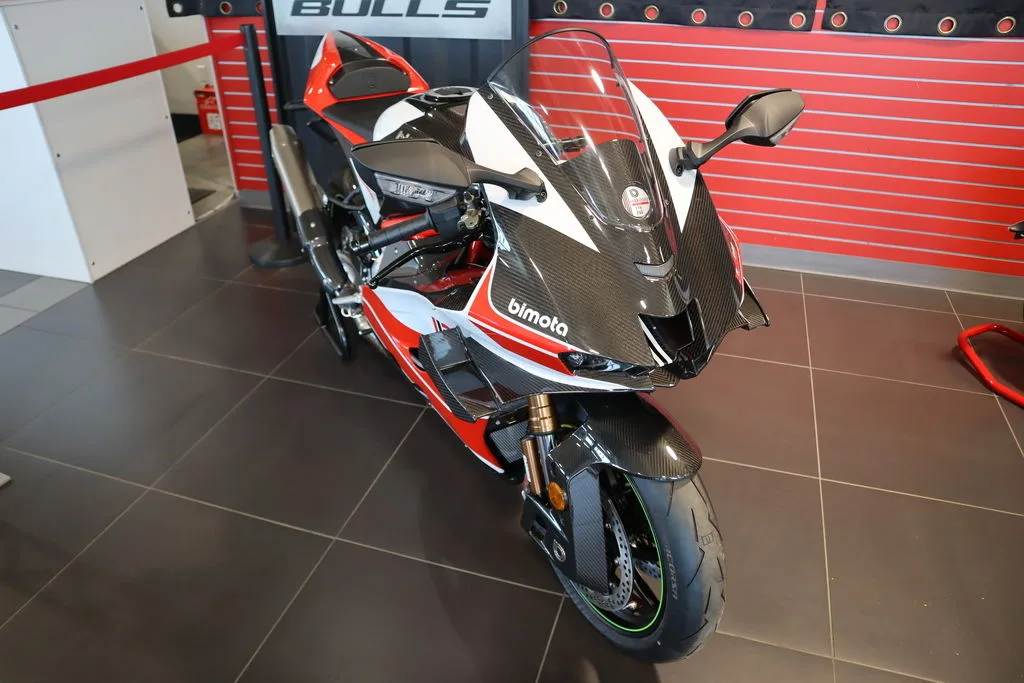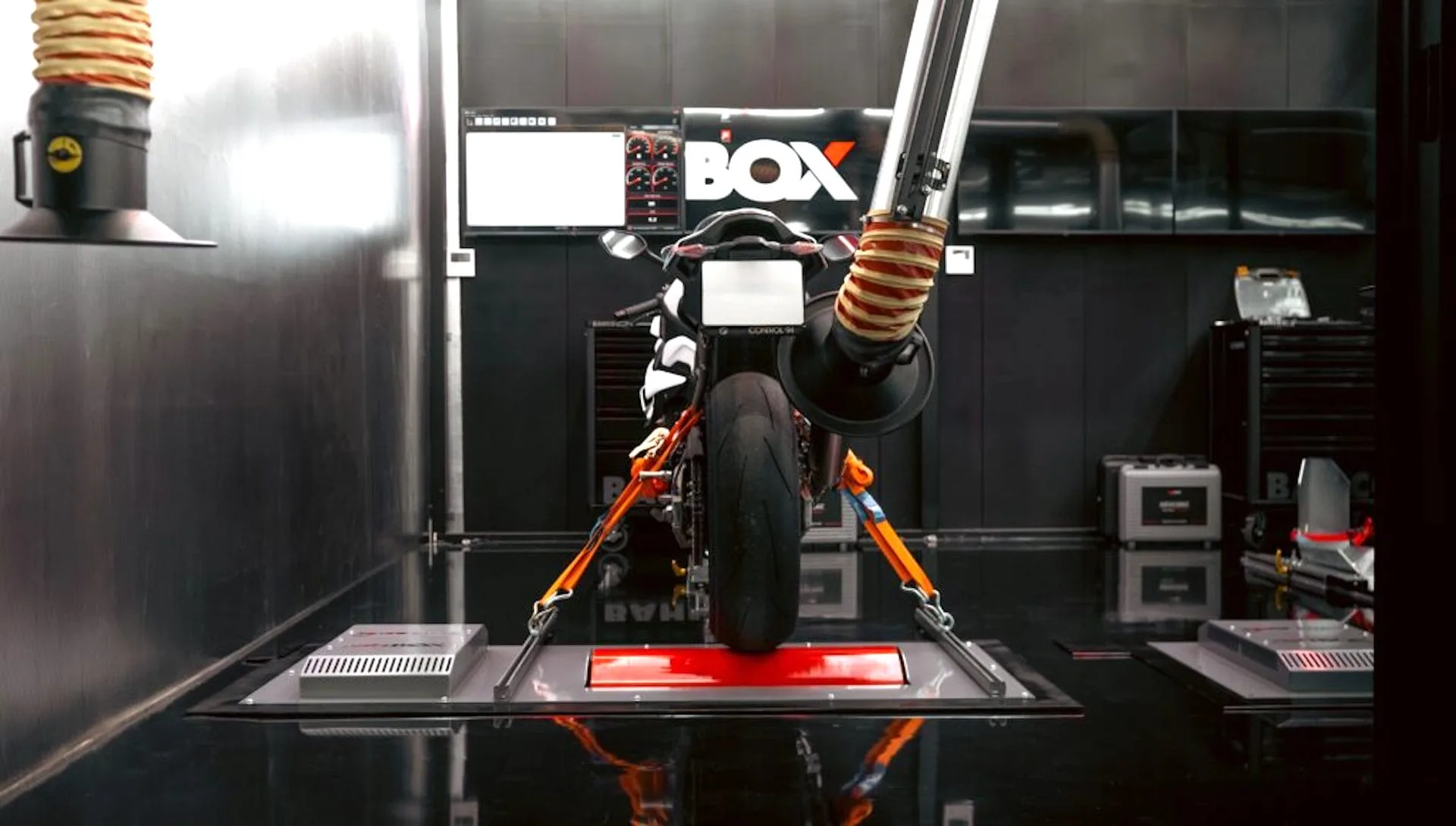
Dimsport has introduced a smaller motorcycle dynamometer aimed at workshops that cannot dedicate a large bay to performance testing. The Dyno Bike Compact uses a recessed layout and mechanical wheelbase adjustment to fit more easily into an existing service environment while still measuring power, torque and drivetrain loss.
The product is less visible to consumers than a new motorcycle, but it addresses a real dealership and independent-shop problem. Modern motorcycles rely on electronic fuel control, ride-by-wire systems, emissions hardware and increasingly complex software. A repeatable test bench can help a technician verify what a repair or modification actually changed instead of relying on feel or an advertised horsepower claim.
A smaller footprint with useful capacity
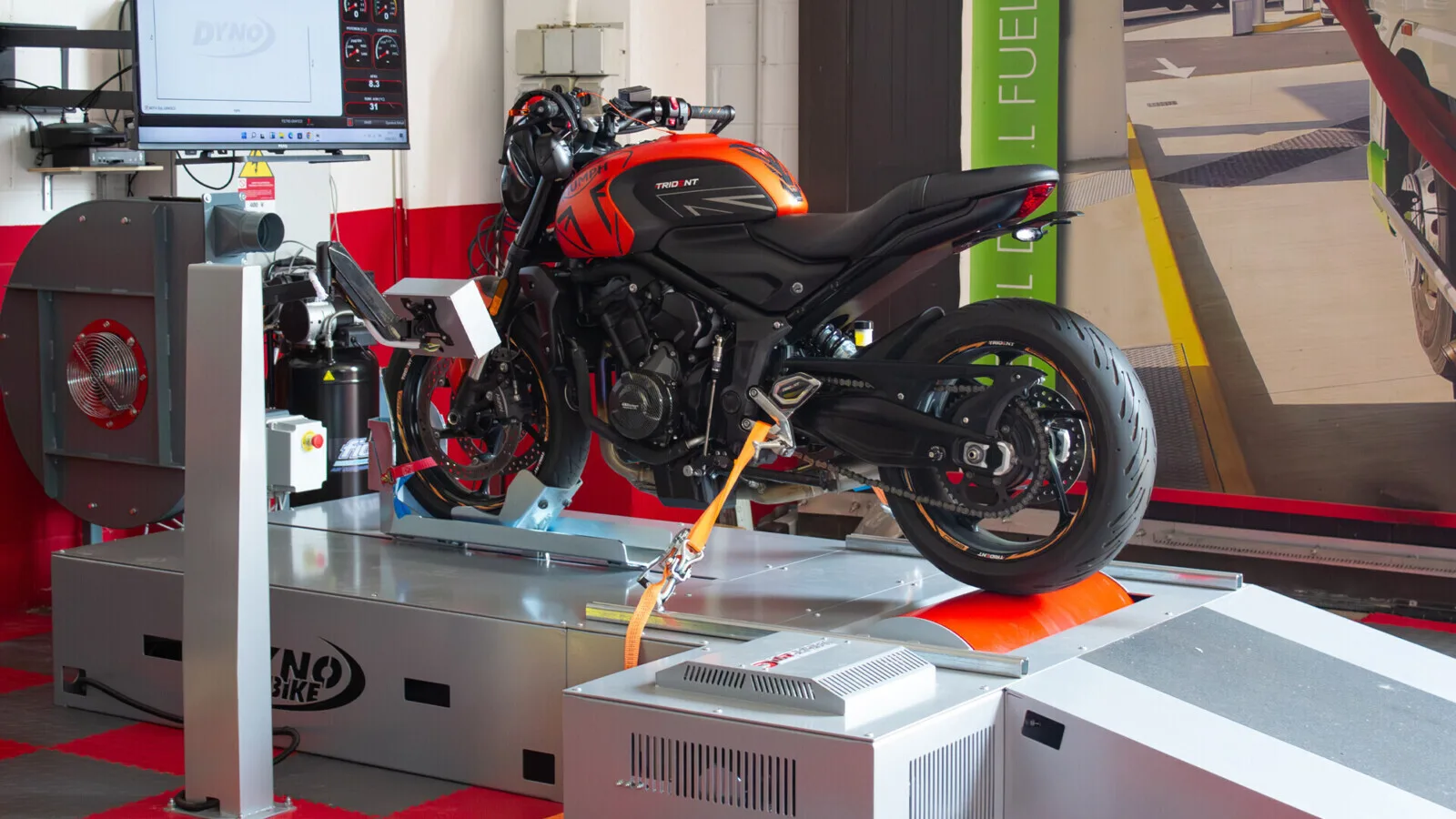
EICMA says the Dyno Bike Compact can accommodate motorcycles with wheelbases up to 1,900 mm and a total load of 1,000 kilograms. That range covers far more than lightweight sport bikes and gives a shop flexibility for long cruisers, touring motorcycles and heavy machines. The recessed design reduces the height above the floor and the need for a long access ramp.
Mechanical wheelbase adjustment is important because a motorcycle must be positioned consistently and secured safely before a run. The bench reports wheel power and torque, drivetrain losses and calculated engine-output values. Engine figures derived from a chassis dyno are estimates rather than a direct measurement at the crankshaft. Consistent test preparation is essential when comparing those results.
Dimsport has not yet published the Compact's complete braking, roller and cooling specification on the public product page. The company's established Dyno Bike is described with a 400 mm roller, an eddy-current brake rated to 800 Nm and capacity for up to 250 kW at the wheel. Those numbers should not automatically be assigned to the Compact until Dimsport confirms them for the new model.
Repeatability matters more than a peak number
A dynamometer is often associated with maximum horsepower, but its best workshop use is comparison. A technician can record a baseline, perform a repair or calibration change and repeat the test under the same conditions. The shape of the torque curve, throttle response and air-fuel behaviour can reveal more than one peak value.
Repeatability depends on tire pressure, engine temperature, tie-down tension, ambient conditions and operator technique. Two runs made with different preparation can produce misleading differences. Shops need a written test process and honest reporting that distinguishes measured wheel output from estimated engine output.
The system can also support diagnosis. A motorcycle that feels weak may have a fueling, ignition, intake, exhaust or drivetrain problem. A controlled load can make faults easier to reproduce while sensors record what the machine is doing. That can save road-testing time, although no dyno replaces a complete mechanical inspection.
Part of a broader electronic-service system
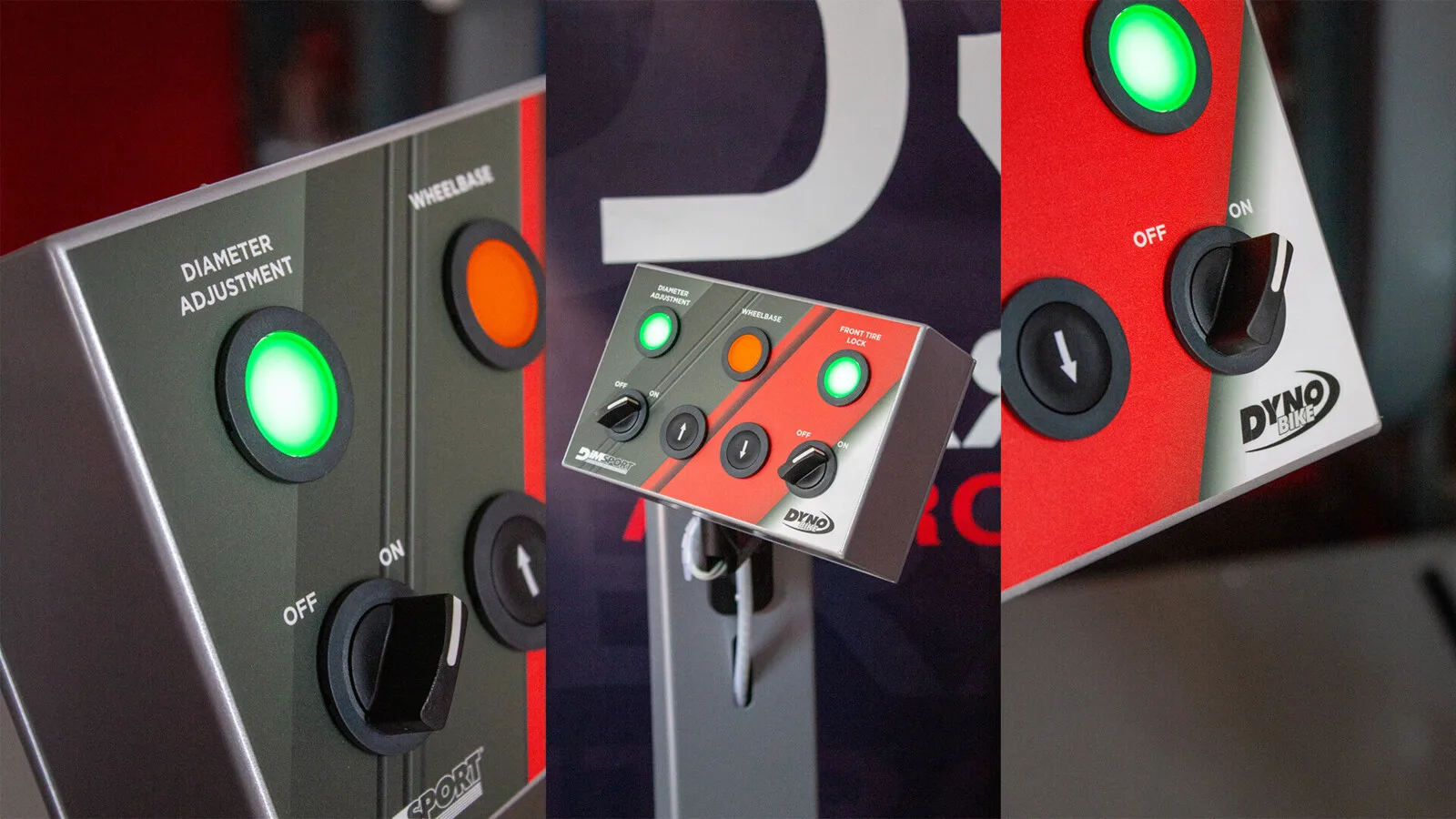
Dimsport presented the Compact beside the Dyno Bike DFMTF2, which uses a swivelling console, linear actuator and pneumatic clamp. The company also presented second-generation Rapid Bike modules in Smart2, Evo2 and Racing2 versions, plus TheGenius and Race Evo tools for programming original engine-control units.
That combination connects measurement and calibration. A shop can test a motorcycle, make an authorized change and verify the result. It also raises responsibility. Emissions rules, warranty conditions and road legality vary by jurisdiction. A tool capable of changing an ECU should be used within Canadian and provincial requirements, not as a blanket invitation to remove compliance systems.
Technicians need to understand the difference between correcting rideability, configuring a race-only motorcycle and modifying a road machine. Clear invoices and saved baseline files help protect both the customer and the shop.
Installation is a facility project
A recessed dyno may save floor space, but installation is not as simple as placing a lift. The shop must plan foundations, anchoring, ventilation, exhaust extraction, cooling airflow, electrical supply, noise control and emergency access. Fire protection and insurance requirements also need review.
Safe motorcycle restraint is essential. A failed strap or incorrectly placed front support can turn a test into a serious hazard. Operators should use manufacturer-approved procedures, inspect tie-down equipment and keep everyone outside the danger area during a run. Hearing protection and barriers may also be required.
The business case depends on utilization. A shop that performs frequent performance work, diagnostics or race preparation may recover the investment through billable testing. A general dealership with low demand could end up with an expensive machine occupying valuable service space. Before buying, an operator should estimate local demand, installation cost, training, maintenance and the time needed for each setup.
What Canadian shops should confirm
Dimsport has a North American operation and offers Rapid Bike products, training and dyno categories through its regional storefront. That does not establish Canadian pricing or an installer network for the Compact. Shops should confirm freight, installation supervision, calibration service, software licensing, warranty response and replacement parts before committing.
Cold climate is another consideration. A dyno room needs stable ventilation and temperature management even when outside air is well below freezing. Bringing in very cold air can affect test consistency, while insufficient exhaust extraction creates an obvious safety risk.
For customers, a dyno result should come with context: the motorcycle's configuration, fuel, tire, correction method and whether the number is measured at the wheel or calculated at the engine. Transparent reporting turns the equipment into a diagnostic tool rather than a marketing prop.
The Dyno Bike Compact is a meaningful development because it targets the physical barrier that keeps many smaller workshops out of controlled motorcycle testing. The next step for Canadian businesses is a complete specification and delivered-cost proposal. If training, installation and support are strong, the smaller footprint could bring repeatable performance measurement to shops that previously had no practical place for it.