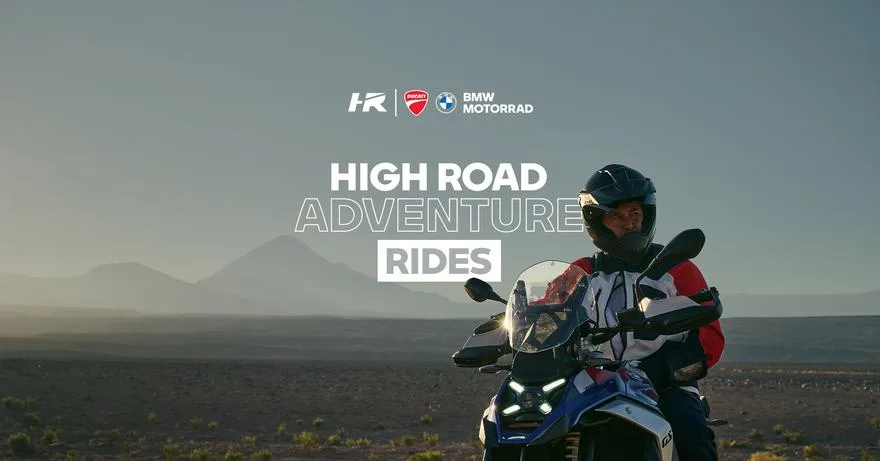
High Road Motorsports is leading a small, beginner-friendly adventure motorcycle ride from its Vancouver location today, giving registered customers a supported way to build confidence away from pavement before the season winds down. The September 26 outing is scheduled from 8:30 a.m. to 5 p.m. Pacific time.
The dealer's event calendar describes the ride as one of the final opportunities to join its ADV experience this year. A separate October 3 event from High Road's Langley location is listed as the last scheduled ride of the season. Today's Vancouver programme begins at 3061 Grandview Highway and uses a registration system rather than an open, arrive-and-ride format.
A bridge between ownership and experience
Adventure motorcycles are sold on versatility, but many owners need a structured first step before taking a large motorcycle onto gravel or trail surfaces. The transition introduces new variables: reduced traction, standing body position, surface reading, slower steering inputs and the need to let the motorcycle move beneath the rider. Those skills are difficult to learn from a product brochure.
A small guided group can make that transition less intimidating. Riders have a defined meeting point, a leader and a community around the day. The description is beginner-friendly, but that should not be interpreted as a substitute for formal training or as a guarantee that every route is suitable for every motorcycle. Conditions, rider ability and organizer judgment still determine participation.
The format also matters because adventure motorcycles vary widely in weight, tires, suspension travel and engine response. A rider on a road-biased touring machine may face different limits than someone on a lighter dual-sport. Good group management accounts for those differences instead of assuming that the ADV label makes all motorcycles equally capable on the same terrain.
What registered riders should check
High Road's public listing says the event uses a $50 deposit that is returned as in-store credit when the registered rider attends. Anyone considering the outing should verify whether registration remains available rather than treating the deposit as same-day admission. The organizer's direct instructions govern meeting time, route, fuel requirements and any eligibility limits.
Before departure, riders should inspect tire pressure and condition, controls, brakes, chain or final drive, lights and fluid levels. Luggage needs to be secured, and loose accessories should not be allowed to become hazards on rough surfaces. A full fuel tank and a charged phone are basic preparation, but riders should also understand that reception can be unreliable outside urban areas.
Protective equipment should match the riding environment. An approved helmet, gloves, boots and abrasion-resistant clothing are a baseline. Eye protection, weather layers and hydration can become important over a full day. If the organizer publishes more specific requirements, those instructions take priority.
Group etiquette matters just as much as equipment. Riders should maintain safe spacing, wait at turns according to the leader's system and communicate if they are uncomfortable. Trying to match a faster participant is one of the quickest ways to turn a confidence-building day into an avoidable incident. A supported ride works when the group allows every participant to operate within a safe margin.
Why this matters for dealers
Dealer-led riding events extend the customer relationship beyond delivery day. A customer who learns where and how to use a motorcycle is more likely to understand the value of suitable tires, protection, luggage, service and training. Those conversations arise from actual experience rather than generic accessory selling.
The programme can also reveal barriers that keep owners from riding more often. Some need route knowledge. Others lack a riding group, worry about dropping an expensive motorcycle or are unsure whether their current setup is appropriate. A small event gives dealership staff a direct view of those concerns.
For the Lower Mainland motorcycle community, the ride creates a social entry point. Adventure riding can appear closed to newcomers when online coverage focuses on remote expeditions or highly modified machines. A local, day-length outing offers a more realistic first step and shows that participation can begin close to home.
A model worth measuring
The useful outcome is not simply the number of motorcycles leaving the parking lot. A strong programme produces riders who finish with more confidence, a clearer understanding of their machine and an honest list of skills to develop next. The dealer can then decide whether demand supports additional rides, training partnerships or owner clinics.
Any later coverage should require a new fact, such as verified attendance, a new date or an expanded programme. At delivery, today's ride was the current milestone, with the October 3 Langley outing still listed ahead. The larger lesson is already clear: a dealership can create value after the sale by helping customers turn ownership into safe, supported experience.