Andreani Opens Two Suspension Seminars for Powersports Professionals
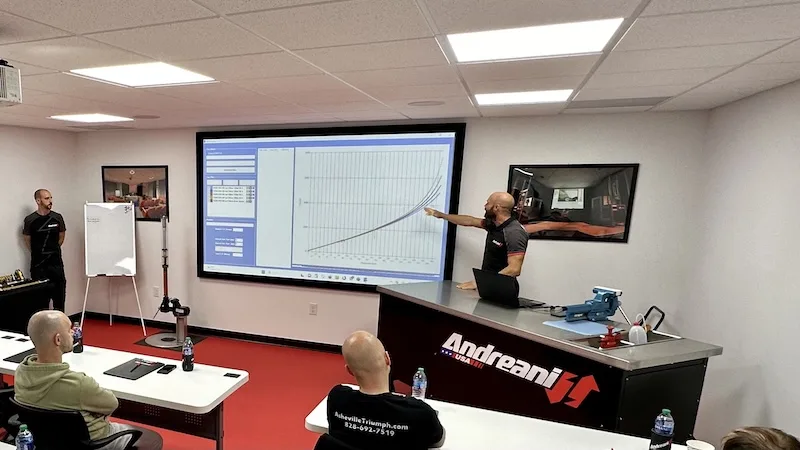
Andreani USA has opened registration for two suspension-training seminars aimed at motorcycle dealers, service centres and other powersports professionals. The classroom sessions run October 26–27 and October 28–29, cost US$600 per participant and are limited to 12 people each. The October 8 announcement positions the courses as a route for businesses considering suspension service or trying to improve setup and product recommendations.
What the seminars cover
The curriculum includes motorcycle geometry, suspension fundamentals, tuning theory, adjustment, product comparisons and selection. Applications span street and adventure motorcycles as well as motocross and off-road machines.
Andreani says the sessions will use live demonstrations but are not hands-on wrenching classes. That distinction is important for technicians expecting a teardown or rebuild course. The stated goal is stronger understanding and better setup, sales and support decisions.
The product range
Training will discuss Andreani, Öhlins and Nitron products together with original-equipment systems from Showa, KYB and WP. A multi-brand view can help staff understand why the same adjustment does not produce the same result on every fork or shock.
Product knowledge should not replace measurement. Sag, spring rate, damping range, rider weight, luggage, pace and terrain all shape a recommendation. A seminar is most useful when a shop turns the theory into a consistent intake and setup process.
Who is teaching
Andreani USA says two instructors from Italy will lead the classes and bring more than 40 years of combined experience in racing, product development, setup and tuning. The small class size should create room for detailed questions.
The announcement does not list a certification outcome or guarantee that attendance alone authorizes every service. Businesses should verify what documentation is provided and whether additional manufacturer training or equipment is required for rebuild work.
Canadian participation
The sessions are in the United States, and the published price is in U.S. dollars. Canadian attendees must add travel, lodging, meals, exchange rate and time away from the shop. They should also confirm border documentation and whether tools or components will be transported.
For a Canadian dealer, the business case is strongest when training supports a defined service plan. A shop should estimate expected setup volume, labour rate, equipment needs, insurance and the number of jobs required to recover the cost.
Why suspension service matters
Suspension is one of the clearest ways to improve how a motorcycle fits its rider and use. Correct springs and balanced damping can improve control, comfort and confidence without chasing engine performance.
It is also an area where poor advice carries risk. Adjustments need to stay within safe ranges, fasteners require correct torque and internal service demands cleanliness and specific tools. Dealers should separate external setup from rebuilding when defining what staff are qualified to perform.
Dealer implementation
A trained employee should return with more than notes. The shop can create a standard rider questionnaire, measurement sheet, baseline-setting record and follow-up process. Recording original and final settings makes results repeatable and protects against guesswork.
Retail staff also need plain-language explanations. Customers may not understand compression, rebound or preload, but they can describe harshness, wallow, brake dive or lack of traction. Turning those symptoms into an accurate diagnosis is where training creates value.
Registration status
Registration is first-come, first-served through Andreani USA by email and requires the participant’s name, company, phone number and preferred session. With only 24 places across both dates, capacity is the immediate constraint.
A sold-out class, an added session or a future Canadian seminar would materially change the opportunity for interested technicians. Until then, the opportunity is best framed as limited professional education rather than a general consumer event.
Building a profitable service menu
Before adding suspension work, a dealership should decide what it will actually sell. Basic setup may include measuring sag, checking clickers, setting preload and documenting a baseline. Advanced work can involve spring replacement, oil service, seals, revalving or complete rebuilds, each with different tools, training and liability. Clear boundaries prevent a salesperson from promising work the shop is not equipped to perform.
Pricing should reflect inspection time, consumables, technician skill and follow-up, not just bench minutes. A structured appointment can also reveal worn bearings, tires or controls that would undermine the suspension result. Those findings should be explained separately, with customer approval before added work.
Canadian shops considering the trip can ask whether course materials use metric measurements, whether setup sheets are supplied and whether post-class technical support is available. Those details affect how quickly the learning can be applied after staff return home.