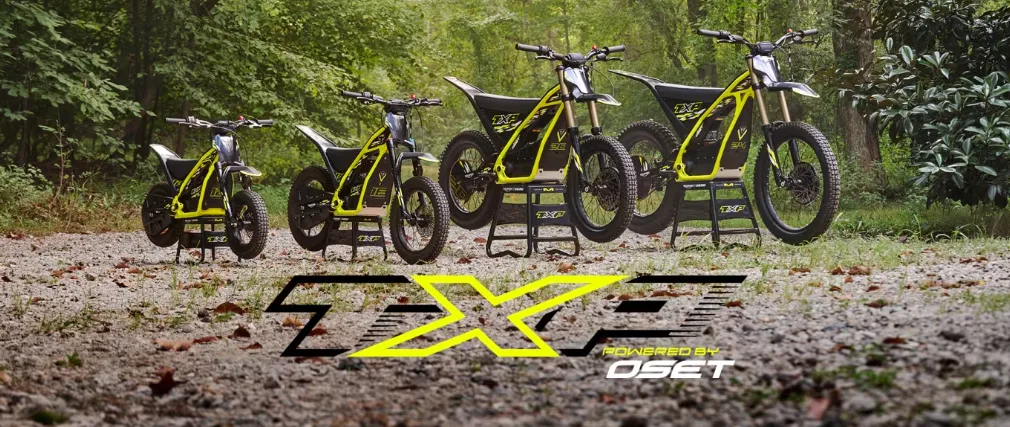
Triumph Motorcycles is expanding its electric off-road ambitions in North America with two new additions to its TXP family: the TXP-20 and TXP-24.
Announced September 22 and already appearing on Triumph’s Canadian website, the two models extend a range that previously centred on the smaller TXP-12 and TXP-16. The result is now a four-bike electric off-road family intended to take riders from their earliest experience on two wheels through increasingly capable machines and, with the TXP-24, into a size suitable for teenagers and adults.
It is an important expansion for Triumph because the TXP program is not simply an electric side project carrying the company’s badge. It is closely tied to OSET, the specialist electric trials-bike manufacturer that joined the Triumph family in 2022.
From kids' bikes to a broader off-road platform
The TXP range is designed around progression.
At the small end, the TXP-12 is intended for children beginning as young as three. The TXP-16 takes the next step, while the new TXP-20 is aimed at growing riders who need a larger chassis and greater capability.
The TXP-24 sits at the other end of the family. Triumph describes it as suitable for riders from roughly 11 years old through adulthood, with a listed maximum rider weight of 90.2 kilograms.
That makes the range particularly interesting for families. Instead of treating youth electric motorcycles as isolated starter products, Triumph is establishing a ladder of machines with increasingly larger frames, suspension, braking systems and performance.
The bikes also use a two-in-one configuration that allows the rider to switch between a seated off-road setup and a standing trials-style arrangement. That reflects OSET’s roots in electric trials riding while broadening the machines beyond pure competition practice.
Adjustable performance is a major part of the design
Electric power can be particularly well suited to learning because performance can be electronically controlled rather than relying only on engine displacement.
Triumph says the TXP models use brushless motors with adjustable throttle response, speed and power. Parental controls are PIN protected, while safety systems include magnetic lanyards and staged start-up procedures.
The company also lists Field-Oriented Control and Active Power Stabilization as part of the electrical architecture. The goal is smoother power delivery and more consistent performance as battery charge falls.
High-capacity lithium battery packs are removable without tools, allowing a battery to be swapped rather than forcing the complete motorcycle to remain parked while charging. Waterproofing and diagnostic capability are also integrated into the system.
The TXP-24 receives the most substantial chassis and running gear of the group. Triumph's technical information shows a larger steel frame, air-adjustable suspension and hydraulic disc brakes designed for the greater speed, weight and capability expected from the largest model.
One specification deserves some caution: Triumph's September 22 consumer announcement and its technical media material currently present different peak-motor figures for the TXP-24. Until those documents are reconciled, the more useful takeaway is that the TXP-24 is positioned as the most powerful model in the family rather than attaching an uncertain wattage number to it.
Why this matters beyond electric motorcycles
The bigger story may be rider development.
Powersports manufacturers have spent years trying to answer a difficult demographic question: how do you create new riders when fewer children grow up with easy access to motorcycles, acreage or riding areas?
Small electric off-road motorcycles remove several traditional barriers. They produce little operating noise, require no fuel mixing or conventional engine warm-up, and can offer highly controllable power delivery.
They do not solve the need for legal riding areas, proper protective equipment or rider supervision. They can, however, make the first experience of throttle control, balance and braking substantially less intimidating.
Triumph CEO Nick Bloor framed the TXP range around exactly that idea when the company unveiled the expanded lineup: creating machines that can introduce younger riders to motorcycling while allowing families to participate together.
That strategy also gives Triumph something it did not traditionally possess — a product that can begin a customer relationship years before the rider is old enough to consider a road motorcycle.
A new role for Triumph dealers
The dealer component is equally significant.
Triumph says the TXP family is being distributed through selected Triumph dealerships, with the newly expanded range available to order and pre-Christmas delivery planned.
For a conventional motorcycle showroom, that introduces a different sales conversation. A parent shopping for his or her own motorcycle could now be introduced to an electric machine for a child. A family already involved in trials, motocross or trail riding could potentially remain inside one brand ecosystem as younger riders grow.
Triumph’s Canadian site already lists the TXP-20 and TXP-24 within its OSET section, confirming that the expanded family is being presented to Canadian consumers rather than being limited to a U.S.-only announcement.
Canada is also a logical market for compact electric off-road motorcycles. Short riding seasons in some regions increase the value of machines that are easy to store and maintain, while the country's strong motocross, enduro and recreational trail communities create a natural audience for youth rider development.
Where these machines can legally be ridden remains a separate question governed by provincial, municipal and property rules. Electric propulsion does not automatically turn an off-road motorcycle into a bicycle or make it legal on public roads and pathways.
Triumph is building an off-road ecosystem
The TXP-20 and TXP-24 arrive while Triumph is investing heavily in off-road competition and production motorcycles.
That broader effort gives the electric range more context. Triumph is no longer relying exclusively on its road-bike heritage; it has been building a presence in motocross, enduro and youth electric riding.
The OSET acquisition now looks increasingly like a strategic part of that expansion.
For Canadian riders, the new TXP models therefore represent more than two additional electric motorcycles. They show how one established motorcycle manufacturer is attempting to build a rider-development path that starts years before a customer reaches a full-size street bike.
For an industry concerned about attracting its next generation, that may ultimately be the most important specification of all.