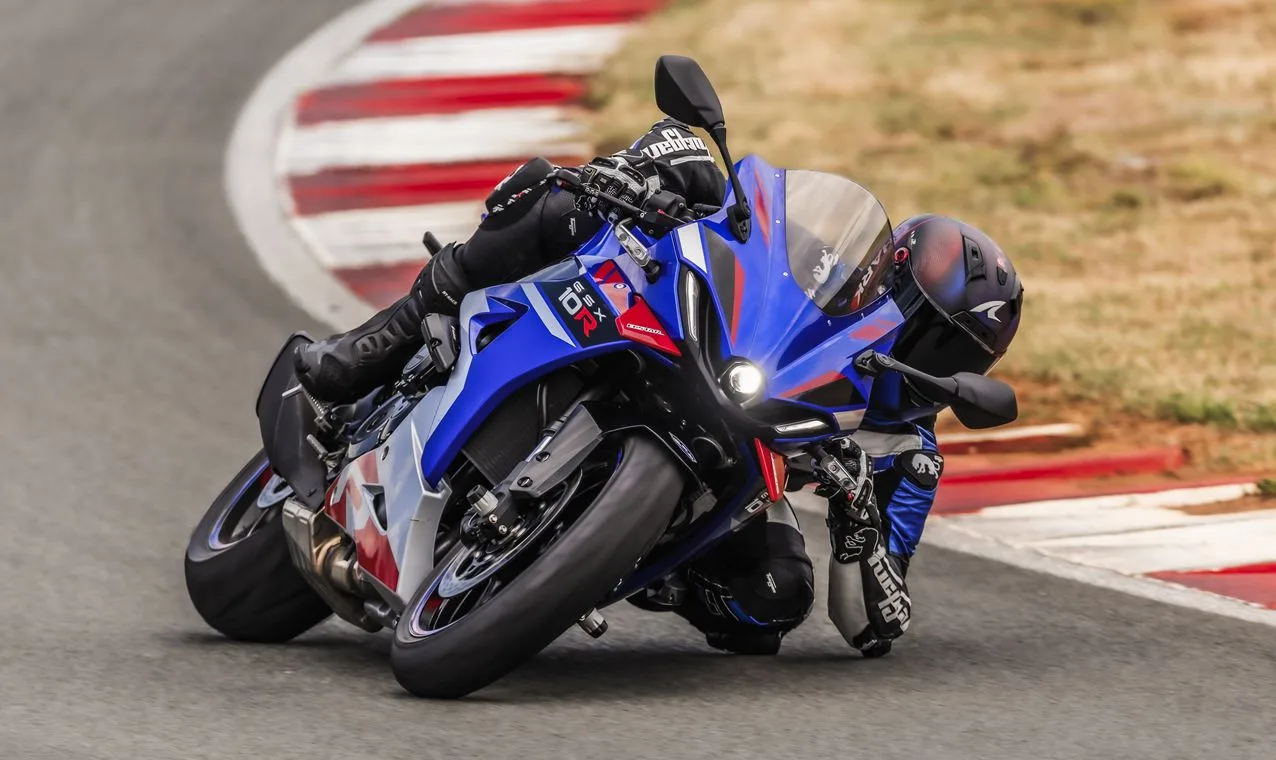
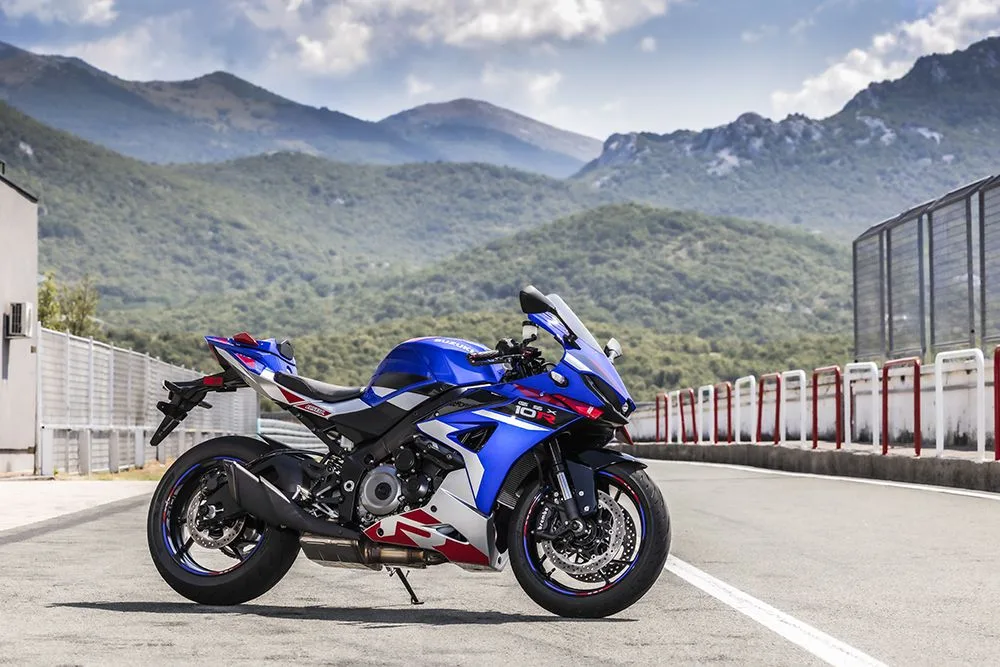
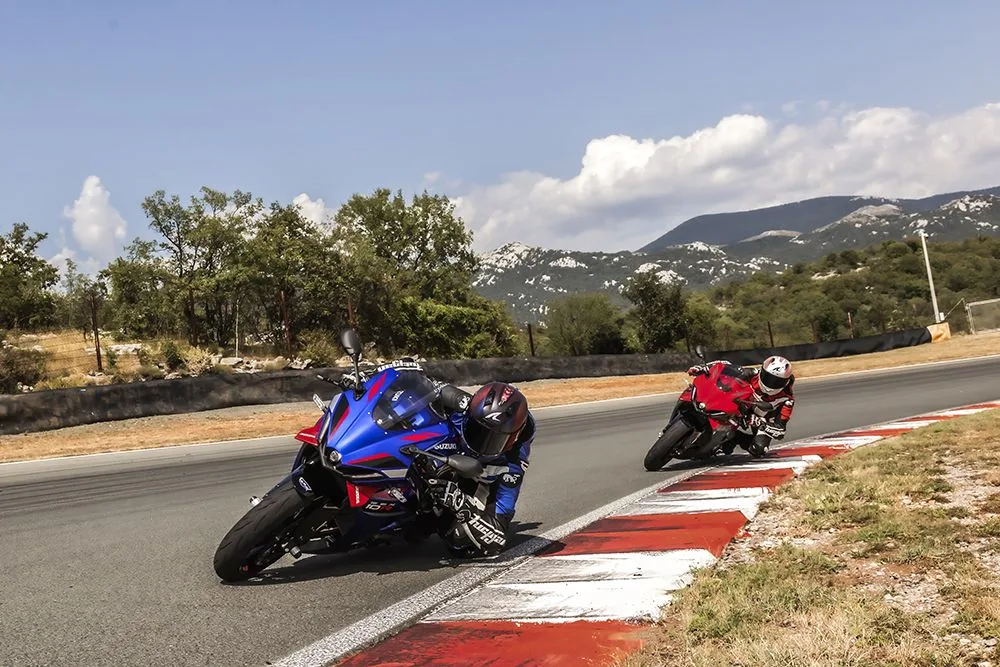
Suzuki has introduced the GSX-10R, a fully faired 999 cc sport motorcycle that combines a K5-derived inline-four with new rider-assistance systems and a road-and-track brief. The November 3 EICMA announcement places the start of its international rollout in summer 2027. It is a new addition to Suzuki's range, and its specification should not be confused with that of the GSX-R1000R.
For Canadian riders, the attraction is a familiar engine lineage in a different package. Suzuki is presenting the motorcycle for commuting, touring and circuit use rather than defining it solely through race homologation. Whether it balances those jobs successfully will depend on its riding position, response and local price as much as its launch specification.
A litre-class four with a practical brief
The official product page identifies the engine's connection to the GSX-S1000 and the earlier K5 family. It also describes a forward-leaning riding position, revised seat rails, an aluminium twin-spar frame and a taller-profile rear tyre. These details show that the GSX-10R is more than a fairing attached to an existing naked motorcycle.
The European specification lists 214 kg kerb mass, an 810 mm seat and an 18-litre tank. Those figures provide useful comparison points, but none establishes comfort over a long Canadian riding day. Seat shape, handlebar reach and the amount of weight carried through the wrists all need a physical assessment.
A sportier position can help a rider support the body and move around at speed, while becoming tiring in slow traffic. The trade-off varies with body proportions and journey length. Someone considering the motorcycle for both commuting and track days should assess both uses rather than assuming a comfortable short ride proves the whole brief.
New assistance systems need clear explanations
Suzuki says the GSX-10R introduces the brand's first slide-control and brake-hold systems within a package of 15 electronic functions. The announced brake hold is intended to maintain a stationary position on flat ground and downhill as well as on an incline. Cruise control and a bidirectional quickshifter are also included in the launch information.
The number of systems is less important than understanding what each one does. Traction control addresses a different part of the riding task from brake hold, while cruise control has a different role again. A rider should know which functions are active, which settings can be changed and what causes a function to disengage.
Slide control should not be presented as an invitation to explore tyre limits on public roads. Electronic intervention operates within physical limits, and the available grip changes with the road surface, temperature and tyre condition. The useful benefit is assistance within the system's operating conditions, not a guarantee that every mistake can be corrected.
Fairing, fuel and the road between circuits
The GSX-10R's full bodywork and winglets establish a more overtly sporting appearance. Suzuki also identifies a seat intended to allow movement while providing greater softness than its GSX-R1000 reference. That combination underlines the attempt to serve ordinary road journeys as well as more focused riding.
An 18-litre tank is useful information for travel planning, but it should not be turned into a fixed touring range. Wind, speed, luggage and throttle use all affect consumption. Riders planning long stretches between fuel stops need real operating evidence and a reasonable reserve, rather than a best-case calculation from a laboratory consumption figure.
The official page also lists a colour TFT, smartphone connectivity and a USB-C outlet. These can support a touring role if the display remains easy to read and the controls are straightforward. A phone connection is most useful when the rider can prepare the route before departure and avoid unnecessary interaction while moving.
What a Canadian comparison should include
Suzuki's summer 2027 rollout statement covers various countries. It does not specify a Canadian arrival date, allocation or retail price. Those details need to come from Suzuki Canada or a dealer quoting the actual Canadian model. Equipment shown on the European machine should be checked against that local specification.
Prospective owners should also compare the GSX-10R with the motorcycles they would genuinely use for the same journeys. Insurance, servicing, passenger accommodation and luggage options may influence the decision more than a small difference in a headline performance figure. A mixed-use motorcycle has to work when the road is ordinary and the weather is less than ideal.
The new GSX-10R gives Suzuki a distinctive litre-class proposition: an established engine lineage, a sportier chassis and riding position, and a substantial electronic package. The strongest case for it will come from how those elements work together in daily use. Canadian buyers now have a defined model to follow while waiting for the local commercial details.