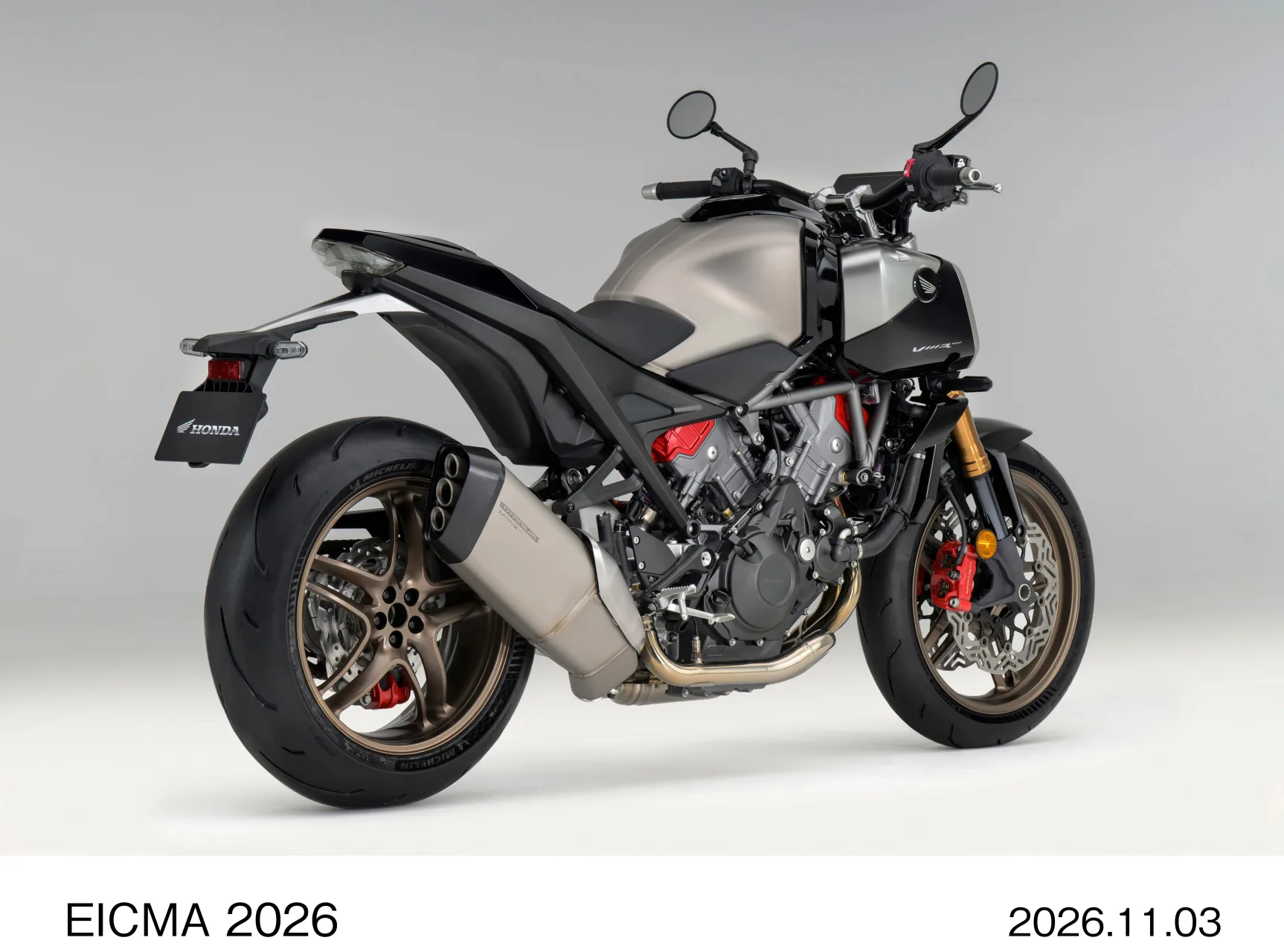
Honda has moved the V3R 900 E-Compressor project to what it calls a planned production model at EICMA 2026. The November 3 announcement shows a further-developed design with an asymmetrical appearance, titanium components and an expanded Honda RoadSync interface. It is a new development stage for an existing project, rather than the first appearance of Honda's electrically compressed V3 concept.
That distinction matters for Canadian readers following the motorcycle's progress. A planned production model is more concrete than an early engine display, but it does not by itself establish a Canadian retail price, delivery date or final certified performance. The announcement is about the direction and design Honda now intends to take toward production.
The engine idea has a development history
Honda displayed its V3 engine concept at EICMA 2024 and showed a V3R 900 E-Compressor prototype in 2025. The earlier official announcement described a liquid-cooled, 75-degree V3 with approximately 900 cc displacement and an electronically controlled compressor. Those details provide background for understanding the current model, rather than a second new launch today.
The compressor's electric drive is the important technical distinction. Its operation is not mechanically tied to engine speed in the same way as a conventional engine-driven supercharger. Honda's development aim has been strong response across a broad operating range, with performance comparable to a larger-capacity motorcycle. That aim should not be converted into a final horsepower number.
Engine displacement and output also describe different things. Displacement is a measure of the volume swept by the pistons, while performance depends on how much air and fuel the engine can process and how efficiently it does so. A compressed-air intake changes the development possibilities without changing the displacement printed in the model's technical description.
The production design is becoming clearer
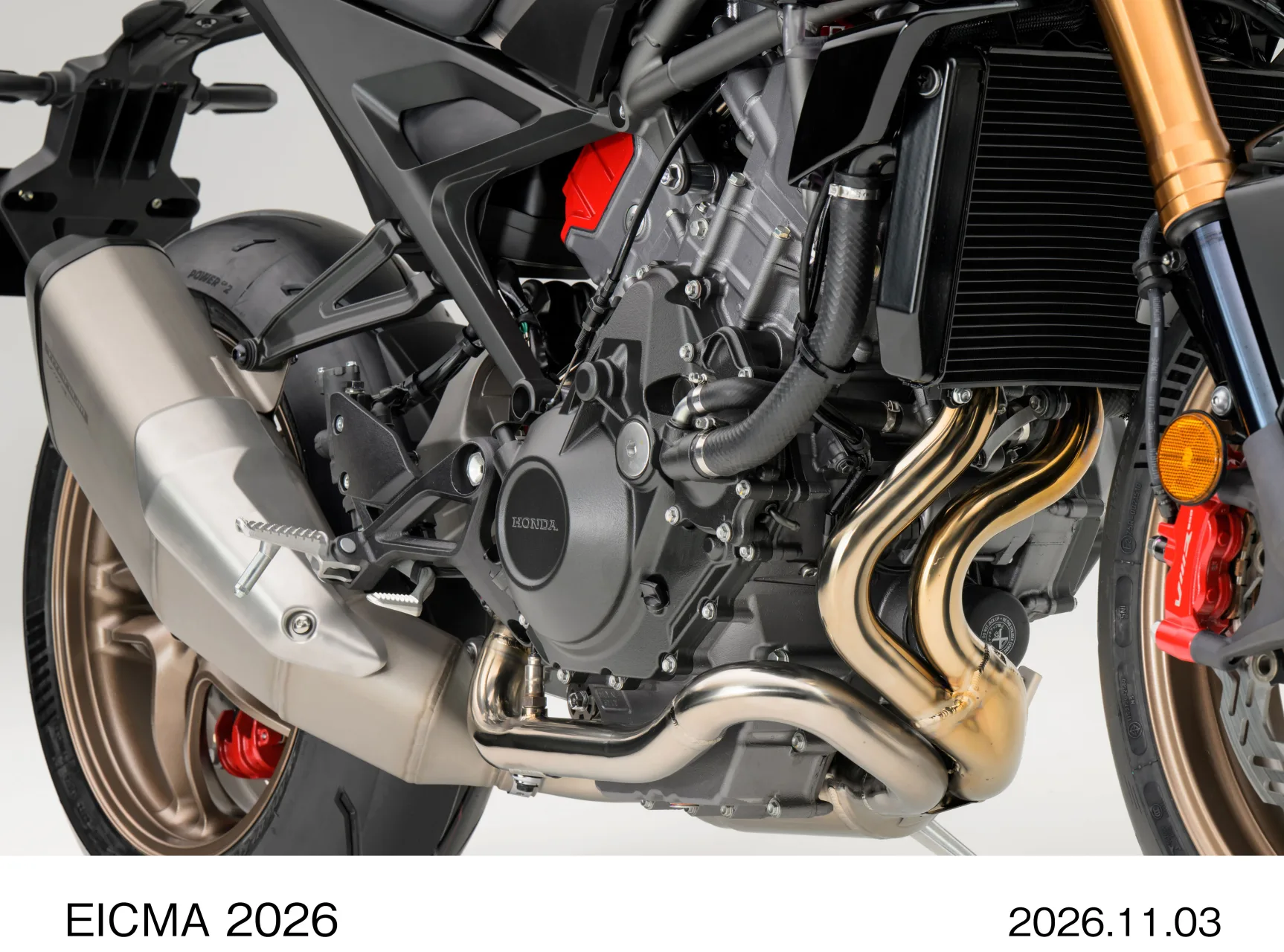
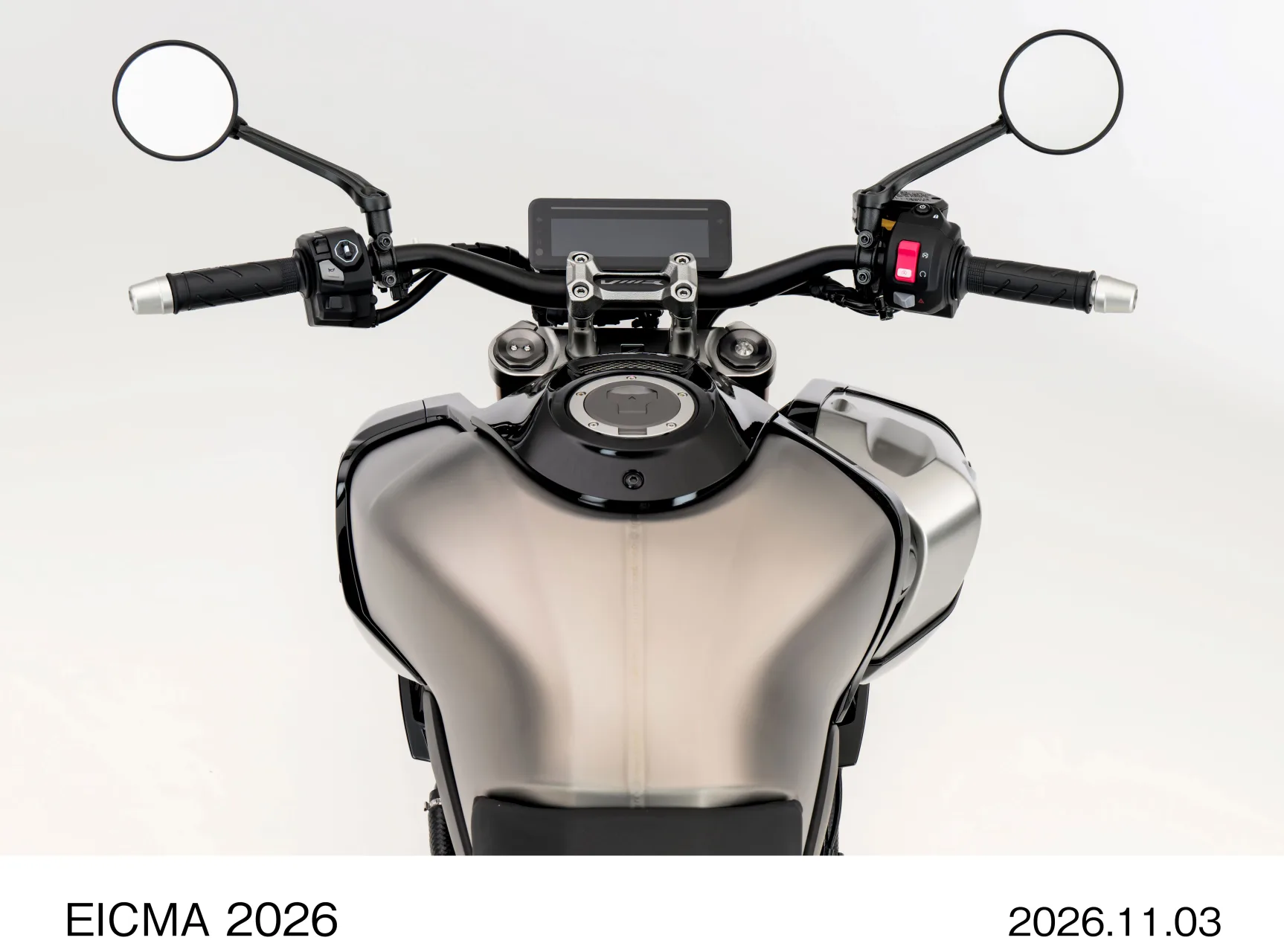
The 2026 announcement identifies a titanium fuel tank, exhaust pipes and muffler, together with a distinctive asymmetrical design. These are tangible changes in the project's presentation. The official photographs also give a clearer view of how the power unit and surrounding chassis are packaged as a complete motorcycle.
Material choice can serve several purposes, including mass, appearance and the way a component is manufactured. It does not allow a reader to calculate the complete motorcycle's weight without a published figure. The same caution applies to visual impressions: an exposed engine and compact bodywork can suggest lightness without establishing a measured kerb mass.
For a potential owner, the packaging questions are practical. How much room is available for the legs? How is heat directed away from the rider? How easy will routine inspection and servicing be? These questions will become easier to answer when Honda publishes the final specification and motorcycles are available for physical assessment.
A new interface belongs to the same story
Honda says the planned production model incorporates an enhanced RoadSync system, including a revised human-machine interface and AI-powered voice controls. These functions are part of the proposed ownership experience, rather than evidence that the motorcycle can ride itself or make traffic decisions on the rider's behalf.
Voice operation may reduce the need to manipulate controls for some tasks, but its usefulness depends on clarity, compatible equipment and reliable operation in a helmet at riding speed. A feature that works well in a quiet demonstration still needs to be understood in the environment where the rider will actually use it.
The sensible approach is to judge the interface by the tasks it makes easier. Navigation, communication and access to information should support the ride without adding unnecessary attention demands. Riders who prefer a simpler display should also be able to understand the core motorcycle functions without relying on every connected feature.
What remains to be established
Canadian buyers should wait for local information before treating the project as an orderable Canadian model. A global display does not settle certification, allocation, price or the final equipment package. Equally, the absence of those details in this announcement should not be used to invent a cancellation or a fixed delay.
The next meaningful information will include the production specification, the way the compressor is managed in normal operation and the applicable service requirements. Those details will help riders compare the V3R with conventional naturally aspirated motorcycles on more than the novelty of its engine layout.
The EICMA 2026 development is therefore significant but specific: Honda has shown a planned production design for a technically unusual motorcycle. The project now offers more to examine than an engine concept or an early prototype. Its Canadian relevance will grow when the remaining commercial and technical details turn that design into a motorcycle local riders can evaluate, price and ride.