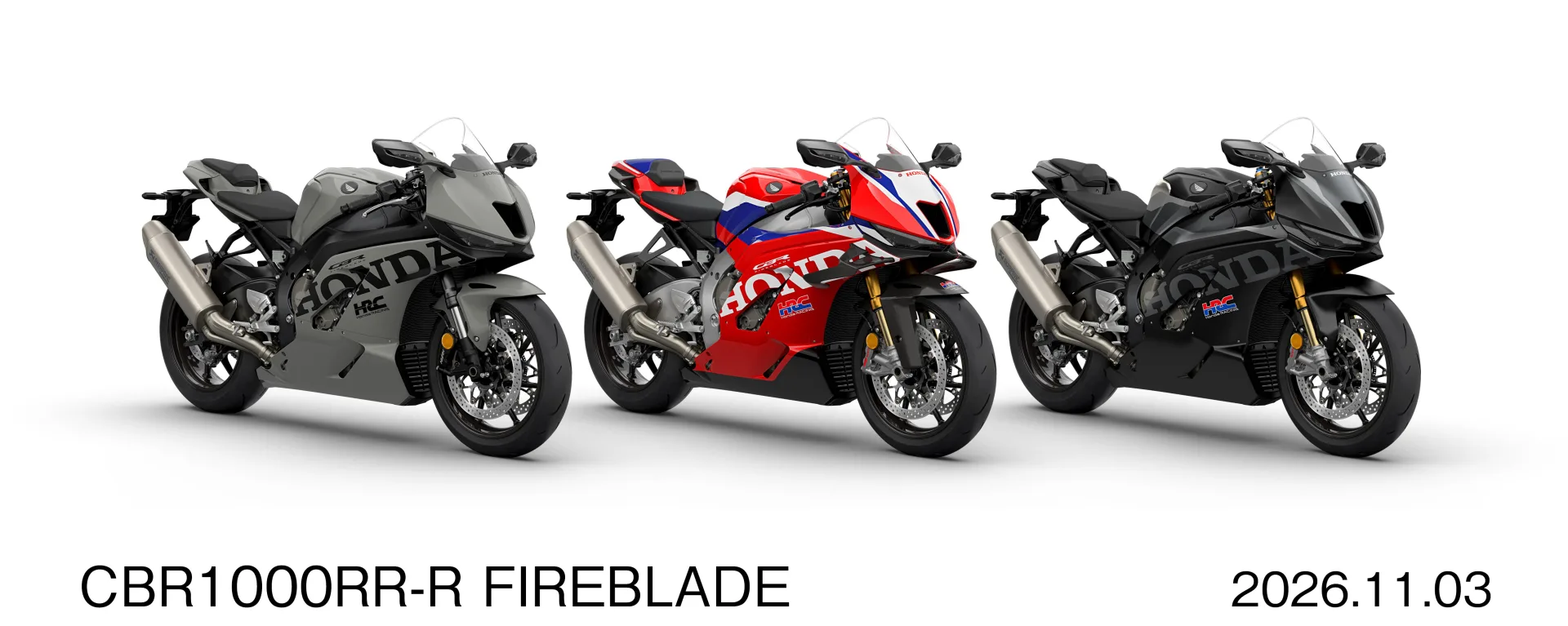
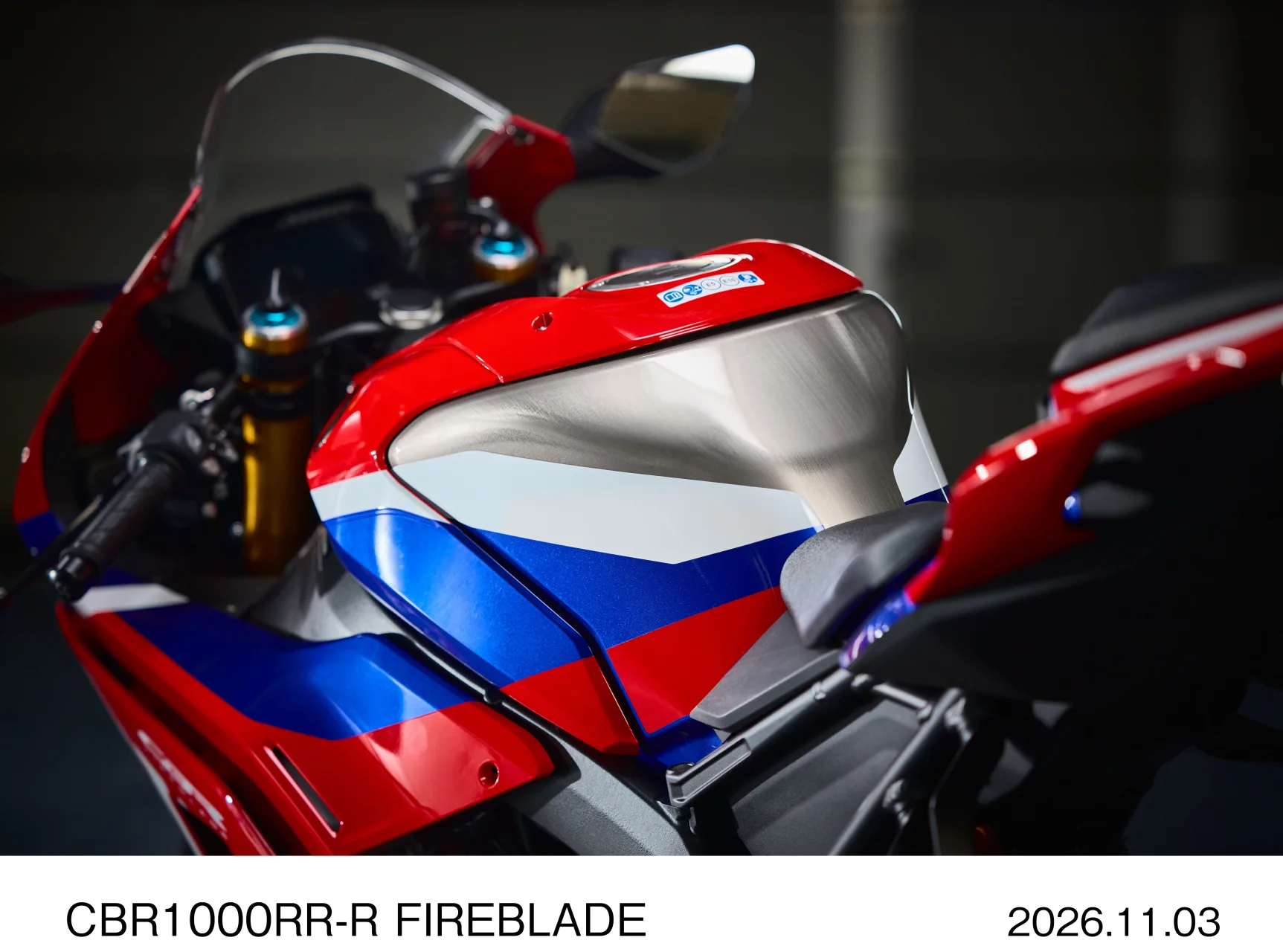
Honda has unveiled a substantially redesigned CBR1000RR-R Fireblade family for 2027, including a new HRC Works Edition intended as a World Superbike homologation model. Announced on November 3, the range continues with standard and SP versions alongside the new racing-focused derivative. Honda says approximately 75 per cent of the components have been newly designed.
The significance is broader than an equipment list. A manufacturer uses a homologation model to connect the production motorcycle with the technical starting point available for racing under the applicable rules. That does not make a showroom bike identical to a World Superbike machine, or mean a road customer needs every feature developed for competition.
A chassis story as much as an engine story
Honda identifies a new aluminium twin-tube frame and swingarm among the changes, together with a two-stage variable-length intake system for the 999 cc inline-four. The development emphasis is on control and track performance, including how the motorcycle behaves while braking, turning and accelerating.
Those phases are connected. A rider needs enough support under braking to place the motorcycle accurately, enough feedback through a corner to judge available grip, and predictable response when opening the throttle. A frame is therefore not judged simply by whether it is stiffer than the one it replaces. Engineers can seek different behaviour in different directions and operating conditions.
That distinction is useful when reading superbike announcements. A reduction in a particular measure of rigidity is not automatically a downgrade, just as an increase is not automatically an improvement. The result depends on the complete package, including tyres, suspension, geometry and the loads produced by the rider. The practical assessment is how consistently the motorcycle responds.
The three versions serve different owners
The standard Fireblade uses Showa suspension. The SP uses electronically controlled Öhlins equipment, while the HRC Works Edition receives mechanically adjustable Öhlins components and dedicated aerodynamic parts. These differences make the choice more specific than a simple progression from basic to better.
A rider who regularly changes circuits or works with a suspension technician may value a mechanical setup that can be recorded and reproduced. Someone alternating between road use and occasional track days may place greater weight on the convenience of electronic adjustment. Neither approach replaces correct spring choice, tyre pressures or a sensible starting setup.
The HRC connection also needs an accurate reading. A production motorcycle can provide a homologation foundation while still requiring substantial preparation for a particular race class. Bodywork, control systems, exhaust rules and safety requirements depend on the event. Buyers considering competition should obtain the relevant regulations before deciding that a model name guarantees eligibility.
Performance needs room to be used
The Fireblade's purpose makes rider fit particularly important. The relationship between seat, footpegs and clip-ons affects how easily the rider can support the body under braking and move through a corner. A position that looks aggressive in a photograph may be comfortable for one rider and restrictive for another.
Track use adds further considerations. A rider needs suitable protective equipment, a motorcycle prepared to the organiser's requirements and time to learn the circuit. A new aerodynamic package or a more advanced control system does not remove those foundations. Consistent technique and a motorcycle that is easy to understand often matter more to progress than selecting the most specialised version immediately.
Consumables also belong in the purchase calculation. Tyres, brake pads and servicing can become a substantial part of the ownership cost when a high-performance motorcycle is used regularly on track. Comparing purchase prices without considering the intended annual riding programme gives an incomplete view of the commitment.
Road equipment and race equipment are separate choices
Honda's announcement notes that fitting its HRC Racing Kit voids the manufacturer's warranty. That is a specific consequence for a specific modification, rather than a reason to assume every track day or accessory has the same effect. Owners should understand the terms that apply to the motorcycle and the changes they plan to make.
Canadian buyers also need the Canadian model specification, price and availability. The European-market reveal explains the new family but does not establish that all three variants will be offered locally in identical form. Written confirmation is especially important for a specialised edition with racing-related equipment and potentially limited allocations.
The 2027 Fireblade announcement is therefore a substantial development in Honda's superbike programme. The new HRC Works Edition is the headline, but the redesigned platform and differing suspension approaches make the whole range worth examining. The right version will depend on whether the owner is planning road rides, occasional circuit days or a structured racing programme, and on which equipment supports that use most effectively.