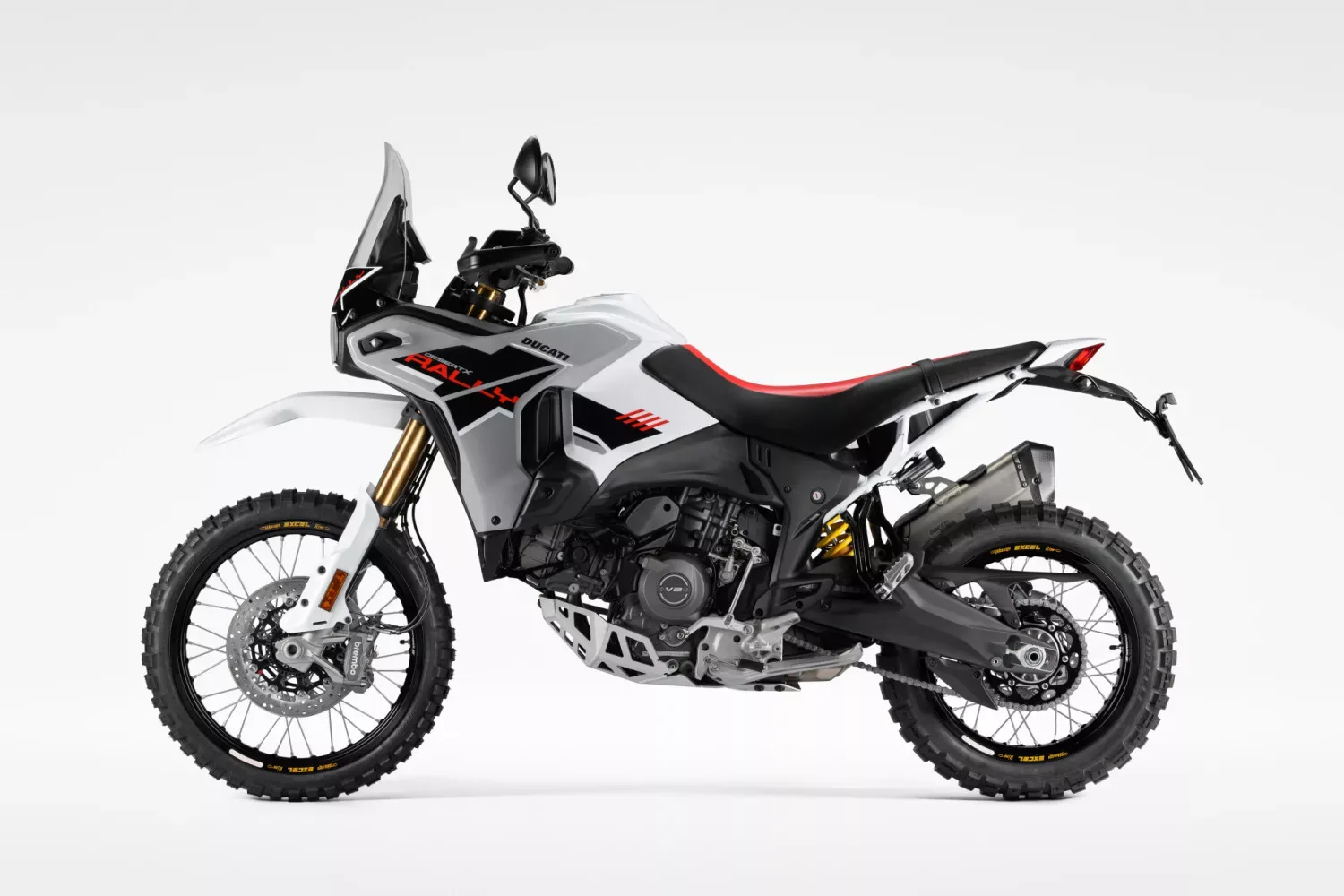
Ducati's new DesertX Rally adopts the company's 890 cc V2 engine and a revised chassis for 2027, pairing a monocoque frame with a progressive Full Floater rear-suspension arrangement. Revealed in Milan on November 2, the motorcycle carries the Rally name into the newer DesertX platform rather than simply adding another colour to the previous machine.
The changes will interest Canadian riders who want an adventure motorcycle for more than occasional gravel. They also make a careful specification comparison important. The outgoing Rally's engine, chassis and wheel information should not be carried across to the new model, even where the overall styling remains recognisable.
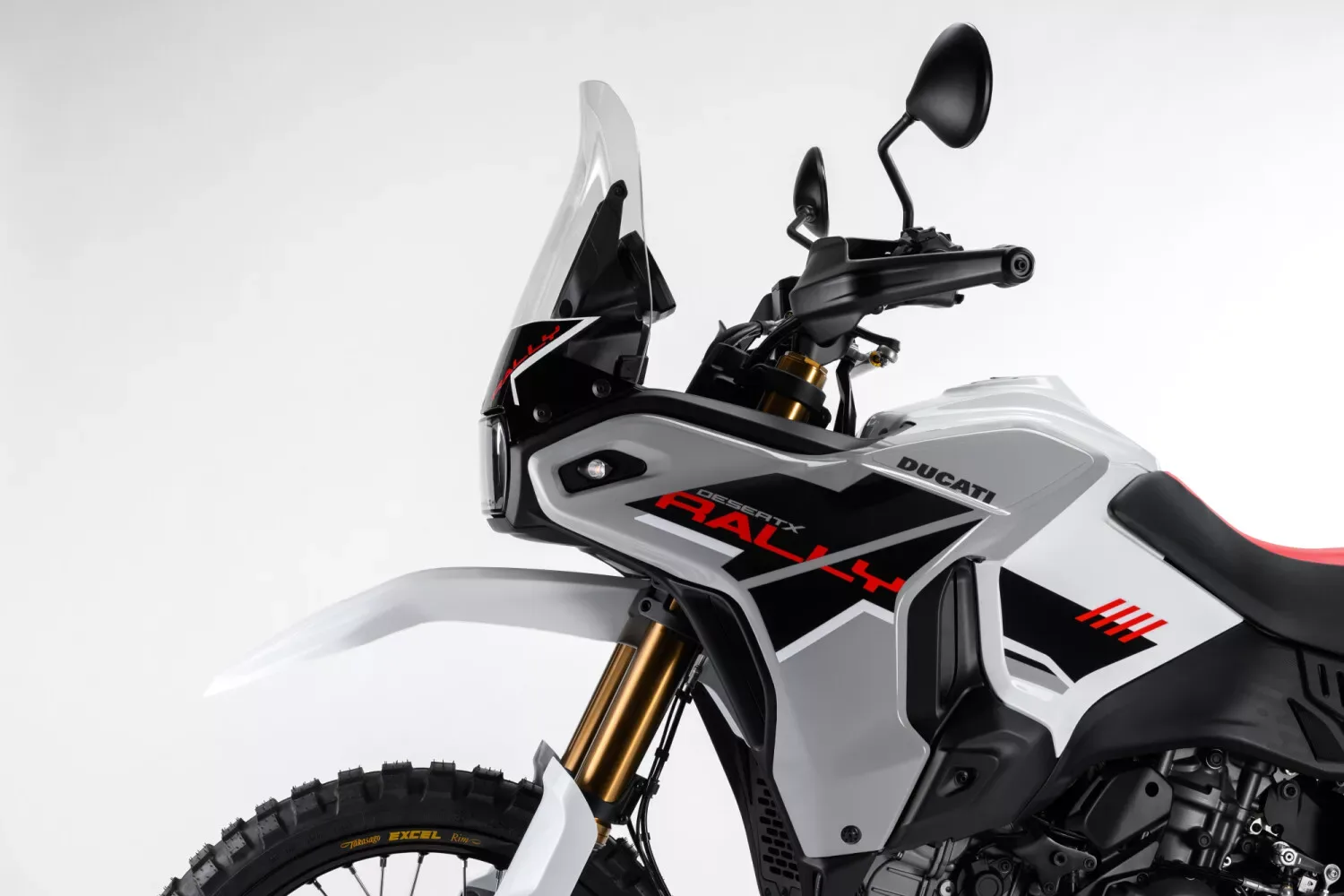
A different foundation
Ducati quotes approximately 110 metric horsepower and 92 Nm for the new engine. The international product page lists an 18-litre tank and a wet weight without fuel of 209 kg. That last qualification matters: it is not a fully fuelled kerb-weight figure and should not be placed beside a competitor's ready-to-ride number without explaining the difference.
The monocoque construction and new rear linkage change the motorcycle's underlying architecture. The useful ownership question is how that package supports control when the surface becomes uneven, especially with luggage aboard. Engine output alone cannot answer it. Throttle response, gearing, suspension adjustment and the rider's ability to move on the motorcycle all influence the experience.
A lower displacement also does not automatically mean a less capable touring motorcycle. The shape of the torque delivery and the gearing determine much of the response a rider uses on a climb or when leaving a slow corner. Conversely, a strong launch specification does not replace a loaded test ride when assessing comfort and manageability.
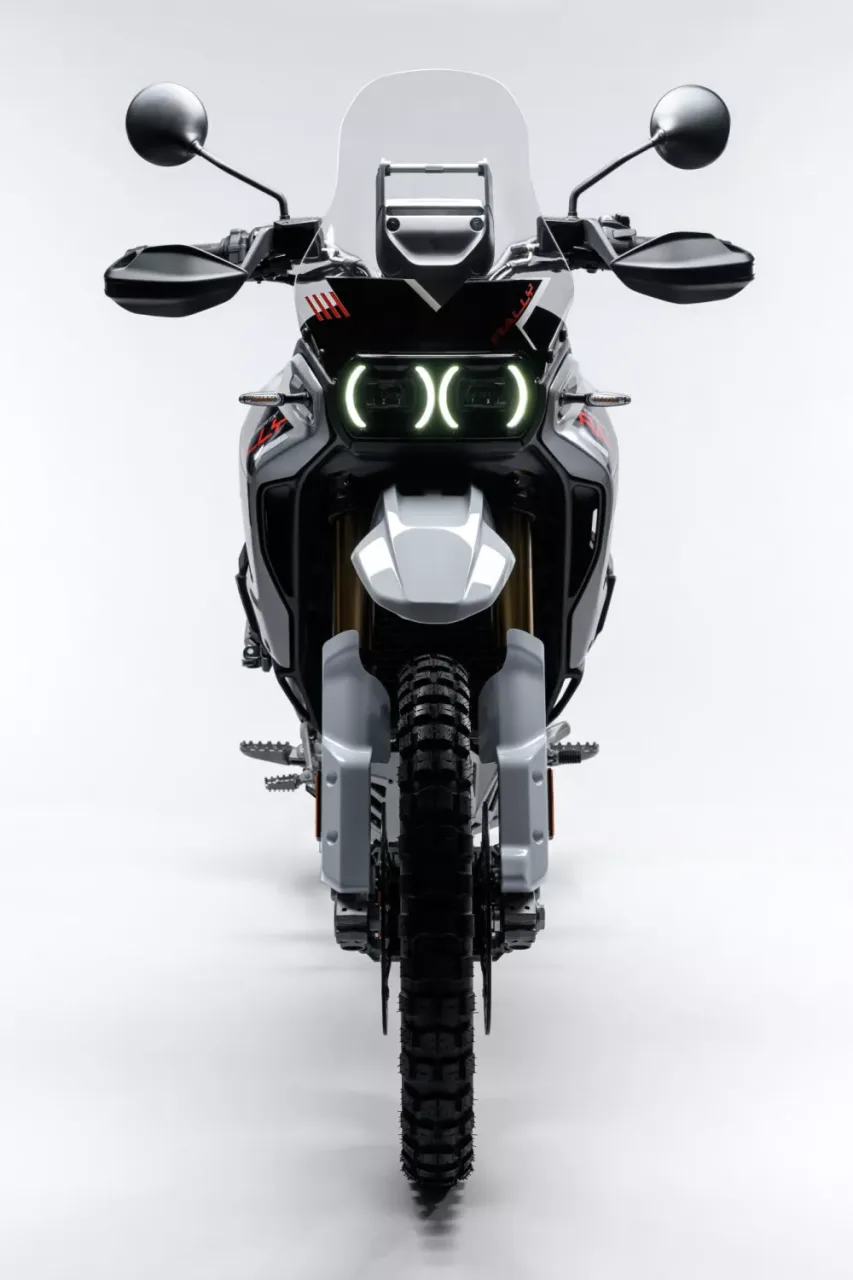
Suspension built around rougher terrain
The announced package includes a 48 mm KYB closed-cartridge fork, a fully adjustable KYB shock and an adjustable Öhlins steering damper. Ducati identifies Kashima and DLC surface treatments among the fork's features. These are concrete component changes, although claims about how much faster a rider can travel would require an independent comparison.
The Full Floater arrangement uses progressive linkages. In practical terms, a linkage allows the relationship between wheel movement and shock movement to change through the suspension stroke. That creates another tool for balancing small-bump response with support deeper in the travel. It does not remove the need to set spring preload and damping for the actual rider and load.
For an owner alternating between commuting and loaded trips, recording a usable baseline setup can be more valuable than changing every adjuster at once. A workshop should be able to explain which adjustments affect ride height, compression and rebound, and how the luggage load changes the starting point. Premium components still benefit from a methodical setup.
Tubeless wheels change the travel discussion
The Rally receives Takasago Excel tubeless spoked wheels, with a 21-inch front and an 18-inch rear. Ducati also highlights the rear wheel's 36-spoke construction. Those details distinguish this model from a generic road-focused adventure specification and help explain its intended terrain.
Tubeless construction can make some tread punctures easier to address, but it should not be read as a promise that every roadside repair will be simple. Sidewall damage, a damaged rim or a puncture outside the repairable area can still end a ride. A travel kit needs to match the wheel and tyre combination actually fitted to the motorcycle.
Canadian riders should also separate wheel size from tyre suitability. A 21-inch front wheel does not make every fitted tyre equally effective in mud, loose rock and wet pavement. The chosen tyre, operating pressure, load rating and conditions remain part of the overall decision. A long highway approach followed by a technical trail asks different things of a tyre than either section alone.
Fit comes before the rally image
The international specification lists a 900 mm seat, or 880 mm with a low seat. Those numbers make a physical fit assessment especially worthwhile. Seat width, boot choice and suspension sag affect ground reach, while luggage can change how easy the motorcycle is to manoeuvre when stopped on a slope.
The launch does not by itself establish a Canadian delivery date or final local equipment package. Buyers should compare the Canadian order specification with the announced model, including exhaust equipment, protection, warranty terms and accessories. A photograph of an overseas machine is useful for understanding the design but cannot settle those purchase details.
The new DesertX Rally therefore offers a substantial technical story: a different engine platform, revised chassis, specialist suspension and tubeless off-road wheel sizes. Its appeal will depend on whether those changes suit the rider's terrain and physical fit. For someone whose routes include demanding unpaved sections, those are more meaningful distinctions than the Rally badge alone.